
National Tea Day in the UK
On Tuesday, it is National Tea Day. The UK is the fifth biggest consumer of tea in the world, with 36 billion cups being drunk a year. Tea first arrived in the UK in 1650 and started off as a luxury product that only the truly wealthy could afford. It was not until the 18th century that it became a drink for the majority, and by the 1820s, we were considered a true tea-drinking nation. The first teabags arrived in 1953 to completely seal the deal.
Nowadays, most of us couldn’t imagine life without a nice cup of tea. But, is it good for us? We now have five main types of tea to choose from: black, green, white, oolong and pu-erh. These all come from the same plant, called Camellia sinensis, but vary in colour and taste depending on the type of tea leaves picked and the level of oxidation and processing. Tea contains two main phytochemicals, substances produced by the plant that gives them their colour, flavour and aroma, including polyphenols and caffeine.
The jury is out when it comes to scientific studies and research about drinking tea and our health; with some suggesting tea can improve heart health, is an anti-inflammatory, an antioxidant, helps reduce the risk of chronic disease, dementia and could even potentially increase our lifespan. It has also been linked to improved mental health and stress reduction. However, some of these studies are short, and results may be observational and association-linked only, without clear cause and effect.
So, we cannot make firm conclusions. Tea also contains caffeine, too much of which can cause sleep disturbance, irritate the bladder and cause anxiety.
Whether you are a tea-drinker or not, here are some important life lessons that having a cuppa allows us to learn.
Pause
We are estimated to make about 35,000 decisions per day; that’s one decision every two seconds. In short, our brains need a break. We are not machines and in an age of emails, instant messaging and multi-platform communication, if we don’t take a break every now and again, it takes a toll on our cognitive and emotional systems.
Making a cup of tea is sometimes the only five-minute break we get in a busy day, and it is a good excuse to pause and just breathe. If we don’t listen to this need to pause, we get increased levels of stress and a higher likelihood of burnout, and low mood or anxiety. The general consensus is to brew black tea for three to five minutes and green tea for two to three minutes; so, don’t short-change yourself on that pause.
Ritual
Tea-drinking can give us the opportunity to have and develop a personal ritual; a repeated and structured set of actions. And it is important to maintain rituals for our mental and emotional health; rituals can bring us comfort and stability. They can help reduce anxiety and help us mark milestones during the day that give us a sense of certainty, with research showing improved productivity, a sense of control and help us transition from one phase of the day into another.
Connectedness
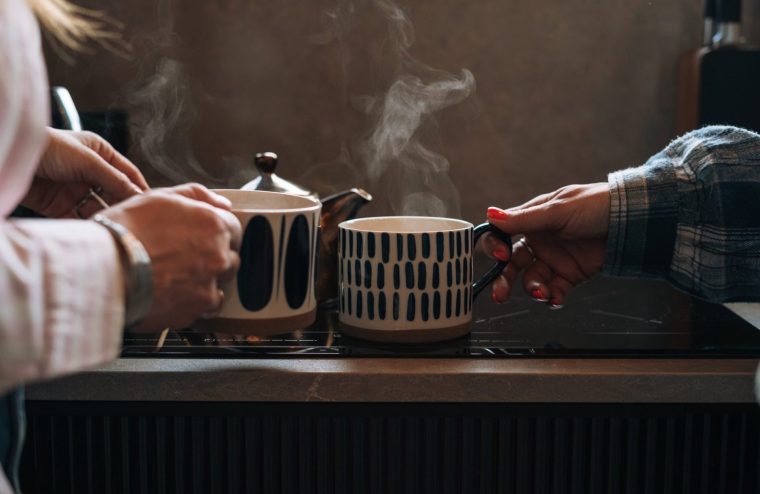
A cup of tea can allow us to have the opportunity to be with others, not just in a functional way, but in a way that brings real connection. Having a drink with someone is a “way in” to open up space for meaningful conversation, for us to proactively listen and to really strengthen relationships. Science tells us that it is the quality of our relationships – to be authentic and real – that are a mainstay of our mental wellbeing. It is often over a cup of tea that we are truly able to open up and talk about what matters.
Association
Our brains work by association and linking certain emotions and feelings with a specific activity, and the same can be said of having a cup of tea. It is often the thing that is offered by other people when we are distressed or upset, when we are cold or have had a long journey, or when we need a break, and as a welcome into other people’s homes. These associations make us view a cup of tea as emotionally restorative, and the very sight or taste of tea can bring up the same feelings of comfort, being looked after and gratitude. We can use this associative quality of our brains when we need to create the same kind of feeling.
Mindfulness
Traditional tea ceremonies – such as the Japanese mindful tea ceremony – embody simplicity, ritual and silence as a teacher of respect and mindfulness. We can take some of these lessons and bring them into our lives to benefit and fully engage our senses. Instead of rushing into the kitchen, grabbing a mug and switching the kettle on while throwing a tea bag in, then rushing off to do another job while you wait, we can make the most of the ritual. We can slow it down, we can pay attention to the kettle boiling, watch the steam and listen to the noises. We can choose which tea we feel like drinking and the colour and texture of the mug or cup we drink from. And we can choose to smell the aroma and really savour the taste and flavour of the tea. In this way, tea drinking shows us how we can fully be present in that moment and distract our brains from the worries and stresses we have. Having mindful moments regularly can build our resilience and also allow us to feel happier and more content throughout our busy day.