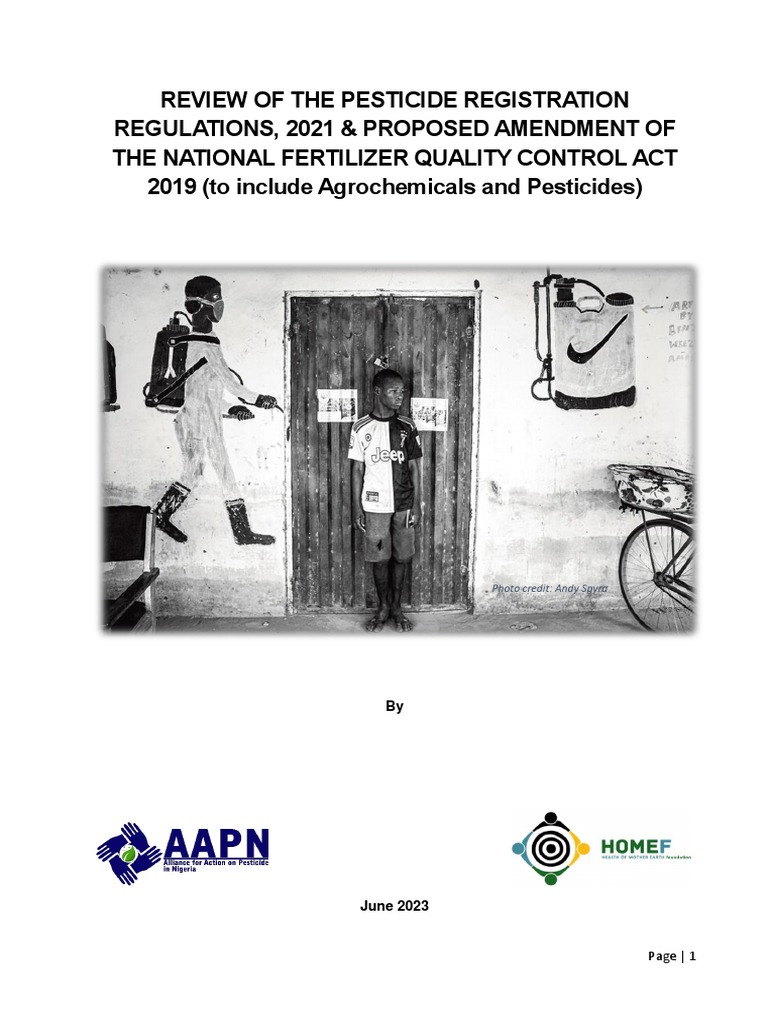
Call for Comprehensive Pesticide Legislation in Nigeria
Agrofood professionals affiliated with CropLife Nigeria have recently emphasized the urgent need for a comprehensive pesticide bill to regulate the industry and enhance awareness about the implications of Maximum Residue Limits (MRLs) in agricultural products. The stakeholders also called for mandatory training and certification of agro-dealers, agricultural extension workers, and other operators across the value chain to prevent the misuse of pesticides and improve food safety.
This call was made during the 2026 Annual General Meeting of CropLife Nigeria, which took place in Lagos. During the event, members elected a new executive committee, marking a significant step forward for the association.
The outgoing President of CropLife Nigeria, David Achimugu, highlighted that the proposed legislation would address existing gaps in the industry, from product registration to field application practices. He stated, “The goal is to have an all-encompassing law to govern the pesticide industry in Nigeria that will address all issues and challenges of the industry from product registration to Good Agricultural Practices involving mandatory training and certification of agro-dealers, agricultural extension workers, and other relevant stakeholders.”
Achimugu further explained that the bill would serve as a platform for advocacy backed by law, which is crucial for engaging with the international community and policy formulators. He noted that rising cases of food contamination and the rejection of agricultural exports due to high pesticide residues underscored the urgency of stronger regulation and training.
He added, “As a result of reported incessant cases of food contamination and rejection of agricultural commodities due to high pesticide residues arising from gross misuse and abuse of instructions on product labels, coupled with poor knowledge and skills of stakeholders, CropLife Nigeria in collaboration with NAFDAC set up a special-purpose stewardship committee to train agrochemical dealers across Nigeria, and we have covered close to four regions to date.”
Industry Sensitisation Efforts
Speaking on industry sensitisation efforts, the newly elected Vice President of CropLife Nigeria, Moses Mordi, said the association had intensified engagement with stakeholders on compliance with Maximum Residue Limits. He mentioned, “Last year, we did a major seminar where we brought all stakeholders and sensitised them on the implications of the Maximum Residue Limit and informed them of standards. It is not one-size-fits-all because Europe has its standards and the United States has its standards, so if you are sending products, you need to understand the allowable limits.”
Mordi stressed that MRL compliance affects both export and domestic markets. He said, “MRL not only affects exporting countries, but it also affects local consumption. We have seen the implications in Nigeria, including cases involving cowpea and improper observance of re-entry periods, so as a body, we are seriously pursuing continuous training and stakeholder engagement.”
He also urged the government to strengthen regulatory oversight of the pesticide industry. He said, “We are saying to the government, please come and regulate us and give us a pesticide law so that all these issues can be addressed.”
Structural Challenges in the Sector
Meanwhile, the Founding President of CropLife Nigeria, Patrick Ikemefuna, decried Nigeria’s lack of a comprehensive pesticide law, which has created structural challenges for the sector. He said, “Nigeria is the only country that does not have a good pesticide bill, and there is a structural problem because regulation is not properly aligned with the Ministry of Agriculture. Codex has set standards for minimum residue levels for every crop, and if proper pesticides are not used, agricultural produce such as cocoa will be rejected.”
Ikemefuna added that while the association had intensified stewardship by training farmers and dealers, broader regulation remained critical. He said, “We train farmers and dealers to ensure proper application, but Nigeria is too large for voluntary compliance alone, which is why we are calling on the government to provide proper regulation to bring everyone together.”
Leadership Changes at AGM
At the AGM, members elected Martins Awofisayo as President, Moses Mordi as Vice President, and Dr Abdullahi Ndarubu as Chairman of the Technical Committee, alongside other executive members. These leadership changes signal a renewed commitment to addressing the challenges facing the pesticide industry in Nigeria.