The Government’s Response to Fuel Protests and Public Engagement
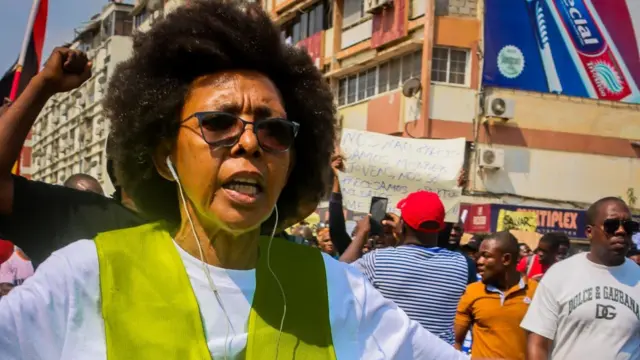
We thank God for His providence, love, and protection, and then rain! It’s yet another week as we draw closer to the middle of the year. On Tuesday, there was supposed to be maandamano across the country to protest against the high cost of fuel. The call for this failed miserably. The organizers, led by the opposition and the so-called leaderless Gen Z movement, had hoped to whip up the emotions of the people to their side, but it didn’t work. There are several reasons for this, and it’s important to reflect on them as lessons on public engagement and communication.
Understanding the Public’s Perspective
To begin with, the people understood that the war in the Middle East between the US-Israel and Iran would have an impact on oil supply. The government first came out on April 3 to assure Kenyans that there would be enough fuel supply across the country. This helped calm the situation, albeit some of the oil marketers had caused some artificial shortage, yet the system had more than 400 million litres in stock.
The second move was the quick arrests and resignation of those involved in the supply of substandard fuel at a higher cost, outside the Government-to-Government arrangement. The Petroleum Principal Secretary Mohammed Liban and CEOs of both the Energy and Petroleum Regulatory Authority and Kenya Pipeline, Daniel Kiptoo and Joe Sang, respectively, were forced to quit following the revelation of the scandal.
Strangely enough, they found defendants from the rank and file of the opposition, who issued a statement accusing the G2G model of being the cause of the high fuel prices. It was clear that the two press conferences were well-coordinated, with the same tone, demonstrating that they were holding brief for the officers who had resigned and their benefactors. It’s quite disconcerting to fathom the extent to which those who claim to be paragons of integrity and champions for reforms can turn around to defend and protect the wrongdoers in the court of public opinion if only for political mileage and more.
Government’s Explanation and Tax Reductions
In their highly publicised press briefings, they castigated the G2G model as the one responsible for the increase in the fuel prices. The government came in to explain the model in detail, with President William Ruto listing the benefits such as stable fuel supply and the strengthening of the Kenyan shilling against the dollar. In quick succession, the 16 per cent VAT on fuel was reduced from 16 per cent to 13 per cent and eventually halved to eight per cent, thus lowering the landed costs of fuel per litre to less than Sh200 per litre. Kerosene that is used by many households remained at Sh152, with the government using Sh6.2 billion of the Petroleum Development Levy, to subsidise as much as Sh96.
The rapid and timely reduction of the taxes caught the opposition off-guard, as they had hoped that this wouldn’t happen. Parliament moved in to pass the amendment in a record 14 hours, after the National Treasury had issued Legal Notices 69 and 70 as per the law. This in effect deflated the detractors, and went ahead to demonstrate to the public that the government was caring and listening. In addition, my office together with Epra sustained the campaign in explaining the G2G model, while detailing how the country was diversifying the sourcing of oil from other places other than the Middle East whose Strait of Hormuz is a chokepoint for 20 per cent of the global oil supply.
Addressing the Question of Higher Oil Prices
There was the lingering question as to why our oil prices were higher than our neighbouring countries. The factors that determine the pricing include the middle-income status of our country, roads construction and maintenance of 20,000 and 6,000km through the fuel levy and a two-month delay in pricing by our neighbours. This explanation helped the situation greatly.
In addition, the swift quantification of the economic effects of maandamano, noting that the last protests cost Sh6 billion to the economy, made Kenyans reflect on the consequences. Ninety-five countries across the world had adjusted their fuel prices, therefore it wasn’t a Kenyan phenomenon alone. Such protests therefore wouldn’t help the situation, as they would further destabilise the economy, hence, reducing the employment opportunities for the very youth that the detractors claim to care for.
Appreciation of Government Efforts
One of the most outstanding reasons why maandamano failed is that people are now appreciating what the government has done so far in delivering the Beta Plan. It is evident in areas such as affordable housing, SHA (Taifa Care), agriculture and food security, MSMEs, especially the Nyota programme, and the digital superhighway such as the Ajira and Jitume programmes that have seen many youths earn their keep from online programmes.
Moreover, the Kazi Majuu programme has enabled many of them to go work abroad. The tourism sector, which employs 1.6 million people, has grown by nine per cent to procure more than Sh500 billion and 7.9 million tourists, of which 2.7 million are international, and 5.2 million being local.
Reflection on Past Governments
Our detractors were in former governments and the question remains: what did they do then that was different.
The journey to transform Kenya into a first world country continues.