The Pressure to Stay Polished
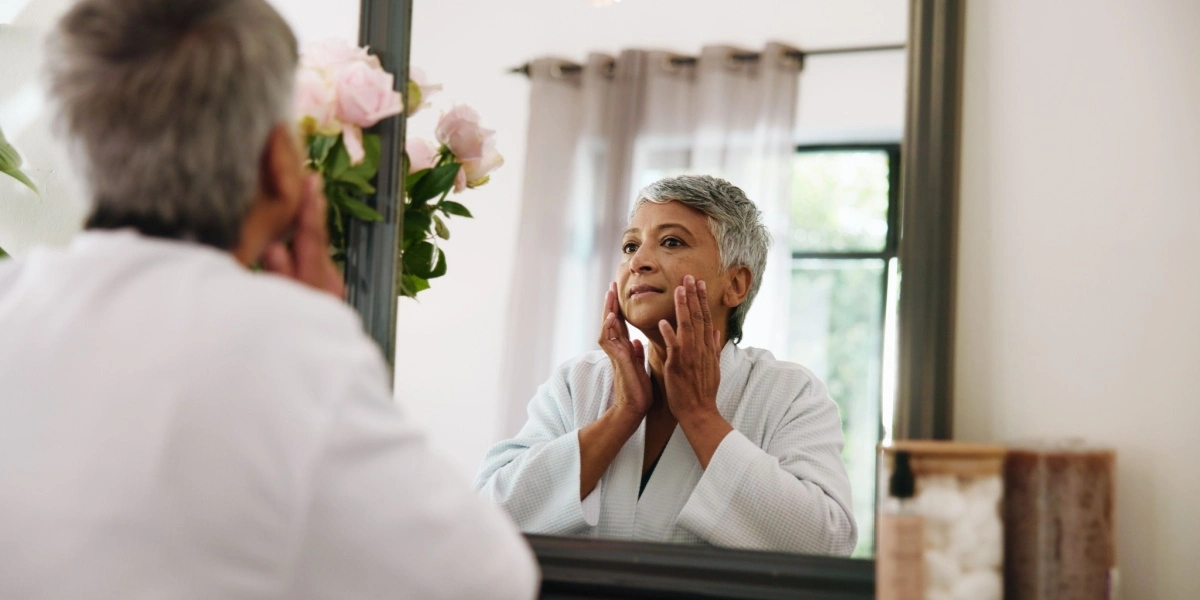
In her column, journalist Christa D’Souza reflects on the tension between aging naturally and maintaining a polished appearance. She draws from her own experiences, highlighting how this issue is not just theoretical but something she has encountered in real life. Dubai, with its emphasis on looking well-groomed, especially among affluent expatriates, serves as a backdrop for her observations. The city’s culture revolves around smooth skin, subtle enhancements, and the idea that time can be gently edited rather than allowed to pass freely.
It was in this setting that a seemingly innocent question led to an unexpected reaction. During a lunch, she asked a man to guess her age. His response, “early 70s,” wasn’t meant as an insult, but it carried weight in a room where many women invest heavily in their appearance. In such an environment, standing still in terms of looks can be seen as falling behind.
Ideals vs. Reality
D’Souza made a personal decision not long ago: to stop all treatments. After years of Botox and other procedures, she chose to stop in her early sixties. This wasn’t a dramatic announcement but a quiet boundary set for herself. However, the concept of “natural aging” is often viewed as a moral high ground, even though it’s a moving target. Factors like hair dye, skincare routines, lighting, and posture all contribute to how one ages. The question remains: where exactly is the line?
Meanwhile, the demand for non-surgical cosmetic procedures continues to rise annually. The language around these treatments has evolved, shifting from correction to “maintenance.” It’s less about changing one’s face and more about preventing it from changing too quickly.
The Cautionary Side
D’Souza also acknowledges the cautionary side of excessive intervention. She points out how celebrity appearances that are heavily altered are often used as examples of what happens when enhancement goes too far. This fear lingers in the background, influencing perceptions of beauty and aging.
A Romantic View of Aging
On the other hand, there is the opposing perspective. American author Joan Juliet Buck, writing for The New York Times, said, “I think we are like old stone houses. We have the value of antiquity.” This romantic view sees aging as a form of texture and history. While D’Souza seems drawn to this idea, she isn’t entirely convinced by it.
A Reluctant Reconsideration
Belief and instinct don’t always align. D’Souza admits that the moment in Dubai unsettled her more than she expected. Not enough to cause panic, but enough to make her reconsider her stance. The temptation to do something, even something small, crept back in. It wasn’t about chasing youth but rather softening the edges of time.
Research often highlights how aging can accelerate at certain stages, but the lived experience can feel less clinical. One year, you look the same. The next, you don’t. It starts subtly and then becomes more noticeable.
Making a Decision
In the end, D’Souza booked an appointment with a dermatologist she knows well. This wasn’t a grand declaration or a sign of defeat. It was simply a decision made after careful consideration.
Perhaps this is where many people find themselves. Not fully embracing every line on their face, nor erasing them completely. Instead, they adjust, recalibrate, and carry on.
The Uncomfortable Truth
And perhaps that’s the uncomfortable truth running through her piece: aging isn’t a stance you take once. It’s something you keep negotiating, whether you like it or not.