A New Vision for the Future
A new experimental town near Mount Fuji is being developed in Japan as a large-scale testbed for robotics, artificial intelligence, and autonomous, zero-emissions transport in everyday life. This innovative project aims to explore how technology can be integrated into daily living, creating a sustainable and efficient urban environment.
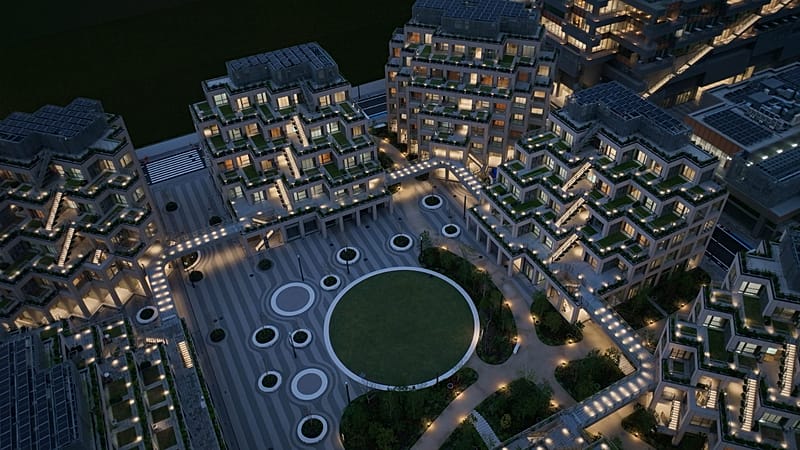
The settlement, which currently spans about 47,000 square metres, is already partially inhabited, with early residents moving through streets shared with autonomous vehicles, delivery robots, and AI-driven systems. This unique environment allows for real-world testing of emerging technologies in a controlled setting.
Woven City: A New Chapter for Toyota
Named “Woven City,” this initiative is being developed by Toyota, and the name is a nod to the Japanese manufacturing company’s origins in textile loom manufacturing. The concept reflects the company’s commitment to innovation and its vision for the future of mobility.
During a media tour of the site, Daisuke Toyoda, senior vice president of Woven by Toyota, emphasized the importance of collaboration with mobility from the perspective of social infrastructure. He stated, “By utilising things like people-related data and pedestrian flow data, and linking them with vehicles, we aim to create a safer and more secure mobility society.”
This approach not only benefits those riding in cars but also ensures safety and peace of mind for pedestrians. The goal is to create a community where technology enhances the quality of life for everyone.
Early Residents and Future Plans
Around 100 residents, or so-called “weavers,” are already living in the first phase of the town, with plans for up to 2,000 people once fully developed. These early residents play a crucial role in the testing process, providing valuable feedback on the technologies being implemented.
Experts highlight that regulatory barriers in Japan make real-world testing of autonomous systems on public roads particularly difficult, making a controlled “city-like” environment especially valuable. According to Toyoda, “This is not a place where, when you want to conduct a field trial, you’re told you can’t because there’s no evidence.”
In Woven City, various experiments can be conducted, and once proven safe and workable, the findings can help governments improve regulations. This collaborative approach between industry and government is essential for advancing technology in a responsible manner.
Technology in Everyday Life
Residents are already interacting with prototype home robots, autonomous logistics systems, and mobility services that operate beneath the city through underground passageways. Above ground, experiments range from AI safety systems to simulated flying taxis, showcasing the potential of future transportation solutions.
Automotive expert Shinya Yamamoto noted that regular people act like test drivers for an automaker. “They can try out various things they want to do within the town in a real setting,” he said. “Then they can directly feed back to the manufacturers whether those things are truly useful for society or for themselves.”
This hands-on approach ensures that the technologies developed in Woven City are not only advanced but also practical and beneficial for everyday users.
Expanding the Vision
When finished, the full site will expand to around 294,000 square metres and is expected to cost about $10 billion (€8.5 billion). This ambitious project represents a significant investment in the future of urban living and technological innovation.
As Woven City continues to develop, it will serve as a model for other cities looking to integrate advanced technologies into their infrastructure. The lessons learned here could shape the future of mobility and urban planning worldwide.
Conclusion
Woven City is more than just a testbed for technology; it is a vision for the future of sustainable and intelligent urban living. By bringing together residents, experts, and innovators, this project has the potential to redefine how we interact with technology in our daily lives. As it grows, it will undoubtedly become a hub for groundbreaking advancements in robotics, artificial intelligence, and autonomous systems.