Increased Restrictions on Santorini Due to Volcanic Activity
Santorini, a popular tourist destination in Greece, is facing new restrictions on access to several of its most iconic areas due to heightened volcanic activity. These measures, which include blocking hiking routes, establishing restricted zones, and implementing vehicle restrictions, could remain in place until at least 31 March 2027. The move comes as a significant challenge for the island’s tourism industry, which accounts for approximately 10% of all visitors to Greece.
The recent decision follows a series of seismic events that have raised concerns among scientists and local authorities. Last year, tourist numbers in Santorini dropped significantly during the summer months due to near-constant earthquakes. At the time, additional restrictions were put in place, including school closures and bans on accessing seaside areas. This latest round of measures is based on recommendations from an emergency session led by committees monitoring the country’s volcanic and seismic hazards.
Seven government departments, including the tourism, interior, climate crises, and civil protection ministries, have collaborated to implement these restrictions after reviewing the latest geodynamic data. Vassilis Kikilias, Minister of Maritime Affairs and Insular Policy of Greece, emphasized that protecting both residents and tourists is a top priority as the summer season approaches.
What Are the New Restrictions?
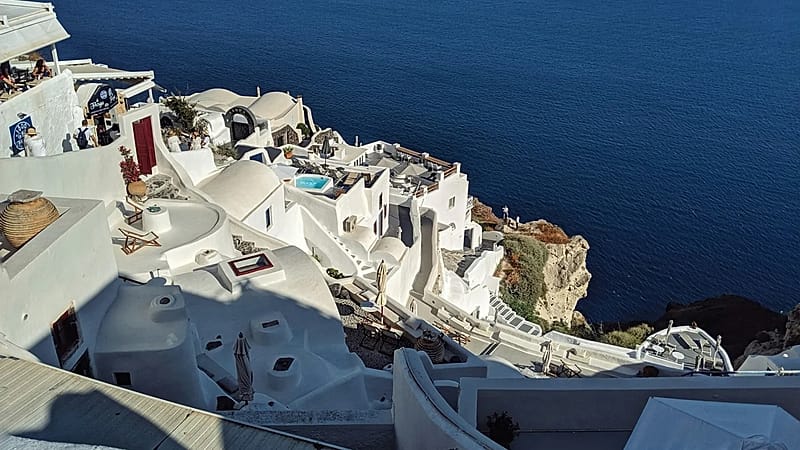
The Santorini Caldera, surrounded by cliffside villages such as Oia, Fira, Firostefani, Imerovigli, and Akrotiri, offers breathtaking views of the Aegean Sea and the volcano. Visitors often take hiking tours to Nea Kameni to observe the volcanic activity. However, with the new restrictions, traffic controls have been introduced at Athinios Port and its surrounding road network to manage congestion during ship arrivals and departures.
A restricted zone has also been established at the Old Port of Fira and surrounding upper areas, preventing visitors from entering. Meanwhile, no restrictions have been placed on the cable car or the Fira–Old Port path. In Ammoudi, a vehicle circulation ban has been implemented on the municipal road to the port from the Oia ring road junction, with only a limited number of passenger vehicles managed by the Municipality of Thira allowed to pass.
Access to the Ammoudi to Agios Nikolaos hiking route is now prohibited. Given the island’s proximity to seismic risks and volcanic activity, these restrictions may continue until at least 31 March 2027.
A History of Eruptions and Seismic Events
Santorini has a long history of volcanic activity, with one of the most significant eruptions occurring around 1600 BCE. This event, known as the Minoan eruption, fragmented the once-unified island and created the current archipelago. Smaller eruptions over time formed the volcanic islands of Nea Kameni and Palea Kameni.
In 1956, an earthquake off the coast of Amorgos, about 50 kilometers away, resulted in 53 deaths and 100 injuries. Approximately 35% of the island’s buildings collapsed, while 45% suffered at least minor damage.
The impact of these seismic events on tourism has been significant. During last year’s “Santorini swarm” of earthquakes, airline seats dropped by 26% from January to June 2025, according to Yannis Paraschis, president of the Association of Greek Tourism Enterprises (SETE). Antonis Pagoni, president of the Santorini hoteliers, highlighted the economic importance of the island’s tourism sector, noting that overall arrivals had decreased by 20%-25%.
With millions of tourists visiting annually, Santorini plays a crucial role in the Greek economy. The island’s unique landscape and rich history make it a must-visit destination, but the ongoing risks associated with volcanic and seismic activity continue to pose challenges for its future.