
A New Era for McLaren: From Darth Vader to the Rebel Alliance
At the Autosport Business Exchange in Miami, which took place during race week at the Formula 1 Crypto.com Miami Grand Prix, McLaren Racing CEO Zak Brown engaged in an on-stage conversation with Formula 1 Correspondent and Presenter Lawrence Barretto. The discussion covered a wide range of topics, but one particular analogy stood out as a defining moment.
Brown described McLaren’s early years as being akin to the dark and intimidating figure of Darth Vader from Star Wars. “Our factory was amazing, it kind of looked like Star Wars. I felt we were Darth Vader,” he said. “We were dark, we weren’t very warm, and it was like, let’s go over to the Luke Skywalker side — being warm, and welcome, and inclusive.”
This candid admission from the CEO of one of Formula 1’s most storied teams highlights a significant shift in the team’s culture. For many years, McLaren was known for its clinical excellence, projecting precision and dominance rather than warmth and inclusivity. However, Brown’s analogy signals a broader transformation that is now taking place within the organization.
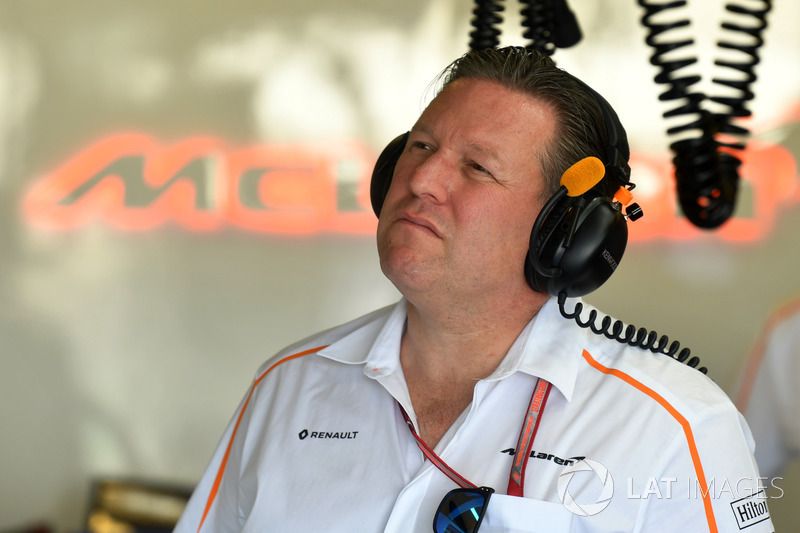
Brown acknowledged that, by his own admission, McLaren had often made people feel like outsiders. In a sport that has historically struggled with accessibility, diversity, and representation, this reflection feels like a moment of accountability. Yet, he also emphasized the steps the team is taking to change this narrative.
One of the most visible expressions of this change is McLaren’s commitment to the F1 Academy, the sport’s all-women single-seater series. The team fields two entries in the series, with Ella Lloyd racing under the McLaren F1 Academy entry operated by Rodin Motorsport, and Ella Stevens piloting the McLaren Oxagon F1 Academy entry, also run by Rodin Motorsport. Both drivers are part of the McLaren Driver Development Program.
Brown humorously noted the coincidence of having two drivers named Ella. “All our drivers happen to be named Ella — not necessarily by design!” he said.
The F1 Academy initiative is just one part of a broader strategy that includes McLaren’s scholar program. Initially launched to mark the team’s 60th birthday, the program started with 60 Scholars — young women aged between 18 and 23 who were given a development opportunity. This initiative has since expanded into a partnership with Cisco and Google, rebranded as Next. The new program now extends beyond drivers to include engineering, marketing, and business.
Brown shared that McLaren aims to have 40% of its workforce come from underrepresented groups by the end of the decade. He noted that not long ago, this figure was around 10%. “Drivers, engineers, marketers — letting people know that everyone is welcome at McLaren,” he said. “Of course, the racing drivers are the most famous aspect of that, but we’re open doors for everyone.”
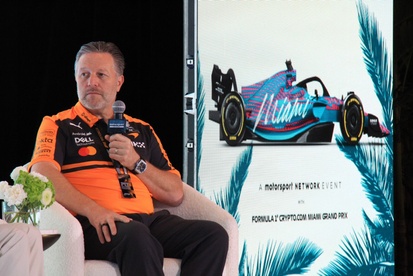
The conversation at ABX Miami occurred against the backdrop of a team riding considerable momentum. Having secured both the Drivers’ and Constructors’ Championships in 2025, McLaren arrived in Miami with much work to do to maintain its titles.
Ultimately, Brown’s Star Wars analogy serves as a manifesto for the modern era of the sport. He is effectively arguing that the “Dark Side” — the old-school, monolithic, and exclusionary way of running a team — has a ceiling. By trading the intimidation of Vader for the collaborative spirit of the Rebellion, McLaren has built a different type of community, both on and off the track.
Michelai Graham is a New York City-based freelance journalist, on-camera talent, and digital strategist. Most recently, she served as the Senior Editor of Entertainment at Boardroom. Her work has also appeared in Ebony Magazine, AfroTech, Lifewire, HubSpot, and more. Michelai covers tech, entertainment, and the business and culture of Formula 1.