Colossal Biosciences and the Quest to Bring Back the Bluebuck
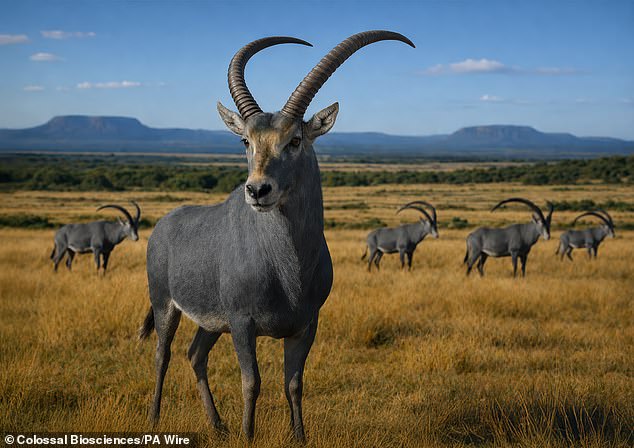
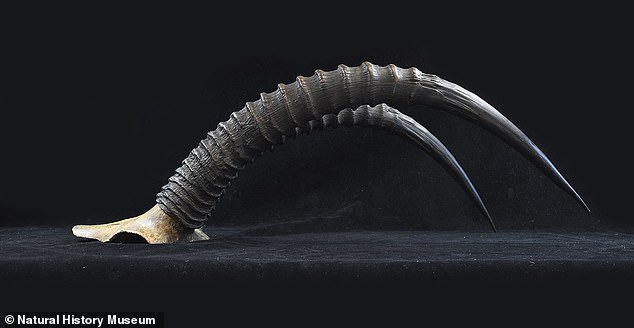
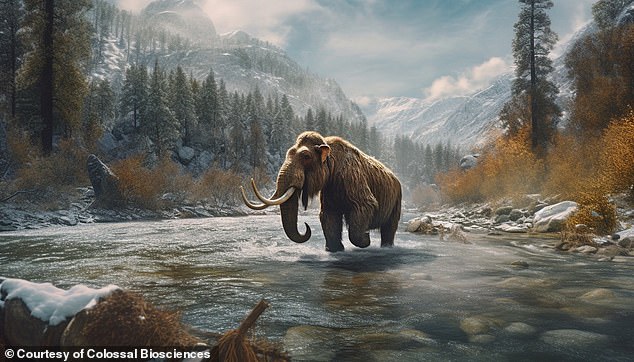
Colossal Biosciences, a company known for its efforts to revive the woolly mammoth, has now turned its attention to another extinct species – the bluebuck. This antelope once thrived in Southern Africa until it was hunted to extinction around 230 years ago due to its unique silvery slate-blue skin. Standing at four feet tall, the bluebuck was smaller than modern antelopes but had large, curved horns that could reach up to two feet (65 cm) in length.
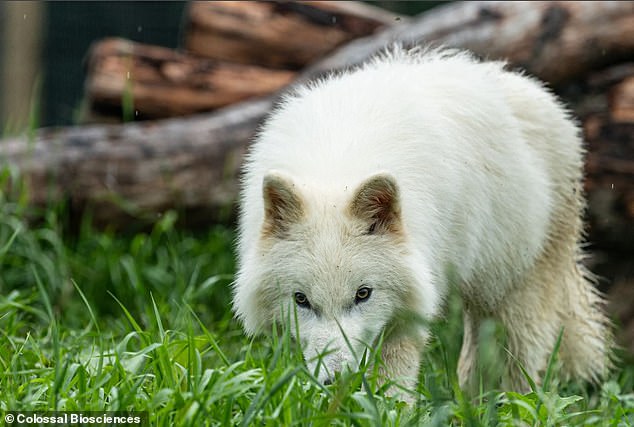
The company has launched an ambitious plan to bring this lost species back from the dead by modifying the genes of its living relatives, the roan and sable antelopes, to create a hybrid that closely resembles the extinct species. This technique was previously used to recreate the dire wolf, which vanished 12,000 years ago. Scientists have been working on the bluebuck project for two years and claim to have made several key breakthroughs.
Although Colossal Biosciences does not have a specific timeline for the bluebuck’s return, it is actively seeking ‘rewilding’ sites in South Africa where the species could be reintroduced. The bluebuck holds a special place in the history of extinct species as it was the first animal in modern times to be wiped out entirely by humans. It played a vital role in the grassland ecosystem of South Africa’s southwestern Cape for thousands of years before the last individual was killed around 1800, just 34 years after the species was first documented.
Ben Lamm, CEO and co-founder of Colossal Biosciences, stated that the bluebuck represents a pivotal step forward for the company and conservation efforts. He emphasized that every reproductive technology, genome editing protocol, and conservation tool developed through this initiative is designed to scale. By focusing on the bluebuck, the company aims to restore a lost species while also building solutions that can help protect entire ecosystems.
Mr. Lamm added that the bluebuck project has only been possible due to major technological advancements. Colossal Biosciences’ de-extinction method does not truly bring the species back but instead creates a genetically-engineered hybrid with many of the traits of the original species.
The Bluebuck: Africa’s Extinct Antelope
- Scientific name: Hippotragus leucophaeus
- Height: Four feet (120 cm)
- Weight: 120 to 200 kg
- Diet: Herbivore
- Habitat: Grasslands in Africa’s southwestern cape
- Notable features: Horns growing up to two feet (65 cm) long
- Date of extinction: 1800
Using a historical bluebuck specimen housed at the Swedish Museum of Natural History, scientists reconstructed the species’ genome. This genetic code was then compared to the genomes of the roan and sable antelopes to identify unique traits. Colossal Biosciences claims to have successfully found the genes responsible for the bluebuck’s smaller size, bluish-grey coat coloration, and distinctive white facial pattern.
Professor Michael Hofreiter, a geneticist at the University of Potsdam who led the work, noted that the genomic research demonstrated that viable DNA could be recovered from the extinct species and placed it within the evolutionary context of other African antelopes. He added that the technological advances made by Colossal have transformed what was once impossible, taking us from reading ancient genomes to rewriting them for conservation.
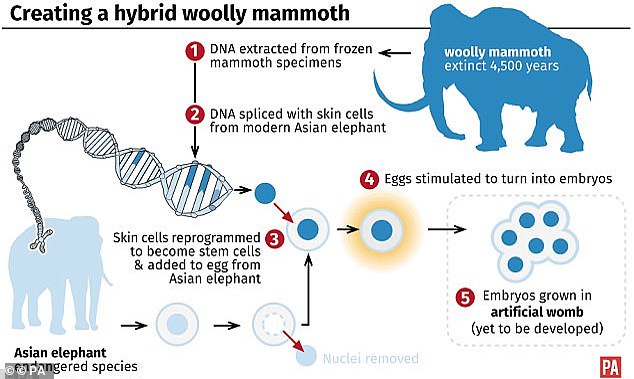
How to ‘De-Extinct’ a Woolly Mammoth
- Ancient DNA is recovered from woolly mammoth remains found frozen in the permafrost.
- Scientists reconstruct the mammoth’s genome from the recovered samples.
- The genome is compared to that of an Asian elephant to identify which ‘target genes’ make them different.
- These target genes are inserted into Asian elephant DNA to create hybrid cells.
- Hybrid cells are used to create pluripotent stem cells which can be stimulated to become sexual gametes or embryos.
- Hybrid mammoth embryos are raised inside an artificial womb or in an Asian elephant.
- A living woolly mammoth is born.
Colossal Biosciences has made significant progress in this area. Scientists have found a way to turn adult cells from the roan antelope into ‘induced pluripotent stem cells’ (iPSCs), a type of cell that can transform into any tissue in the body. With the right chemical encouragement, these stem cells can be coaxed into becoming muscle, skin, pigment-producing cells, and even eggs or sperm.
Dr. Beth Shapiro, chief science officer at Colossal Biosciences, explained that once you have a pluripotent cell line, you can differentiate it into virtually any tissue type, which means you can test how genetic changes affect biology without needing a living animal. This is especially important for species where every individual counts.
Conservation and the Future of Antelopes
These techniques will not only be useful for bringing back the bluebuck but also in aiding conservation projects for antelopes currently on the brink of extinction. Currently, populations are declining in two-thirds of all antelope species, with more than 25% considered at risk. Five species – the addax, hirola, Ader’s duiker, dama gazelle, and saiga – are now classified as Critically Endangered.
Colossal Biosciences is creating a ‘genetic library’ of DNA from threatened species, so that rare species can be bred if their numbers fall too low. However, the company’s main goal is to reintroduce the extinct bluebuck into its original habitat. It claims that this ‘re-wilding’ will help restore the natural ecosystem of Southern Africa, which has degraded since the bluebuck’s extinction.
Ethical Considerations and Controversies
Colossal Biosciences is currently collaborating with Advanced Conservation Strategies (ACS), an ecology research group, to plan a pathway towards reintroduction. Scientists will consider potential reintroduction sites, ecological requirements, population viability, partner landscapes, and regulatory pathways. However, the company has yet to disclose where it is considering reintroducing these long-lost animals.
Professor Alto Charo, an expert in bioethics from the University of Wisconsin-Madison and adviser to Colossal Biosciences, said that de-extinction done well is an act of ecological responsibility as well as scientific ambition. However, the ambition to bring lost species back from extinction has also proven controversial.
After claiming to have ‘de-extincted’ the dire wolf, Colossal Biosciences faced widespread criticism for making a misleading claim. Critics pointed out that the animals created were not ‘dire wolves’ but simply genetically modified grey wolves. Similarly, ecologists have questioned whether a species can safely be reintroduced to an ecosystem that has changed significantly in its absence.
The Dodo Revisited
Inside the ambitious plan to ‘de-extinct the Dodo’: How scientists are using stem cell technology to bring back the extinct species. It’s one of the most famous extinct animals of all time, ruthlessly hunted to extinction by humans in just a few decades. Now, scientists are edging closer to bringing the famous dodo back to its original home of Mauritius, the island east of Madagascar in the Indian Ocean.
US startup Colossal Biosciences, based in Dallas, Texas, is using stem cell technology and genome editing to create a modern approximation of the species. At a cost of over $225 million (£180 million), it is ‘de-extincting’ the dodo more than 350 years after it was wiped out from Mauritius by European explorers. Scientists have already achieved the monumental feat of sequencing the full genome of the extinct species, from bone specimens and other fragments. The next step is to gene-edit the skin cell of a close living relative, which in the dodo’s case is the Nicobar pigeon, so that its genome matches that of the extinct bird.