The Plight of Four Australian Women and Their Families in Syria
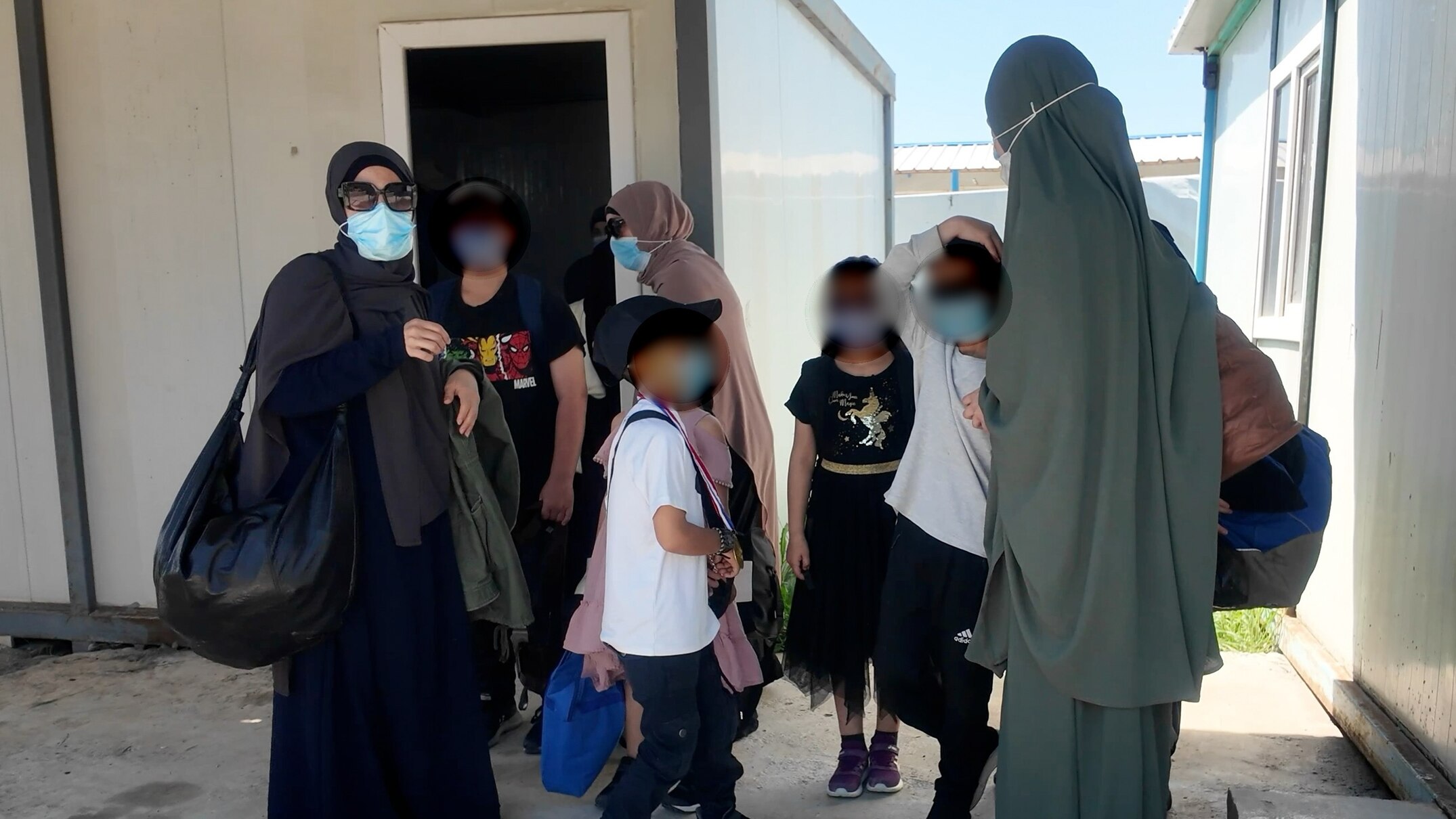
Four Australian women, along with their children and grandchildren, are currently in a state of uncertainty in Syria. They were part of a refugee camp that houses family members of individuals suspected of being affiliated with the Islamic State (IS). These women, who have been living in limbo for years, recently attempted to leave the Al Roj camp in north-east Syria with the intention of heading to Damascus and eventually returning to Australia.
However, their journey has been halted due to strong rhetoric from the Australian government, which has reportedly prevented them from reaching the airport. This has left the group in an uncertain position, unsure of what their next steps will be.
The ABC has uncovered that this group includes three generations of the same family, highlighting the deep-rooted connections and shared experiences that bind them together.
Kawsar Abbas: A Mother’s Struggle
Kawsar Abbas, 54, is originally from Melbourne. She is the wife of Mohammed Ahmad, who ran a charity aimed at supporting people in Syria. The Australian Federal Police had suspicions that this charity was funneling funds to the Islamic State. In 2019, Mohammed Ahmad told the ABC that he and his family became trapped in Syria after traveling from the charity’s headquarters in Turkey to attend the wedding of his son, Omar, in 2014.
Mohammed revealed that shortly after arriving in Syria, he discovered that Omar had pledged allegiance to the Islamic State. He also mentioned that Omar kept a Yazidi slave, whom he claimed was treated well. Despite this, Mohammed insisted he was never a supporter of the Islamic State and was imprisoned in north-east Syria when IS was defeated.
“I would rather be judged in Australia than here,” he said, emphasizing his deep connection to his home country.
In 2019, Kawsar expressed concerns about the health of the children in the camp, particularly during the approaching winter. She warned that the conditions would become even more difficult as the season progressed.
Zahra Ahmed: A Widow’s Plea
Zahra Ahmed, 33, is the eldest daughter of Mohammed and Kawsar Abbas. She is the widow of Muhammad Zahab, a notorious Islamic State recruiter who died in an air strike in 2018. In 2024, Zahra told an SBS documentary that the women had no choice but to follow when some male members of her family joined ISIS.
“I didn’t make this bed,” she stated, expressing her frustration over the decisions made by other family members. She emphasized that the women were forced to suffer for the choices of others and now face the consequences with their children.
In 2019, Zahra and her family told the Sydney Morning Herald that they had been doing humanitarian work in Syria when the Islamic State closed its borders, preventing them from leaving. She urged the Australian government to reach out to them and understand their situation.
Zeinab Ahmed: A Desperate Appeal
Zeinab Ahmed, 31, is the second-eldest daughter of Mohammed and Kawsar Abbas. In 2025, she spoke to the ABC from the Al Roj camp, making an impassioned plea for help. She feared for her safety and the lives of her children, describing the camp as unsuitable for children.
She mentioned that there is a street in the camp called “Australia Street,” where the families live closely together, united by their common goal of returning home. Zeinab also revealed that Australian officials had visited the camp in 2022 to meet with the women and children, conducting interviews and DNA tests.
One of the key figures involved in the repatriation effort was Sydney GP Jamal Rifi, who paid for the passports and delivered them to Syria. Four families were eventually repatriated to Australia, bringing hope to many.
Janai Safar: A Life Changed
Janai Safar, 32, was studying health science in Australia before she left in 2015 to travel to Islamic State-occupied Syria. She had a child in Syria in 2016 and was married to an Islamic State fighter who died in 2017. In 2019, she was among the women met by Four Corners in the Al-Hol camp.
Back then, Janai told the Australian newspaper that she had gotten married after arriving in Syria and stayed at home, taking care of her child. She expressed fear of being treated like a criminal if she ever returned to Australia, despite not being directly involved in any violent acts.
Her father described her as a “stubborn but kind-hearted” woman who posed no threat to Australia. Her grandfather, John Crockett, suggested that it would be better for the families to return to Australia rather than remain in camps in Syria.
A Murky Future
Accompanying the four women are nine children, whose identities the ABC has not disclosed. The ABC understands that 21 Australian women and children still remain in the Al Roj camp. In February, the ABC revealed the identities of all 11 Australian women in the camp after seeing a handwritten list of their names.
Many of these women have spoken to the ABC, including as far back as 2019, when Four Corners gained access to north-eastern Syria. Most of the women have been stuck in Syrian refugee camps since the collapse of Islamic State in 2019. Some of their children were born in camps such as Al Roj.
Many of the women have claimed that they were not supporters of Islamic State but victims, lured into traveling to Syria under false pretences. Legal and human rights groups have also warned that the group, particularly the children, face a grave risk of further radicalisation if left to languish in the camps.
The ABC has made repeated attempts to contact the group, their families, and their supporters, but the situation remains unresolved.