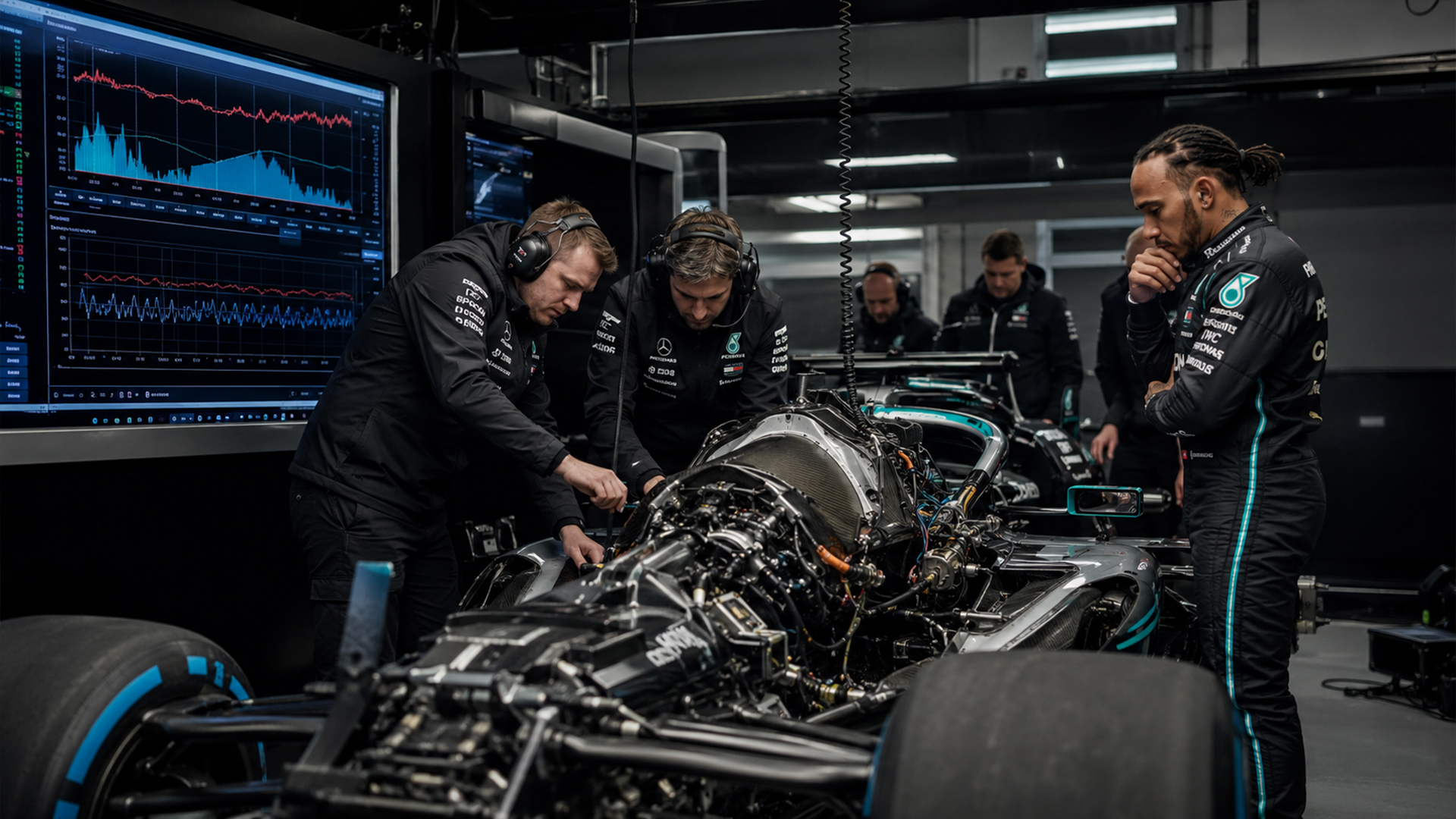
The Evolution of F1 Engine Regulations
Formula 1 has always been a sport of innovation, pushing the boundaries of technology and performance. However, the latest engine regulations have sparked a significant reevaluation of the sport’s direction. Initially designed to showcase the future of Formula 1, these rules have already prompted a rethink among F1 leaders, teams, and power unit manufacturers.
A Shift in Power Unit Balance
In principle, the 2027 power unit regulations are set to undergo a major adjustment. The current rule cycle, which aimed for a near 50-50 split between internal combustion and electric power, is being reconsidered. The planned changes would increase combustion output by around 50kW while reducing electrical output by the same amount, resulting in a balance closer to 60% combustion and 40% electric power.
This shift is intended to make the cars more intuitive to drive, reducing the need for complex energy management that drivers have criticized since the new rules were introduced. The goal is to allow drivers to focus on racing rather than managing energy consumption.
The Challenges of the 50-50 Concept
The original idea of a 50-50 split was based on the desire to incorporate more electrical power, enhance efficiency, and promote sustainable fuels. The 2026-style rules retained the turbocharged V6 but removed the MGU-H and increased the role of the MGU-K, creating a larger electric contribution than previous hybrid eras.
However, this approach led to complications. Drivers found themselves managing energy in ways that felt counterintuitive. Going faster through a corner could leave less battery power available for the following straight, making it difficult to maintain speed throughout the lap. This undermined the natural instinct of attacking the circuit as hard as possible.
Drivers’ Concerns and the Need for Change
Driver feedback has been consistent, with Max Verstappen, Lando Norris, and Fernando Alonso among those expressing concerns about the overemphasis on energy management. The central issue is not abandoning technology, but ensuring that drivers are not punished for driving quickly through corners.
The proposed changes aim to reduce the need for complex energy management, allowing drivers to race more aggressively. By shifting the balance to roughly 60% combustion and 40% electrical energy from 2027, the sport hopes to restore a clearer connection between driver input and lap time.
Beyond Entertainment: Safety and Racing Quality
While the changes may seem like a purely entertainment-focused move, they also address deeper concerns. Energy management affects both racing quality and safety. If cars run out of electrical deployment in awkward places, speed differences can become unpredictable, which matters during overtakes and on circuits with long straights after slower corners.
Recent modifications trialed in Miami have helped build support for the broader 2027 shift. The goal is to ensure that cars behave in a way that drivers can anticipate when fighting wheel to wheel.
Technical Challenges of the New Approach
Increasing combustion power and reducing electric deployment sounds straightforward, but it involves technical complexities. The extra combustion output would come through increased fuel flow, while electric deployment would be reduced from around 350kW to 300kW. This shift could help drivers spend less time managing energy and more time pushing.
However, fuel flow changes can affect more than just the engine map. They may impact fuel consumption, tank size, chassis packaging, cooling, reliability, and how teams design cars around the power unit.
Engineering Headaches and Political Complexities
The 2027 fix could create new engineering challenges. A 60-40 power split is easier to agree on in principle than to deliver in practice. Increasing fuel flow could require larger fuel tanks, affecting chassis design. Such changes may force teams to rethink carryover plans, budget assumptions, and power unit homologation limits.
This is where political and technical complexity begins. A major hardware adjustment for 2027 could disrupt development schedules built around the original rules. Some teams may need to redesign more aggressively, and power unit manufacturers may require regulatory freedom to make the change work without gaining or losing unfair advantages.
Manufacturer Watchfulness and Competitive Balance
Every engine regulation change creates winners and losers. Some manufacturers may have optimized their power units around the original 50-50 framework, while others may welcome a reset. Any change that opens development windows, alters fuel flow, or changes electrical deployment could shift competitive balance.
The final wording of the proposal matters, as the World Motor Sport Council still needs to ratify the plan, and the FIA must turn the broad agreement into regulations that teams and manufacturers can actually design around.
Evidence from Miami and Future Considerations
The timing of the changes is important. F1 had already made some short-term rule tweaks before Miami to reduce extreme energy-management problems. These changes were seen as a step in the right direction, but not a complete solution. Further 2026 tweaks were discussed alongside the broader 2027 hardware changes, suggesting a two-stage approach.
First, patching the current regulations to keep racing workable. Then, making deeper hardware changes in 2027 to address the underlying balance between combustion and electric power.
The Broader Engine Debate
The 2027 change is not the only engine debate in Formula 1. FIA president Mohammed Ben Sulayem has pushed for a return to V8 engines, possibly by 2030 or 2031, with simpler technology, more noise, less weight, and limited electrification. This puts the 2027 tweak in a wider context, as F1 is re-evaluating how much hybrid complexity it wants in the long run.
The Real Lesson: Driver Feel
The most important point is not the exact numbers of combustion and electric power, but driver feel. Formula 1 cars are technical machines, but they still need to reward the best drivers in a way that feels logical. A driver should be able to brake late, carry speed, commit to throttle, and fight another car without feeling that the power unit strategy is working against the act of racing.
A Correction Over Pride
The 2027 engine change is an admission that the current balance went too far. It does not mean the hybrid concept has failed completely. F1 still wants sustainable fuel, electrical power, and modern relevance. But the sport is now acknowledging that a racing car cannot be judged only by energy targets and manufacturer appeal.
It has to race properly. The planned shift toward more combustion power and less electric dependence should make the cars easier to attack with, easier to race against, and less frustrating for drivers. The challenge now is turning that principle into regulations that are fair, practical, and ready in time.
Formula 1 tried to build a future around a near-even split between combustion and electricity. By 2027, it appears the sport wants that future to feel more like racing again.