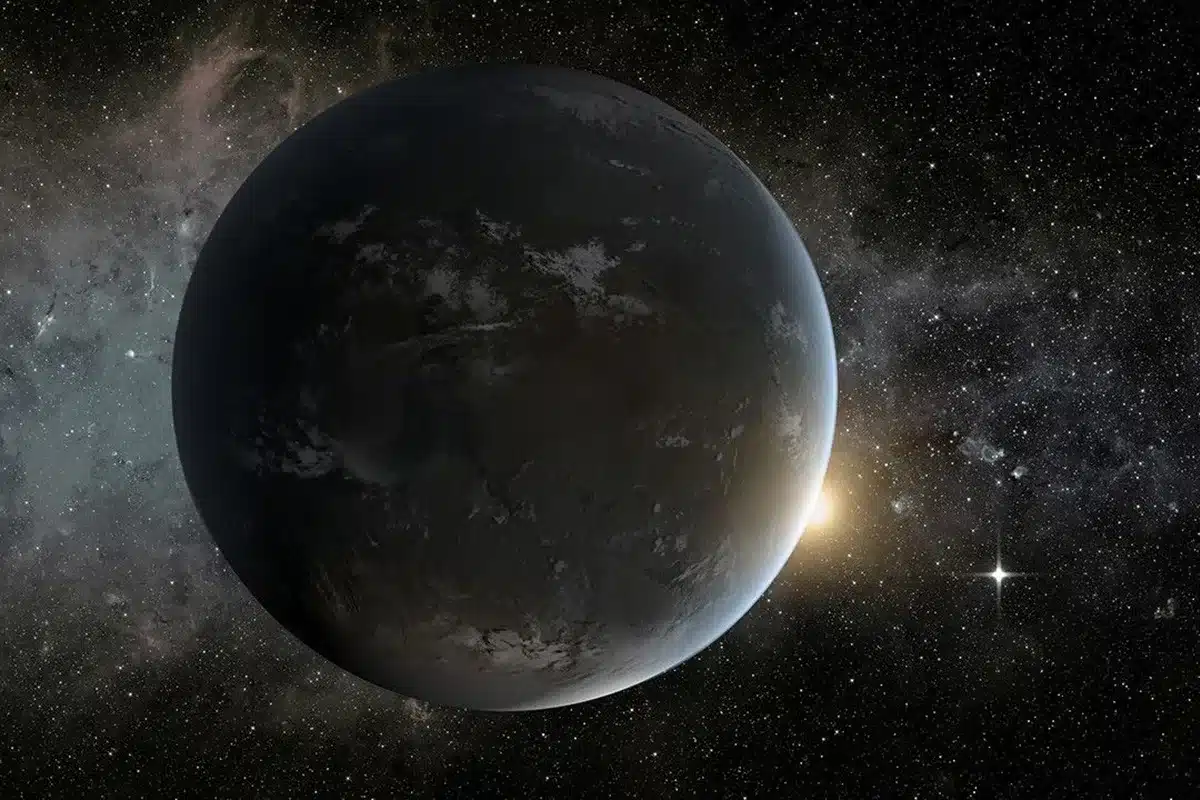
Astronomers have made a groundbreaking discovery, identifying a new class of exoplanet that defies all previous understanding. This finding, published in the journal Nature, reveals a world rich in sulfur and covered in molten material, offering scientists an entirely new perspective on planetary diversity.
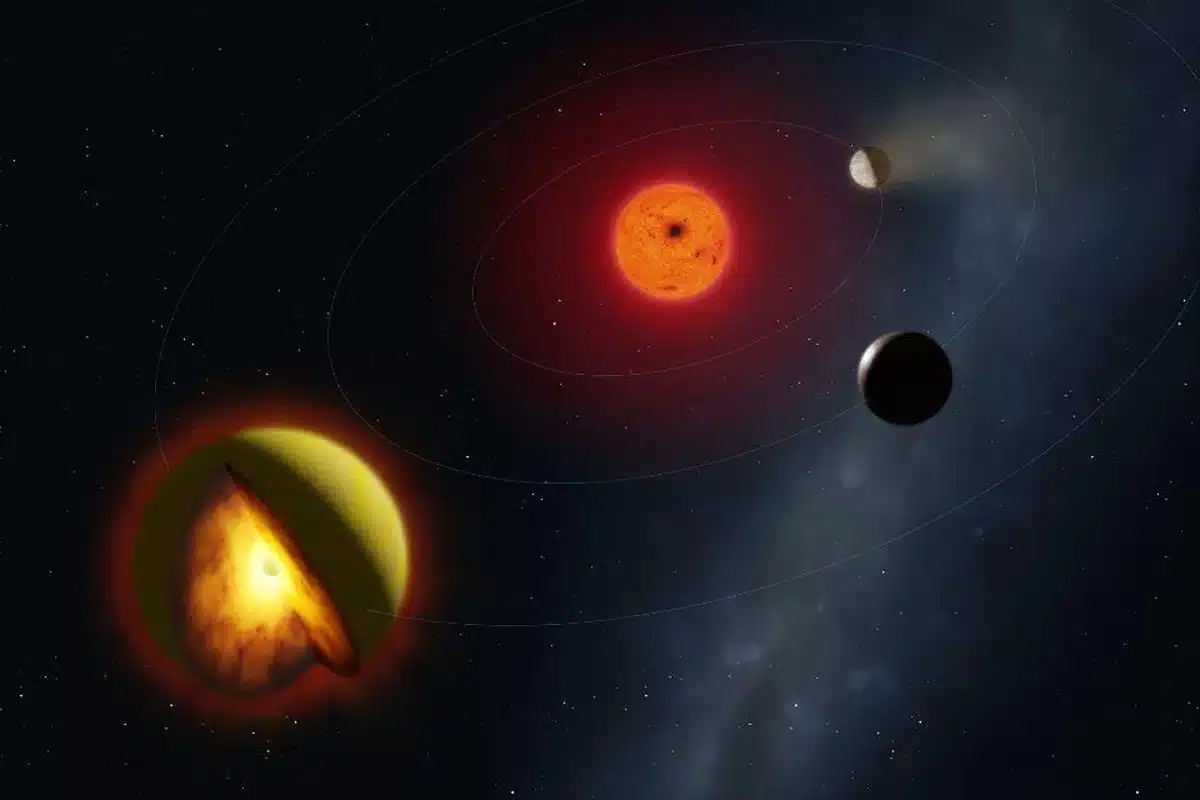
The newly discovered exoplanet, named L 98-59 d, is located 35 light-years away in the constellation Volans. It presents a unique set of characteristics that challenge existing classifications of planets beyond our solar system. Unlike Earth, where solid crust and liquid water dominate, L 98-59 d has a mantle composed entirely of molten silicate material, similar to lava found on Earth. The planet’s surface remains continuously heated due to a thick, sulfur-rich atmosphere that creates a powerful greenhouse effect, preventing it from cooling. This has allowed for the existence of a global magma ocean over billions of years, making it a truly one-of-a-kind discovery.
A Planet Unlike Any Other
L 98-59 d challenges everything astronomers thought they knew about exoplanets. Its composition and structure are unlike any other known planet, raising questions about how such a world could form and evolve. The planet’s dense atmosphere and high temperatures make it inhospitable to life as we know it, but its existence highlights the incredible variety of planetary systems in the universe.
Dr. Harrison Nicholls, lead author of the study from the University of Oxford, explains, “This discovery suggests that the categories astronomers currently use to describe small planets may be too simple.” He adds, “While this molten planet is unlikely to support life, it reflects the wide diversity of the worlds which exist beyond the Solar System. We may then ask: what other types of planet are waiting to be uncovered?”
New Insights Into Planetary Evolution
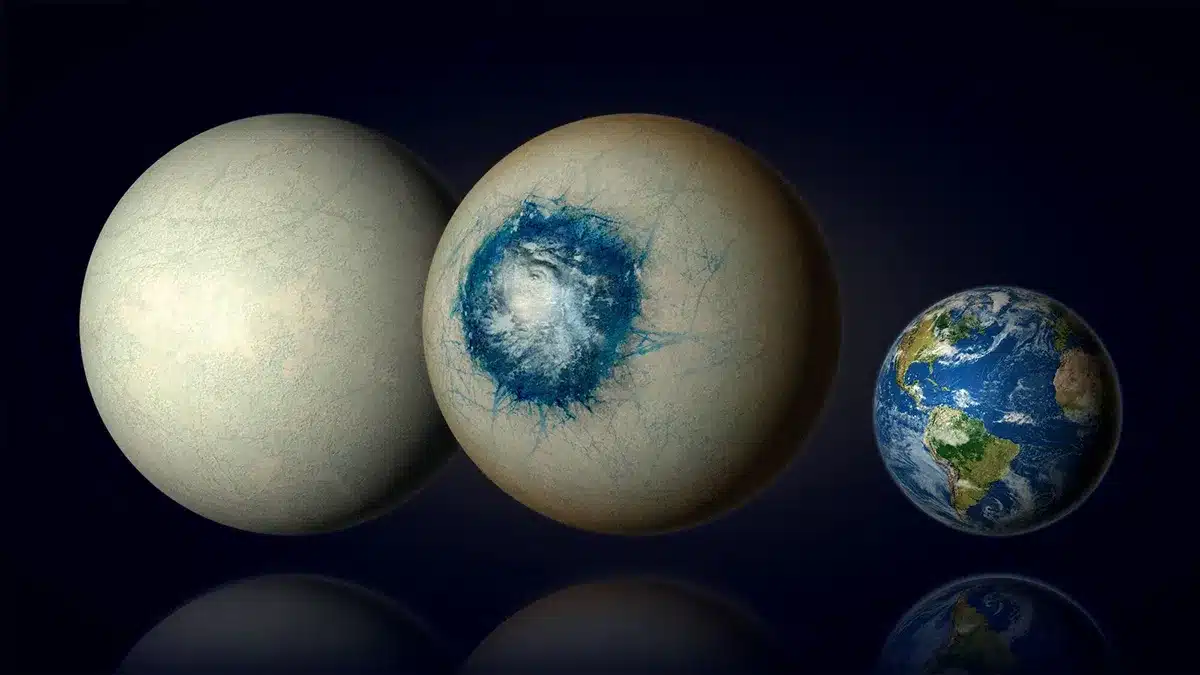
The research, published in Nature, combined advanced computer models with observational data to explore the formation and evolution of L 98-59 d. According to the findings, the planet initially resembled a sub-Neptune but has since undergone significant changes, shrinking and losing some of its primordial atmosphere. This makes it distinct among exoplanets in terms of size and composition.
Its low density also challenges current theories about what planets in this size range should look like, marking it as an anomaly in the field of exoplanet studies. Professor Raymond Pierrehumbert, a co-author of the study, notes, “What’s exciting is that we can use computer models to uncover the hidden interior of a planet we will never visit.”
The study represents a major step forward in understanding the composition of distant planets through indirect measurements. By reconstructing the planet’s deep past, scientists can gain insights into the processes that shape planetary systems without needing to send spacecraft to explore them directly.
The Future of Exoplanet Discovery
Although L 98-59 d is an extraordinary find, it is just the beginning of what could be a new era in exoplanet discovery. As next-generation telescopes come online, astronomers expect to uncover more worlds with similar characteristics. These future discoveries may revolutionize how we categorize and understand planets, revealing that our current models are far too simplistic.
Professor Pierrehumbert concludes, “Although astronomers can only measure a planet’s size, mass and atmospheric composition from afar, this research shows that it is possible to reconstruct the deep past of these alien worlds – and discover types of planets with no equivalent in our own Solar System.”
As the search for exoplanets continues, the discovery of L 98-59 d serves as a reminder of the vast and unexplored diversity of worlds that exist beyond our own. With each new finding, scientists are one step closer to understanding the complex and fascinating nature of planetary systems across the universe.