A Young Innovator’s Journey to Create Water-Absorbing Concrete
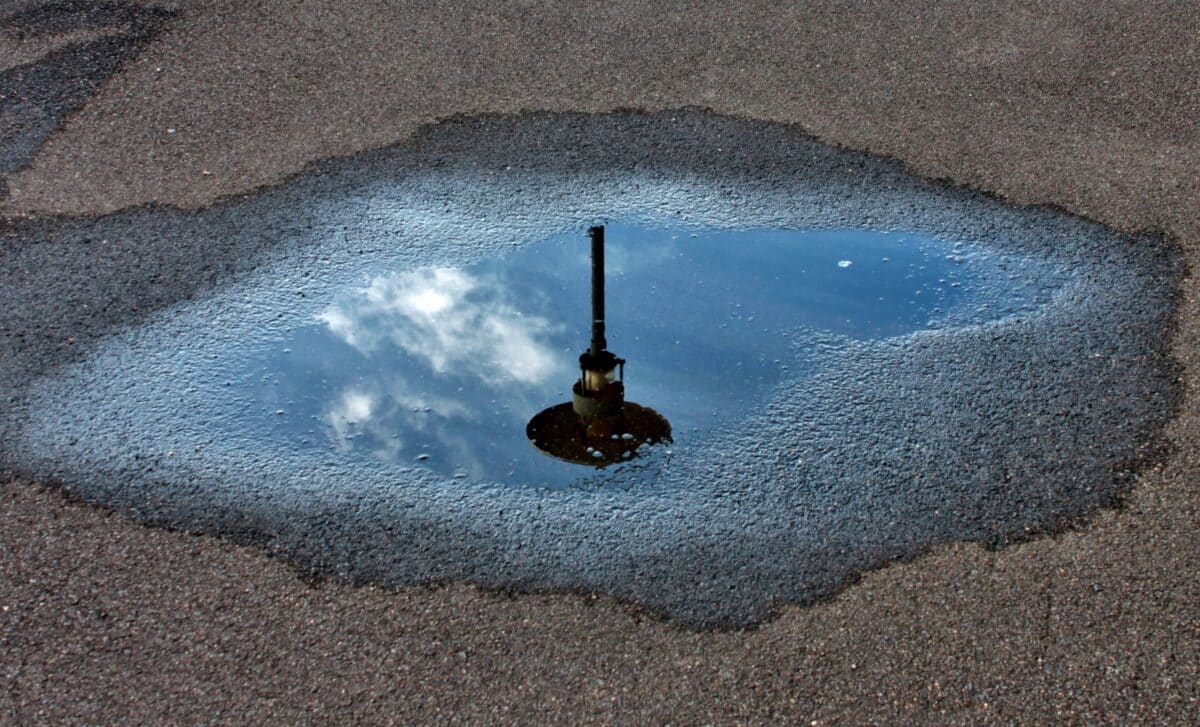
After witnessing floodwater spill from a driveway into the street during a storm in Miami, sixth grader Luca Durham began searching for a way to make concrete absorb water instead of pushing it away. His experiments with porous materials and recycled waste products eventually led to a new concrete mixture that earned him the Lemelson Early Inventor Prize at the South Florida Science and Engineering Fair.
As explained in a release published online on September 29, 2025, by the Society for Science, the project focused on improving porous concrete, a material designed to let water pass through it but often criticized for durability problems and clogging. Hoping to create a stronger and more reliable alternative, he experimented with sustainable additives capable of improving drainage while reusing discarded materials.
A Stone Bathmat Sparked The Central Idea
The project started with a simple observation close to home. During heavy rainfall, Luca noticed that water from a neighbor’s flooded driveway flowed into the road, making driving difficult. That experience pushed him to investigate whether sidewalks and driveways could be redesigned to better handle stormwater. And one of his main discoveries came from an object he encountered daily.
According to Society for Science, the student became interested in diatomaceous earth after noticing how quickly his stone bathmat absorbed water after a shower. He later learned that the material comes from fossilized algae and is known for its absorbent properties.
“One day, after taking a shower, I stepped on my stone bathmat and noticed how fast it absorbed the water from my feet,” he explained. “It was kind of like a sponge, and I wanted to know what it was made from. I found out it was made from diatomaceous earth, which comes from tiny, fossilized algae.”
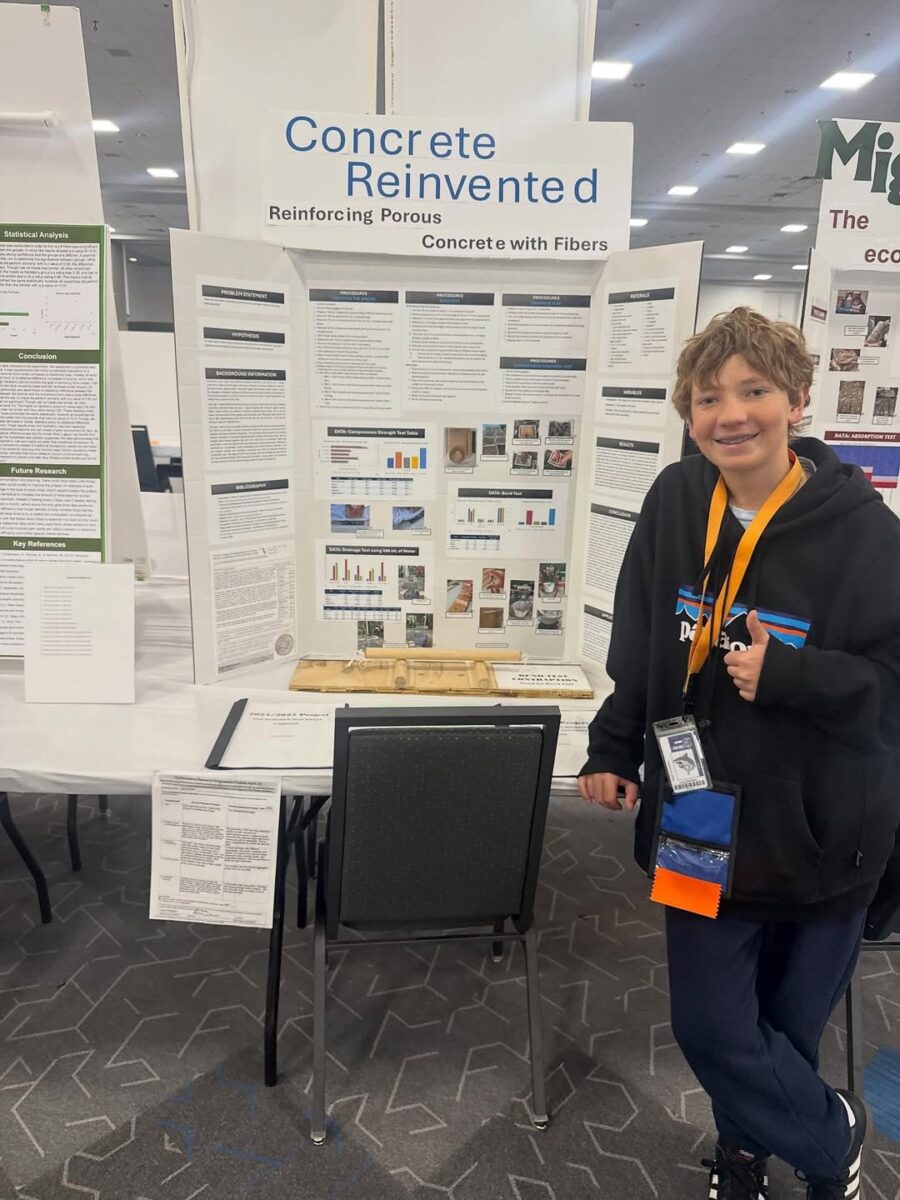
That observation led him to wonder whether diatomaceous earth could be added to concrete to increase water absorption while preserving strength. The idea became the basis for the next phase of his experiments.
“I wanted to find additives that could help concrete drain water but still be strong. I also looked for materials that were sustainable or things people usually throw away, because I wanted my project to help both people and the environment,” he added.
Shells, Charcoal and Gravel Were Tested as Additives
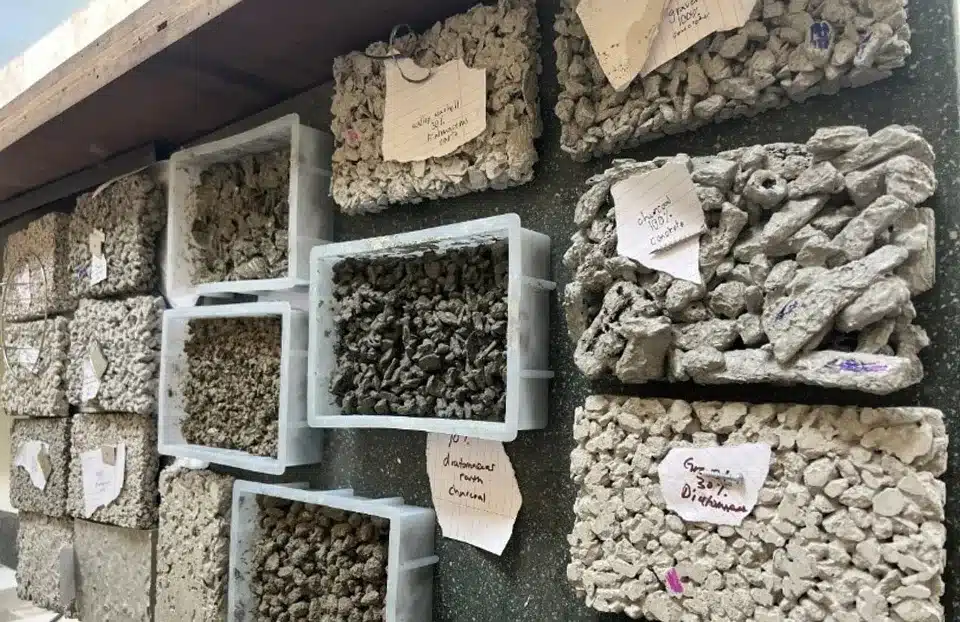
Luca then began testing several materials with different physical properties. He chose crushed oyster shells and seashells because their shapes create tiny openings inside concrete, allowing water to move more easily through the structure. He also added charcoal, which he described as porous and capable of filtering water. Gravel was included because it is already commonly used in porous concrete to improve durability and drainage.
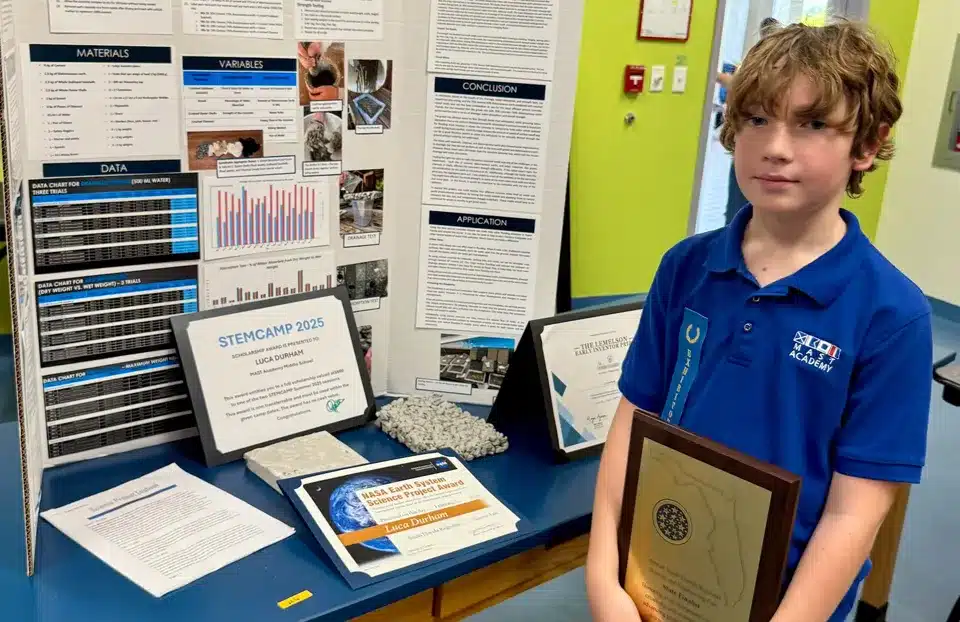
As explained by the same source, he tested each combination for drainage, absorption and strength. His initial hypothesis predicted that a mix containing 30% diatomaceous earth and 70% cement with shells would perform best. The results turned out slightly differently. The strongest-performing mixture combined 30% diatomaceous earth with 70% cement and gravel.
“This project shows that using sustainable materials in concrete can help reduce flooding, improve water drainage and create a more environmentally friendly infrastructure.”
Trial And Error Became Part Of The Process
The experiments were not always successful. The student said some early tests failed because he used incorrect ratios between cement and additives. He also struggled to make all the shell and charcoal pieces the same size, which affected consistency during testing. Despite those setbacks, he stated that the project remained exciting because it allowed him to observe how different materials changed the concrete’s performance.
“I loved seeing the science in action and figuring out which materials made the biggest difference,” Luca said, according to Society for Science. “But the best part was realizing that I might have created something no one has ever tried before.”
The middle schooler said he now plans to continue improving the material by adding carbon fiber strips to help the concrete support more weight while maintaining its drainage properties.
“My dream is to create a sidewalk material that is strong, eco-friendly, and helps keep streets from flooding,” he concluded.