Global Health Alert: Ebola Outbreak Declared a Public Health Emergency
In a recent development, the World Health Organization (WHO) has declared the ongoing Ebola outbreak in the Democratic Republic of Congo (DRC) and Uganda as a public health emergency of international concern. This decision highlights the urgency of the situation and the need for coordinated global efforts to contain the spread of the virus.
Key Details About the Outbreak
The Africa Centres for Disease Control and Prevention (Africa CDC) first confirmed the new Ebola outbreak in the Ituri province of DRC on Friday. By Saturday, there had been 336 suspected cases and 88 deaths reported, with all cases currently confined to DRC, except for two cases in neighboring Uganda.
This particular outbreak is caused by the Bundibugyo virus, a rare variant of the Ebola virus that does not have any approved therapeutics or vaccines. This makes it particularly challenging to manage compared to other strains.
Although DRC and Uganda have experienced over 20 Ebola outbreaks, this is only the third time the Bundibugyo virus has been reported. The previous occurrences were in 2007-2008 in Uganda and 2012 in DRC.
Understanding the WHO’s Emergency Declaration
The WHO’s emergency declaration is not equivalent to a pandemic emergency like the one seen during the COVID-19 crisis. It serves as a call to action for donor agencies and countries to support the affected regions. However, the effectiveness of such declarations has varied in the past.
For example, during the 2024 mpox outbreak in DRC and other parts of Africa, the WHO’s emergency declaration did not significantly speed up the delivery of essential supplies like diagnostic tests, medicines, and vaccines.
The Outbreak’s Origin and Spread
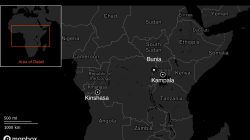
The outbreak began in a remote area known as Mongwalu health zone, which is located in the eastern part of DRC’s Ituri province. This region is a high-traffic mining area, contributing to the initial spread of the virus.
As patients sought medical care, the cases migrated to Rwampara and Bunia health zones, enabling the spread across three health zones. These areas include Mongwalu and Bunia, the capital city of Ituri province.
Ituri is situated in a remote part of DRC, characterized by poor road networks and is more than 1,000 kilometers away from Kinshasa, the nation’s capital.
Geographical Concerns and Risks
One major concern is the proximity of the affected areas to Uganda and South Sudan. Bunia, the main city in Ituri, is near the border with Uganda, increasing the risk of cross-border transmission.
Additionally, the Africa CDC has highlighted the risk of further spread due to intense population movement and attacks by armed groups that have killed dozens and displaced thousands in parts of Ituri over the past year.
There are also gaps in contact tracing, as local authorities work to identify those who may have been exposed to the virus.
An Unusual Strain of Ebola
The Bundibugyo virus, responsible for this outbreak, is rare and different from the more commonly encountered Ebola Zaire strain. It was first detected in Uganda’s Bundibugyo district during a 2007-2008 outbreak that resulted in 37 deaths out of 149 cases. The second occurrence was in 2012 in Isiro, DRC, where 57 cases and 29 deaths were reported.
According to the WHO, the Ebola disease is caused by a group of viruses, with three types known to cause large outbreaks: the Ebola virus, the Sudan virus, and the Bundibugyo virus.
Dr. Gabriel Nsakala, a professor of public health with experience in managing past Ebola outbreaks in DRC, noted that treatments for viral infections like Ebola often focus on managing symptoms. He emphasized that while DRC has extensive experience dealing with Ebola, the unusual strain could complicate response efforts.
Urgent Measures to Contain the Outbreak
Following the confirmation of the outbreak on Friday, the Africa CDC convened an urgent high-level coordination meeting with health authorities from DRC, Uganda, and South Sudan, along with key partners including U.N. agencies and other countries.
The meeting focused on immediate response priorities, cross-border coordination, surveillance, safe and dignified burials, and resource mobilization. On Saturday, Africa CDC Director-General Dr. Jean Kaseya outlined several key response measures, including resource mobilization, deployment of multidisciplinary teams at border crossing points, isolation of high-risk contacts, enhancement of surveillance, and contact listing and follow-up.
Logistical Challenges in DRC
Congo, being Africa’s second-largest country by land area, often faces logistical challenges in responding to disease outbreaks due to poor road networks and long distances. During last year’s three-month outbreak, the WHO faced significant challenges in providing vaccines, with delivery taking a week after the outbreak was confirmed.
Funding has also been problematic. While the WHO has released $500,000 to support the response, and the Africa CDC has mobilized $2 million, these amounts are considered a small fraction of what is urgently needed.
During last year’s outbreak, concerns were raised about the impact of U.S. funding cuts by the Trump administration. The U.S. had previously supported responses to DRC’s past Ebola outbreaks, including in 2021, when the U.S. Agency for International Development provided up to $11.5 million to support efforts across Africa.
How Ebola is Transmitted
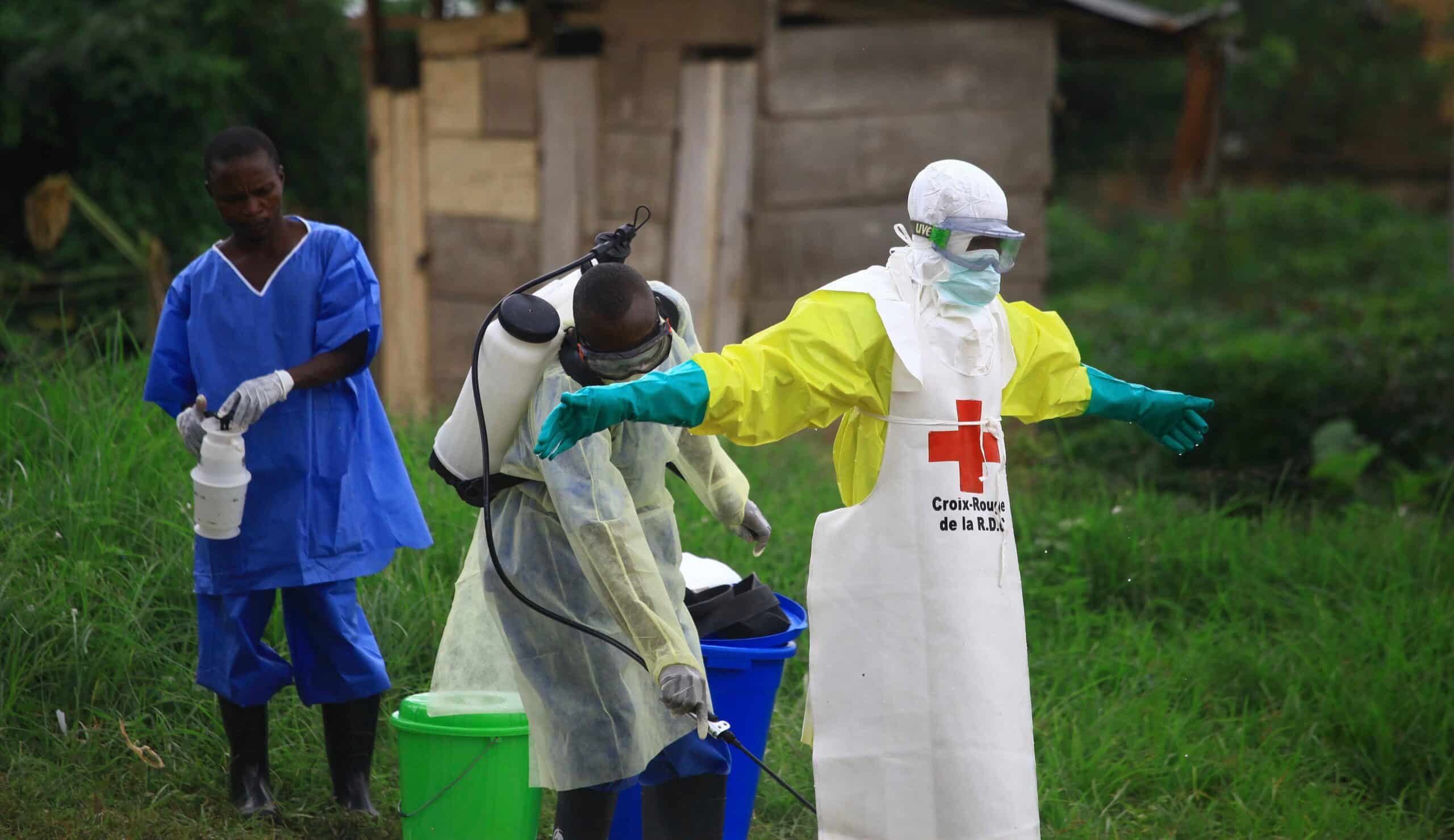
The Ebola virus is highly contagious and can be transmitted to people from wild animals. It spreads among humans through contact with bodily fluids such as vomit, blood, or semen, and with surfaces and materials contaminated with these fluids.
The disease it causes is a rare but severe and often fatal illness in humans. Symptoms include fever, vomiting, diarrhea, muscle pain, and at times internal and external bleeding.
The virus was first discovered in 1976 near the Ebola River in what is now DRC. The first outbreaks occurred in remote villages in Central Africa, near tropical rainforests.