Understanding the Ebola Outbreak in the Democratic Republic of Congo and Uganda
The World Health Organization (WHO) has declared the ongoing Ebola outbreak in the Democratic Republic of Congo (DRC) and Uganda a “public health emergency of international concern.” This decision follows reports of at least 80 deaths linked to the outbreak. While the WHO did not classify this as a pandemic, it emphasized that the situation could escalate significantly.
Experts highlight that the current strain of the virus is not the most infectious, but the high mortality rate is due to the affected regions’ limited resources. Here’s what we know about the outbreak and its implications.
What is Ebola?
Ebola disease is a severe, often fatal illness caused by a group of viruses known as orthoebolaviruses. There are six identified types, with three causing large outbreaks:
- Ebola virus (EBOV) causing Ebola virus disease (EVD)
- Sudan virus (SUDV) causing Sudan virus disease (SVD)
- Bundibugyo virus (BDBV) causing Bundibugyo virus disease (BVD)
The current outbreak in Uganda and DRC is caused by the Bundibugyo virus. Named after a village on the Ebola River in the DRC, the virus was first discovered in 1976 during two simultaneous outbreaks—one in Nzara (now South Sudan) and one in Yambuku (now DRC).
What is the Bundibugyo Strain?
The Bundibugyo strain is a specific variant of the Ebola virus. According to the WHO, there have been two previous outbreaks of this strain. This current outbreak is particularly concerning because there are no approved therapeutics or vaccines specifically for the Bundibugyo strain, unlike for other strains such as the Ebola-Zaire strain.
Amanda Rojek, associate professor of health emergencies at the Pandemic Sciences Institute, University of Oxford, noted that “Bundibugyo has fewer proven countermeasures than Zaire ebolavirus, where vaccines have been highly effective in controlling outbreaks.”
Professor Raina MacIntyre, an epidemiologist from the University of New South Wales, stated that while the strain is not the most severe, it has a fatality rate of around 30% among infected individuals. She also mentioned that the number of cases could be higher than reported, with estimates suggesting over 300 infections.
Where Have Cases Been Recorded?
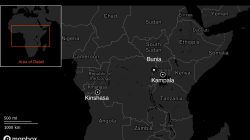
The UN health agency has reported cases in the DRC’s Ituri province across at least three health zones: Bunia, Rwampara, and Mongbwalu. In Uganda, laboratory-confirmed cases have been recorded in Kampala, the capital city.
Jean Kaseya, director-general of the Africa Centres for Disease Control and Prevention, noted that the first cases were reported in Mongwalu, a high-traffic mining area. Patients seeking medical care in other areas contributed to the spread across multiple health zones.
Recent reports suggest that several Americans in the DRC may have had high-risk exposure to suspected cases, with at least one individual possibly developing symptoms.
Symptoms of Ebola
The onset of symptoms typically occurs between eight to 10 days after infection. Initial symptoms include:
- Fever
- Malaise
- Muscle pain
- Headache
- Sore throat
These are followed by more severe symptoms such as:
- Vomiting
- Diarrhoea
- Abdominal pain
- Rash
- Impaired kidney and liver function
While internal and external bleeding can occur, it is less common and usually appears later in the disease. Some patients may experience confusion, irritability, and aggression due to the impact on the central nervous system.
Diagnosis and Treatment
Ebola is typically diagnosed through blood tests. Additional tests may involve urine samples or nasal/throat swabs.
For the most common type of Ebola, EVD, the WHO recommends the use of two monoclonal antibody treatments. However, the current outbreak involves the Bundibugyo virus, which lacks a specific vaccine or treatment.
Transmission of Ebola
The virus spreads through direct contact with bodily fluids of an infected person or animal, including fruit bats, monkeys, and apes. Sexual contact and contaminated needles can also transmit the virus. Funeral rituals involving touching the body of a deceased person are another significant transmission route.
Healthcare workers are at high risk, especially if they are not fully protected with proper personal protective equipment (PPE).
Is Ebola in Australia?
Australia has never recorded a case of Ebola. The Australian Centre for Disease Control states that if there is a major outbreak overseas, the government may implement additional measures, such as monitoring travelers and displaying information at airports and ports.
Why Is It Not a Global Pandemic?
Professor Paul Griffin, an infectious diseases expert at the University of Queensland, explained that while the outbreak is serious, it does not pose a pandemic threat. “Ebola is not all that easily transmissible,” he said. However, the outbreak spans multiple jurisdictions, raising concerns about potential international spread.
What Does the WHO Declaration Mean?
The WHO’s declaration of a public health emergency of international concern aims to mobilize donor agencies and countries to take action. It signals the seriousness of the situation, the risk of international spread, and the need for a coordinated global response.
The WHO will convene an emergency committee to advise on the regional response to the outbreak. As the situation evolves, continued vigilance and international cooperation will be essential to contain the spread of the virus.