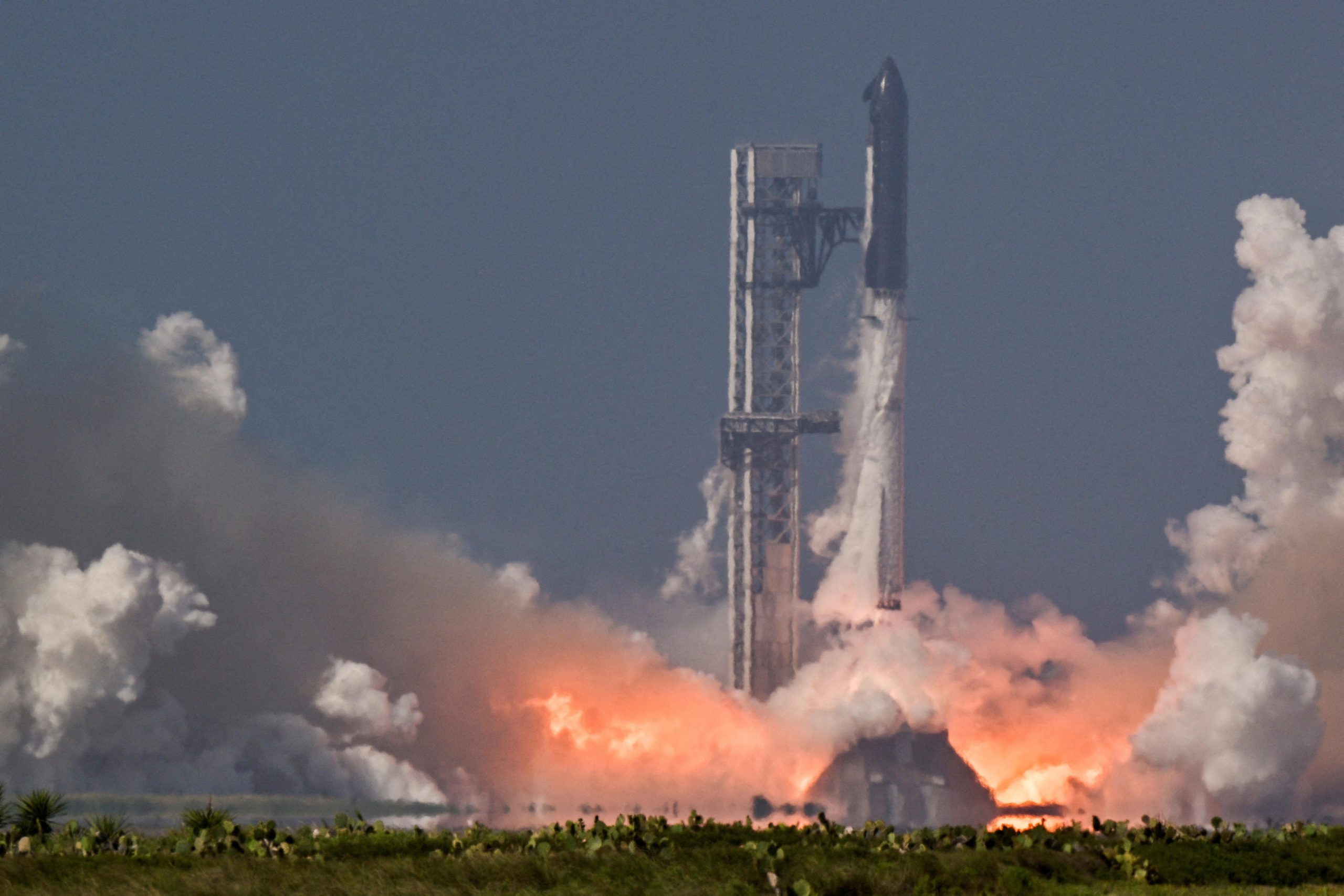
SpaceX’s colossal Starship rocket has been temporarily grounded as the commercial spaceflight company delves into an investigation following its most recent test flight. The Federal Aviation Administration (FAA), which is responsible for licensing commercial rocket launches, disclosed on May 27 that a “mishap” occurred during an hourlong spaceflight from South Texas. This marks the first time the FAA has officially acknowledged an issue with the rocket since its launch on May 22, which was the 12th test flight of the Starship since April 2023.
The world’s largest rocket launched successfully from South Texas and reached space, but the first-stage booster, known as Super Heavy, experienced a performance failure. This led to an uncontrolled landing off the Gulf Coast. Despite this setback, the second stage vehicle managed to achieve most of its planned objectives.
Here’s what you need to know about SpaceX’s investigation into the most recent Starship launch, referred to by the company as flight 12.
What Happened on Starship Flight 12?
Billionaire entrepreneur Elon Musk’s SpaceX launched its Starship rocket on May 22 from its Starbase facility near the U.S.-Mexico border. The rocket was powered by 33 of SpaceX’s Raptor-class engines, which provided the initial thrust at liftoff. After separating from the upper stage minutes after launch, the booster made a water landing in the Gulf of Mexico, which was renamed the Gulf of America under an executive order.
The upper stage, however, had a much longer journey. Using its own six Raptor engines, it flew halfway around the world before landing and exploding in the Indian Ocean. During the flight, Starship successfully deployed 20 mock versions of SpaceX’s Starlink satellites and two modified satellites that, in a historic first, captured images of the rocket as it ascended into space.
FAA Grounds Starship as SpaceX Investigates Super Heavy Mishap
This time, SpaceX pushed the performance of the Super Heavy booster beyond previous limits, so the company did not attempt to return and land it at the launch site, as it had done in March 2025. While the vehicle landed off the Gulf Coast as planned, SpaceX admitted that the booster failed to reignite its engines during a procedure called a partial boostback burn. This resulted in what SpaceX described as a “hard splashdown” in the gulf.
Now, the FAA, which licenses commercial rocket launches, is requiring SpaceX to conduct a full investigation into what it has classified as a “mishap.” Although the failure of the Super Heavy booster did not cause any damage or injuries, the investigation aims to determine what went wrong and implement corrective actions. Starship will remain grounded until the investigation is complete and the FAA approves SpaceX’s final report.
What Is a Mishap Investigation?
The FAA mandates mishap investigations whenever something goes wrong—or doesn’t go as planned—during a spaceflight. These investigations are crucial for ensuring safety and identifying areas for improvement. Even though no harm was caused in this case, the process allows SpaceX to analyze the failure and make necessary adjustments before resuming operations.
What Is Starship? The World’s Largest Rocket Bound for the Moon and Mars
The flight test marked the debut of SpaceX’s third-generation prototype of Starship. Standing at 407 feet tall when fully stacked, the new iteration of Starship, known as Version 3 (V3), is the largest and most powerful rocket SpaceX has ever launched.
Like previous designs, the fully integrated Starship spacecraft consists of a 236-foot-tall lower-stage booster called Super Heavy and a 171-foot-tall upper stage simply named Starship. If all goes according to plan, Starship Version 3 is expected to be the first to reach orbit. SpaceX is developing the prototype to be capable of refueling mid-flight through a complex process involving two Starships meeting in orbit to transfer propellant.
This capability is essential for Starship to reach distant destinations, including serving as a lunar lander for NASA’s Artemis moon missions and potentially transporting humans to Mars.