
Ice Pops Recall Due to Potential Health Risks
Ice pops are being removed from shelves in four US states after officials raised concerns about the presence of ingredients that could lead to behavioral issues and cellular damage. The recall involves 16 flavors of De Dios’ Ice Pops, a company based in New Jersey. These frozen treats include popular options such as mango and pina colada.
The U.S. Food and Drug Administration (FDA) has warned that the ice pops may contain dyes like Yellow 5 or Red 40, which are not listed on the product labels. These additives are used to give foods vibrant colors but have been associated with hyperactivity in some children. Additionally, laboratory and animal studies suggest these dyes may cause cellular damage, potentially increasing the risk of certain cancers.
In addition to the dyes, the ice pops may also contain milk, pecans, or pistachios, which are not disclosed on the label. These ingredients can trigger severe allergic reactions in individuals who are sensitive to them.
The recalled products were available in New Jersey, New York, Pennsylvania, and Connecticut, and were sold up until the end of last month. Consumers are advised to check their freezers for any De Dios’ Ice Pops and either dispose of them or return them to retailers for a full refund. To date, no illnesses have been reported in connection with this recall.
It is important to note that ice pops purchased in May are not part of the recall, as the company has since updated its manufacturing processes. 
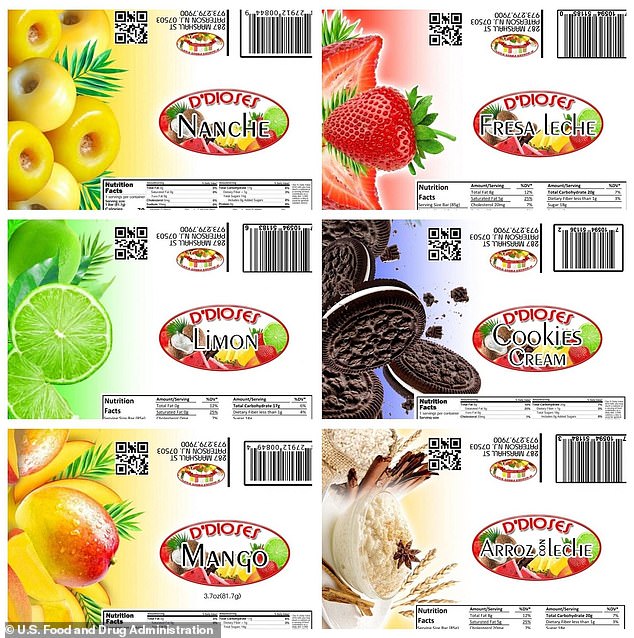
The recalled ice pops were sold in 3.7oz packages through various retailers across the four states. The affected flavors include coco, fresa con leche, arroz con leche, mamey, guayaba, vanilla, rompope, nuez, pistachio, cookies and cream, pina colada, limon, grosella, mango, tamarindo, and nanche.
The FDA initiated the recall following an inspection of the company’s manufacturing processes, which raised concerns about potential contamination. De Dios was said to have “immediately implemented corrected processes” to prevent future contamination. However, the specific manufacturing errors were not detailed by investigators.
It remains unclear whether the food dyes have been added to the labels or removed from the products. Despite this, the FDA classifies these dyes as Generally Recognized as Safe (GRAS) for use in food. However, emerging research is beginning to question this classification.
Consumers with questions about the recall are encouraged to contact De Dios directly.
Common Allergies in the United States
Approximately 1.5 million Americans have a milk allergy, while up to 3 million suffer from a pecan allergy—among the most common allergies in the country. Up to 330,000 people have a pistachio allergy. In some cases, even minimal exposure to these allergens can trigger severe reactions.
Allergic reactions can manifest in various ways, including hives, wheezing, itching, or tingling around the lips or mouth. Coughing or shortness of breath may also occur. In severe cases, anaphylaxis—a life-threatening reaction where the airways narrow and can block breathing—may develop.
Allergies occur when the immune system mistakenly identifies a substance as a threat and attacks it, leading to the symptoms. About 82 million people in the United States suffer from at least one allergy, highlighting the importance of careful ingredient labeling and consumer awareness.