Survivors have shared their harrowing stories of fighting the Bundibugyo strain of the Ebola virus, a strain for which no approved medicine or vaccine currently exists. The situation in Congo has escalated into an outbreak, with at least 282 confirmed cases reported so far.
The central African nation’s health ministry states that the majority of these cases—264 in total—are concentrated in the eastern Ituri province. The outbreak, which began several weeks ago, has led to over 1,000 suspected infections. According to government data, the disease has now spread across 22 health zones in three eastern provinces.
Despite efforts by the World Health Organization (WHO) to highlight progress, such as new supply deliveries to under-resourced health centers, significant challenges remain. The health ministry identifies early detection, rapid isolation of cases, rigorous contact tracing, safe and dignified burials, and strengthening infection prevention and control in medical facilities as critical hurdles in containing the crisis in this remote region.
Meanwhile, the Coalition for Epidemic Preparedness Innovations announced it would commit up to $62 million to accelerate the development of three experimental vaccines targeting the Bundibugyo strain. These vaccines are being developed by the International AIDS Vaccine Initiative, Moderna, and the University of Oxford.
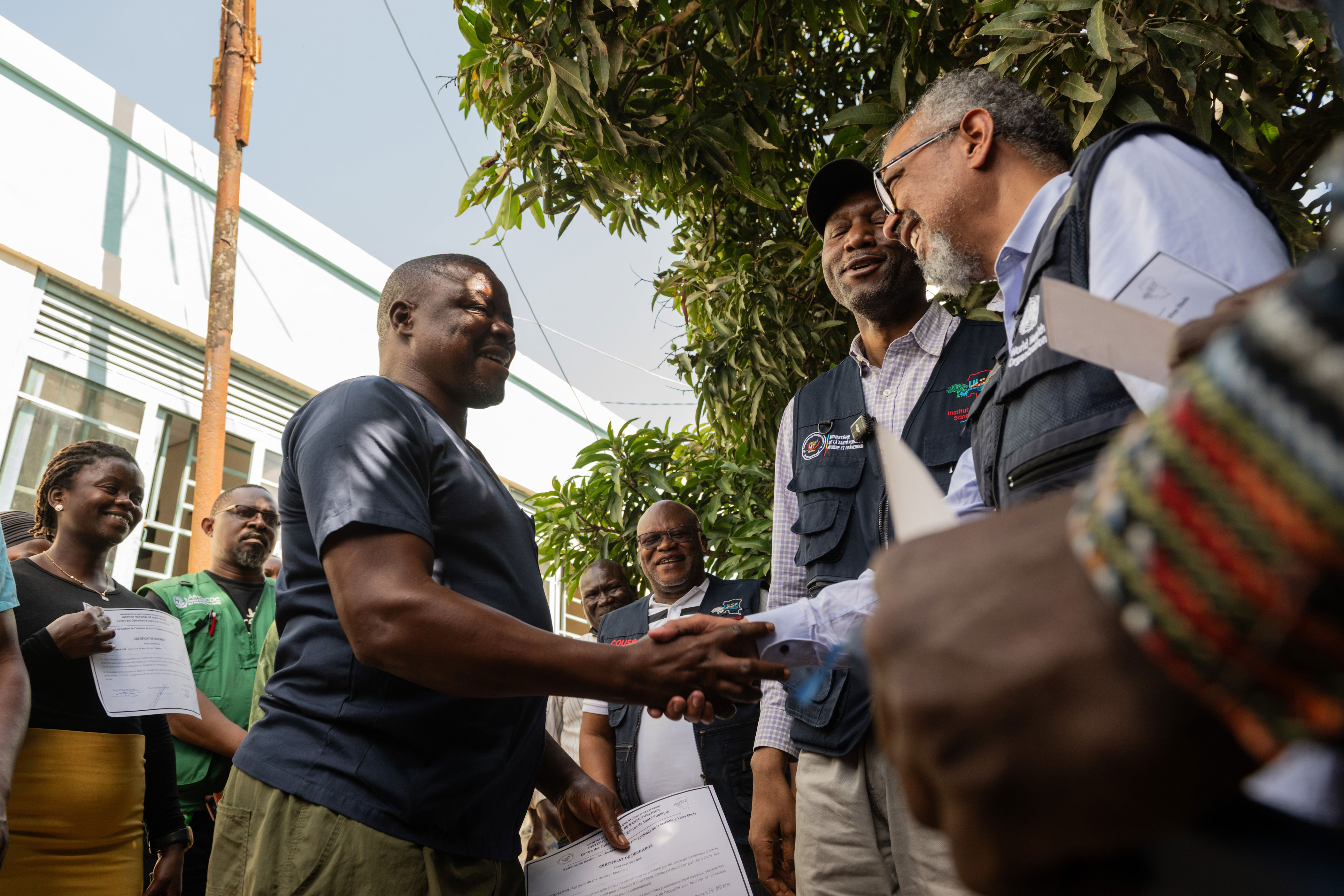
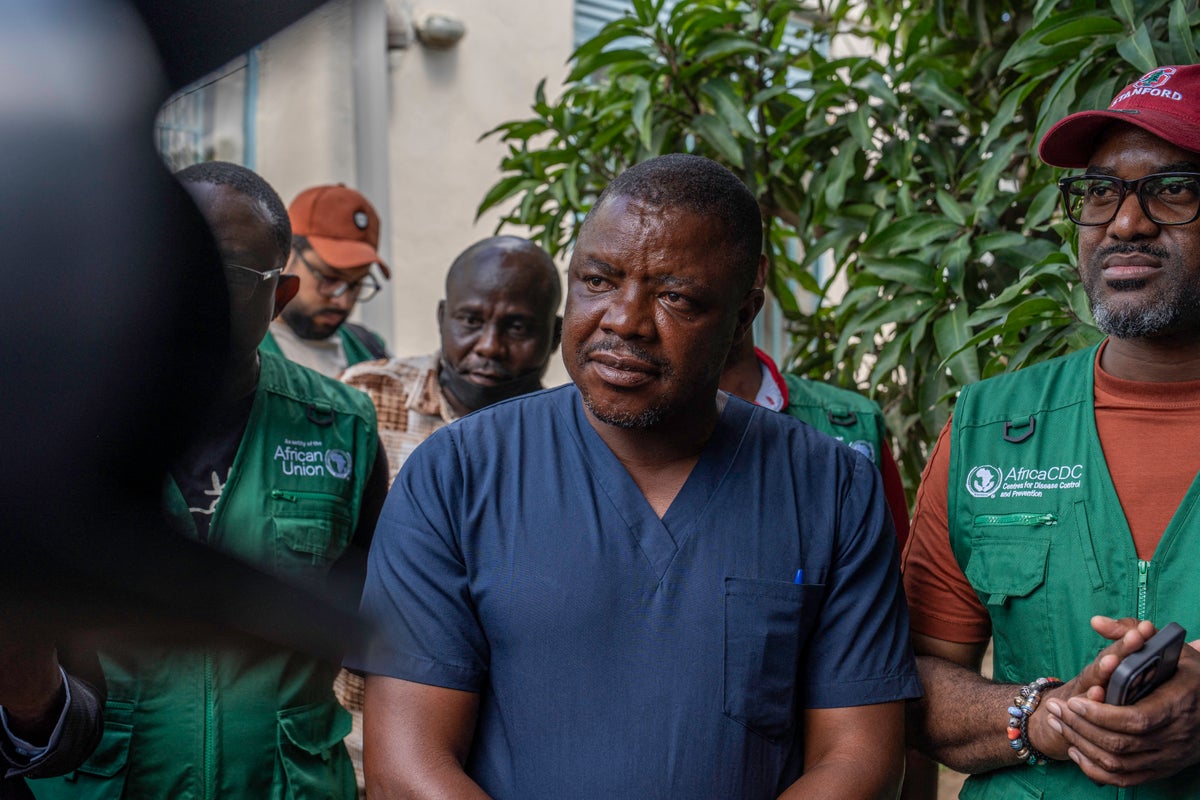
Health workers have been particularly at risk during this outbreak. The WHO honored five of them as survivors over the weekend during a visit by Director-General Tedros Adhanom Ghebreyesus as he opened a new Ebola treatment center in Bunia, the capital of Ituri province.
Baraka Bulambulu, a nurse, expressed his joy after receiving negative results from his final Ebola tests. “Coming out of this illness alive is an indescribable joy,” Mr. Bulambulu said with a wide grin.
Ezo Étienne, another nurse who recovered, described how he started feeling dizzy while checking on patients. “I called the team and told them, ‘Something’s wrong here,’” he recalled. “I decided to rest for a bit, and a few minutes later I started vomiting.”
The virus spreads through close contact with the bodily fluids of sick or deceased patients. Treatment has primarily focused on managing symptoms, according to the WHO.
“Your courage gives hope and your living story that this outbreak can be stopped,” Mr. Tedros told the health workers on Sunday.
Despite challenges, including threats from armed groups and resistance from some wary residents, the recoveries are “a victory worth celebrating,” said Dr. Dieudonne Mwamba Kazadi, director-general of Congo’s National Institute of Public Health. “It’s a strong message that it is possible to recover from Ebola when seeking care early in a dedicated health facility,” he added.
Neighboring Uganda has reported nine cases of Ebola in this outbreak and has closed its border with Congo to limit the spread. Although more than 20 Ebola outbreaks have occurred in Congo and Uganda, the Bundibugyo virus has been rare.