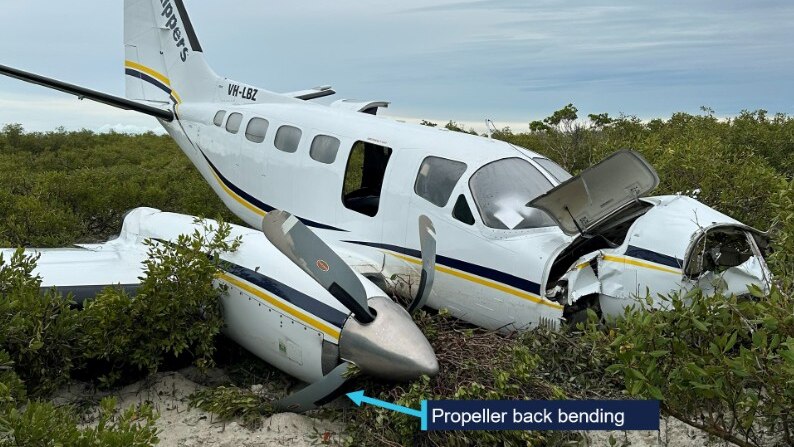
Overview of the Incident
Australia’s transport safety watchdog is currently investigating whether a pilot accidentally turned off a plane’s engine before it crashed in Western Australia’s north earlier this year. The incident involved a plane operated by Skippers Aviation, which was carrying two pilots and five passengers when it crashed shortly after take-off from Broome airport on March 19. This location is approximately 2,000 kilometres north of Perth.
One passenger sustained serious injuries, while the remaining four passengers and both pilots received minor injuries. The aircraft was substantially damaged as a result of the crash.
Preliminary Report Findings
The Australian Transport Safety Bureau (ATSB) released its preliminary report into the crash on Tuesday, outlining factual information gathered during the early stages of the investigation. Although the report does not include any official findings, it highlights that a previously logged defect required both engines of the plane to be started manually.
According to the report, the flying pilot was unsure after take-off whether they had pressed the engine’s stop or start buttons. In manual mode, the control computers responsible for enriching the plane’s engines with fuel were not working. This situation was logged, meaning the aircraft could still operate under specific conditions.
“The aircraft’s engines had to be started in manual mode, with the pilots planning to use the left and right START buttons to enrich each engine with fuel,” said ATSB chief commissioner Angus Mitchell.
Button Placement and Confusion
The Cessna 441 engine start buttons are located next to the stop buttons on the same panel. At the time of the incident, the plane was being operated by two pilots — one flying from the left seat and a training captain on the right.
The ATSB reported that the pilot flying pressed “what they believed to be the left and right start buttons, without looking at the panel” after take-off. After noticing a change in engine sound, the training captain asked the pilot flying if they had pressed the stop buttons. The pilot flying was unsure, according to the report.
With limited time available to restart the engines, the training captain decided to land the aircraft in the mangroves.
Investigation Focus
Mr Mitchell stated that the focus of further investigations would include operational procedures and training, in addition to aircraft design features such as the stop and start buttons. The ATSB is also set to investigate safety considerations, with the preliminary report noting that two passenger seats detached from their seat tracks during the forced landing, and a third partially detached.
The commissioner emphasized that information from the preliminary reports may be subject to change should new evidence become available to the investigation.
Ongoing Investigations
The ATSB continues to conduct its investigation, aiming to uncover the root causes of the incident and ensure that similar events do not occur in the future. The findings from this investigation will be crucial in shaping future aviation safety measures and protocols.
As the investigation progresses, more details are expected to emerge, providing a clearer picture of what transpired during the flight and the steps that can be taken to prevent such incidents. The safety of all passengers and crew remains a top priority for the aviation industry, and this incident serves as a reminder of the importance of rigorous training and clear procedures.