UK Prime Minister Announces Plan to Restrict Children’s Social Media Access
Prime Minister Keir Starmer is set to announce a new policy aimed at limiting children’s access to social media in the coming days. A speech outlining this policy is expected to be delivered next week, marking a significant step in addressing growing concerns about the impact of social media on young people.
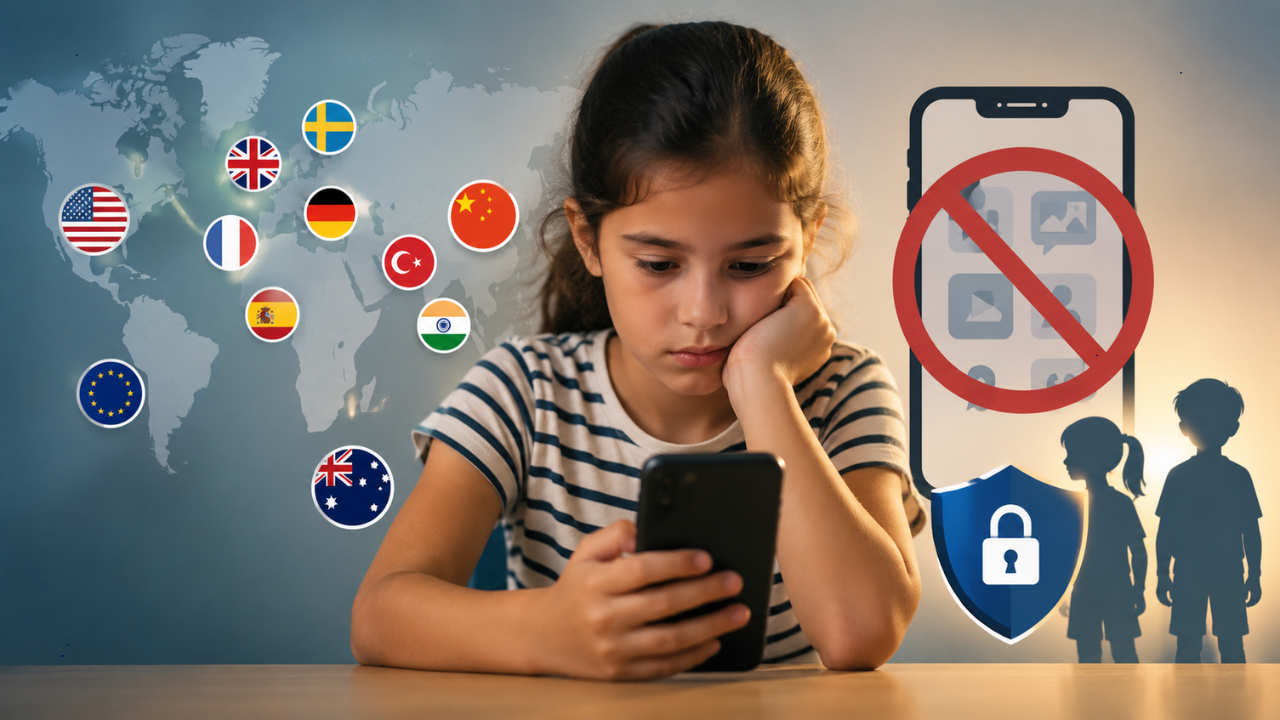
The UK joins a growing list of countries that are taking action to protect children from the potential harms of online platforms. These measures are being driven by increasing worries about mental health, online abuse, and child protection issues.
Countries Implementing Social Media Restrictions for Minors
Several nations have already introduced or are considering regulations to restrict social media use among younger users. Here is an overview of some of these efforts:
- Australia: Banned social media for children under 16, including TikTok, Instagram, Facebook, and YouTube.
- China: Uses a “minor mode” system that limits screen time and access based on a child’s age.
- Denmark: Plans to ban social media for children under 15, with limited parental exceptions for those aged 13–14.
- France: Approved a bill to ban social media for children under 15, pending final legislative approval.
- Germany: Children aged 13–16 can use social media only with parental consent.
- Greece: Preparing to introduce a social media ban for children under 15.
- India: Karnataka has banned social media for children under 16. Other states like Andhra Pradesh, Goa, and Bihar are considering age restrictions.
- Italy: Children under 14 need parental consent to create social media accounts.
- Malaysia: Barred users under 16 from registering new social media accounts.
- Norway: Proposed raising the minimum age for social media consent from 13 to 15 and introducing a 15-year minimum age limit.
- Poland: Drafted legislation to ban social media for children under 15 and require age verification.
- Slovenia: Preparing a law that would prohibit social media access for children under 15.
- Spain: Plans to ban social media access for minors under 16 and require age verification.
- Sweden: A government commission has recommended a minimum social media age of 15.
- Turkey: Passed legislation banning social media use by children under 15.
- United States: Several states require parental consent for minors, while federal legislation seeks stronger protections for young users.
- European Union: Considering stricter child safety rules, including parental consent for under-16s and a ban for children under 13.
The Debate Over Blanket Bans
While many governments are moving towards restricting access, there is ongoing debate about the effectiveness of such measures. The UN human rights office has warned that simply blocking children from social media is not enough. According to Volker Türk, the UN High Commissioner for Human Rights, the design choices and business practices of social media platforms contribute significantly to online harms.
Türk emphasized that bans can be easily circumvented and may push children towards less monitored spaces. He stressed that the focus should be on making platforms safer rather than just limiting access.
The UN Office also released a 10-point framework titled “Getting Children’s Safety Online Right,” which includes recommendations for governments and technology companies. These include embedding child safety measures into platform design, conducting mandatory child-rights impact assessments, and consulting children when developing online safety policies.
Expert Opinions on Platform Accountability
Experts argue that strong platform accountability, age-appropriate design, and algorithmic responsibility are essential in creating a healthier digital ecosystem. Dr. Rajendra Pratap Gupta, Chairman of Health Parliament, highlighted the importance of regulating platforms to ensure they are safe for young users.
He noted that without effective platform control, regulations risk remaining symbolic. Digital literacy and parental awareness are also crucial components of any comprehensive strategy.
With inputs from Reuters