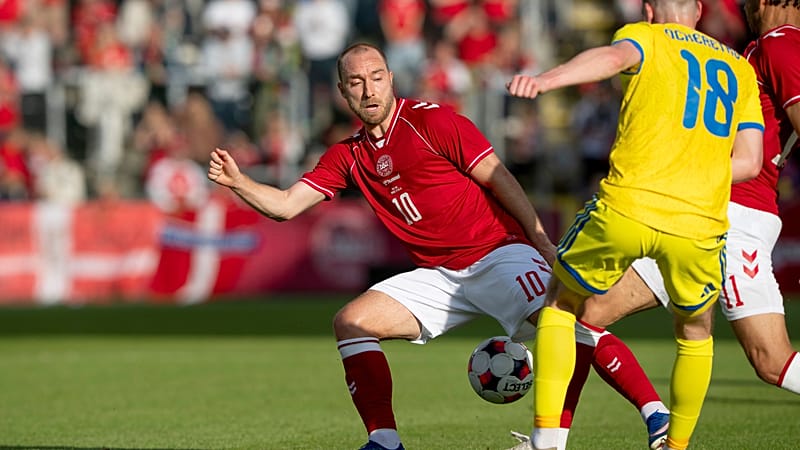
Danish footballer Christian Eriksen’s recent on-field collapse during a match against Ukraine has once again brought the life-saving technology of implantable cardioverter-defibrillators (ICDs) into the spotlight. This incident, sadly not the first health scare for the 34-year-old during his career, echoes his previous cardiac arrest at the European Championship in 2021. It was following that event that Eriksen was fitted with an ICD, a device that proved crucial in the recent incident.
Eriksen himself has since shared on social media that he is recovering well at home with his family. He expressed immense gratitude to the medical teams who attended to him on the field and the medical professionals who have been monitoring his heart condition since 2021. “Thanks to their expertise, my ICD did exactly what it was designed to do: protect me when I need it,” Eriksen stated, highlighting the device’s life-saving capabilities.
Understanding Implantable Cardioverter-Defibrillators (ICDs)
So, what exactly is an ICD and how does it function? An implantable cardioverter-defibrillator is a compact, battery-powered medical device surgically implanted beneath the skin, typically in the chest. It is connected to the heart via specialised wires. Its primary role is to continuously monitor the heart’s electrical activity.
The device is designed to detect and respond to abnormal heart rhythms, medically known as arrhythmias. When the ICD identifies an irregular heartbeat that poses a significant risk, it can deliver precisely calibrated electric shocks. These shocks are intended to reset the heart rhythm and restore it to a normal, effective pumping pattern.
ICDs are generally prescribed for individuals identified as being at a high risk of life-threatening arrhythmias. These are abnormal heart rhythms that can critically impair the heart’s ability to pump blood efficiently, potentially leading to cardiac arrest. Patients who have survived a previous heart attack or cardiac arrest, or those diagnosed with ventricular arrhythmias (dangerous electrical disturbances originating in the heart’s lower chambers), are often candidates for ICD implantation.
Life with an ICD: A Return to Normalcy
For many patients, receiving an ICD marks a significant step towards regaining a sense of normalcy and security. According to leading medical institutions like Johns Hopkins Medicine, most ICDs have a lifespan exceeding ten years. Crucially, with the device in place, individuals can often lead fulfilling lives.
This typically includes the ability to return to work, drive a vehicle, and, importantly, engage in sports, provided they receive clearance from their healthcare professionals. While historically, patients with ICDs were advised to avoid high-intensity sports, recent medical guidelines have adopted a more nuanced approach. Now, decisions regarding athletic participation are made on a case-by-case basis, taking into account the individual’s specific condition and the capabilities of their ICD.
The ICD Sports Registry, a comprehensive study that followed 440 athletes equipped with ICDs for up to four years, provided compelling evidence supporting this shift. The study reported no sports-related fatalities, injuries, or cardiac arrests among athletes who returned to their respective sports after receiving an ICD. Furthermore, the research indicated that ICDs in athletes could be programmed with higher shock thresholds without negatively impacting outcomes, offering enhanced protection.
Beyond Eriksen: Athletes with ICDs
While Christian Eriksen’s situation has garnered significant attention, he is not the sole athlete to compete with an ICD. His experience highlights that athletic pursuits and life with an ICD are not mutually exclusive.
Katharina Bauer: This German professional pole vaulter underwent implantation of a subcutaneous implantable defibrillator (S-ICD) in 2018. Bauer was diagnosed in childhood with a condition that caused her heart to beat at an excessively high rate, necessitating two previous heart surgeries. Following the detection of an abnormal heart rhythm by her doctor, the S-ICD was implanted, allowing her to continue her successful career in pole vaulting.
Daley Blind: The Dutch footballer Daley Blind also has an ICD. He received the device after being diagnosed with myocarditis, an inflammation of the heart muscle. Blind continues to play professional football, currently featuring for Girona in Spain’s top football division.
These examples underscore the evolving understanding and management of cardiac conditions in athletes. With advancements in medical technology and personalised patient care, individuals like Eriksen, Bauer, and Blind can continue to pursue their passions, demonstrating the remarkable resilience of the human body and the life-saving impact of modern medical devices.