
In the realm of investment, a long-term perspective is paramount, forming the very foundation of any sound strategy. Yet, it’s precisely this forward-thinking approach that presents the most significant hurdle when constructing a robust portfolio. As humans, our ability to accurately predict the future is notoriously limited, a weakness exacerbated by the constant deluge of news cycles – be it about soaring oil prices, the rapid advancement of artificial intelligence, or the potential disruption it poses to established industries.
However, according to Viral Patel, the Chief Executive Officer of BXPE, adopting a five- to ten-year outlook is the essential starting point for the firm’s private equity investment methodology.
Blackstone, a titan in the financial world, was established in 1985 by Stephen Schwarzman and Peter Peterson, both former executives at Lehman Brothers. Today, it stands as the world’s largest alternative asset manager, boasting a staggering US$1.3 trillion in assets under management (AUM).
This immense scale grants Blackstone unparalleled access to insights and data that often present a starkly different narrative from the day’s headlines. The firm holds investments in approximately 270 companies, owns a vast portfolio of 13,000 real estate properties, and provides lending facilities to over 4,000 borrowers.
“Every quarter, we delve into the data and signals we’re observing,” Patel explains. “We analyse which segments of the global economy are experiencing acceleration, where deceleration is occurring, and how we should strategically position our portfolios. This rigorous exercise is what enables us to determine the direction of our thematic investments.”
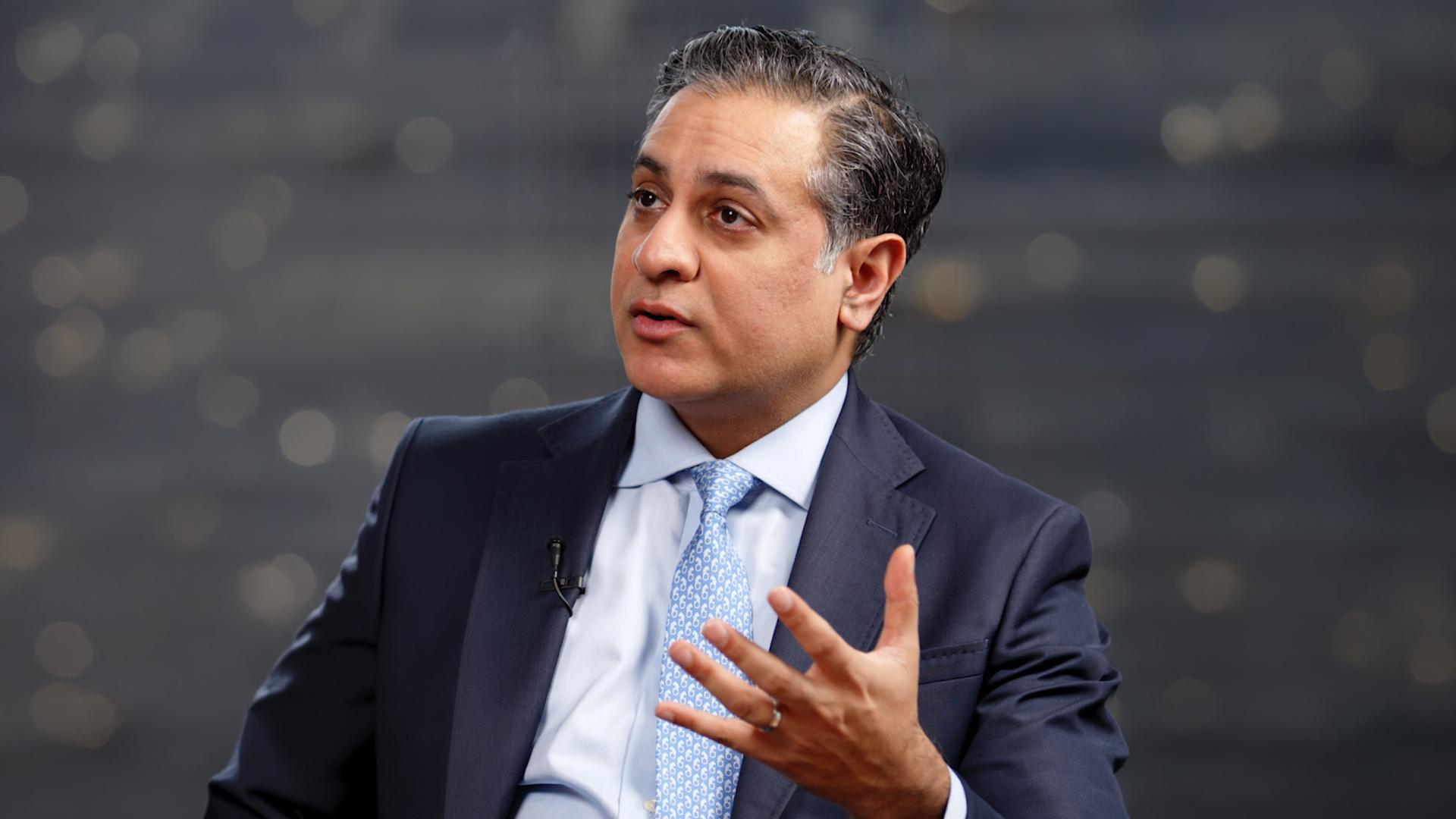
So, what are Blackstone’s current observations of the market landscape?
Patel notes that at the corporate level, company earnings have demonstrated resilience, inflation is within a favourable range, and the cost of capital is on a downward trend. These three factors collectively create an opportune environment for investors seeking to deploy capital.
The available data corroborates this optimistic outlook. In 2025, the total deal value within US Private Equity saw a significant 36% increase compared to the preceding year, with a particularly strong appetite for “scaled private equity.”
“This refers to larger companies, those capable of weathering market volatility and turbulence, and those that can undertake initiatives like reconfiguring their supply chains and investing in AI to enhance their operations,” Patel elaborates. “These are precisely the types of businesses where we’re witnessing the most substantial increase in activity.”
The opportunities emerging from artificial intelligence align perfectly with Blackstone’s established philosophy of investing in secular growth trends. While persistent headlines about market bubbles might cause unease among investors, Patel asserts that the underlying drivers of growth are undeniably clear.
“When you examine AI products and review published reports on the revenue growth rates of companies like OpenAI and Anthropic, or observe the developments with Gemini, we believe this represents a one-way trajectory of upward momentum,” he states.
Blackstone is actively investing across the entire AI value chain, but one of the most evident opportunities lies within the energy sector. For the past two to three decades, US power generation capacity has remained largely stagnant, with efficiency improvements offsetting rising demand. This equilibrium began to shift last year as demand started to climb.
Some projections indicate that a substantial 40% increase in power generation capacity will be necessary over the next decade to support the burgeoning demands of AI, electrification, and the reshoring of manufacturing. This could potentially trigger a capital expenditure cycle worth trillions of dollars.
Blackstone is strategically positioning itself to capitalise on this opportunity through investments in various areas, including energy infrastructure such as power plants and transmission lines, battery technology to address energy storage needs, and service businesses focused on testing and maintenance.
From Durable Themes to Enduring Business Models
While AI has become the prominent poster child for investment today, the often-overlooked heroes are the business models that have quietly and consistently delivered value for decades.
Patel emphasises that Blackstone dedicates just as much effort to identifying businesses with a proven track record of longevity as it does to uncovering secular growth opportunities. Franchise models serve as a prime illustration of this principle.
“When you discover the right concept, you can achieve remarkably high growth, robust margins, and substantial free cash flow,” Patel remarks.
The underlying mechanism of a franchise model is straightforward. Once a brand successfully resonates with consumers, its growth can accelerate as franchisees contribute the capital for the expansion of new outlets. Blackstone has strategically leveraged this dynamic in recent years through investments in companies such as Jersey Mike’s and 7 Brew Coffee. An earlier investment in Hilton Hotels further underscores the remarkable durability of this business model.
However, enduring business models extend far beyond the scope of franchising. Blackstone is also identifying promising opportunities within what Patel refers to as the “physical economy” – sectors intrinsically linked to real-world experiences and services, rather than solely digital disruption.
The travel and leisure sector continues to benefit from a strong tailwind, as consumers increasingly prioritise experiential spending. This trend has prompted Blackstone to invest in areas such as music publishing, theatre companies, and restaurant chains.
“Consumer expenditure continues to shift towards experiences,” Patel observes.
Even industrial sectors like aerospace and defence are drawing considerable attention, driven by increased government spending and the ongoing efforts to rebuild and strengthen supply chains. While AI presents a compelling growth narrative, and Blackstone is indeed investing heavily in this area, Patel is unequivocal that some of the most attractive opportunities still reside within business models that have proven their efficacy over decades.
Are Private Markets Too Significant to Overlook?
Blackstone’s remarkable growth trajectory has been largely fuelled by its cultivated expertise in private markets. Historically, the early adopters of private market investments have primarily been institutional investors and family offices, where allocations can range significantly, often between 25% and 50% of their overall portfolios.
These sophisticated investors typically possess longer investment horizons, which aligns perfectly with the strategic mindset required for navigating private markets, assets that do not offer the daily liquidity characteristic of publicly traded securities.
While the adoption of alternative investments among private wealth clients is steadily increasing, it currently remains considerably below the levels observed among institutional investors. Nevertheless, Blackstone’s Private Wealth business has experienced substantial expansion over the past decade, with assets under management from this channel now exceeding US$300 billion across various Blackstone funds.
Undoubtedly, a portion of this growth can be attributed to the prospect of higher returns, as private markets have historically delivered a premium compared to public markets. However, perhaps the most compelling rationale for considering an allocation to private markets lies in the sheer magnitude of the available opportunity set.
“Globally, of the companies with revenues exceeding US$250 million, nearly 90% of them are actually situated within the private markets,” Patel explains.
This observation raises a pertinent question: if one is diversifying their portfolio by engaging with only 10% of the available investment universe, how much genuine diversification are they truly achieving?
For further insights from the team at Blackstone, please visit their website.