A Remarkable Cow Challenges Perceptions of Animal Intelligence
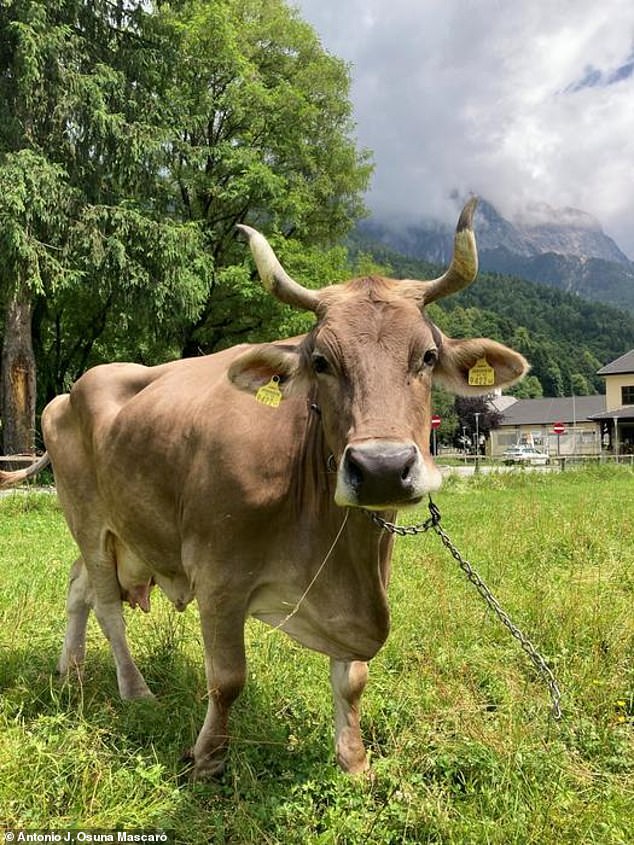
A cow known for her unique behavior has prompted scientists to rethink the cognitive abilities of cattle. Veronika, a brown Swiss cow from the Austrian village of Carinthia, has become the subject of a groundbreaking study after being observed using a stick to scratch herself. This is the first documented case of a cow using a tool in such a deliberate and complex manner.
Veronika’s intelligence was initially noticed by Witgar Wiegele, an organic farmer and baker who has kept her as a pet for over a decade. He observed that she began playing with wooden sticks using her mouth before she started to use them to scratch herself. Wiegele expressed his amazement at her extraordinary intelligence and emphasized the lessons humans can learn from animals—patience, calmness, contentment, and gentleness.
A paper published on January 19 in the journal Current Biology details what scientists describe as the first recorded instance of tool use in a pet cow. This discovery suggests that cattle may possess greater cognitive capabilities than previously believed.
Dr. Alice Auersperg, a cognitive biologist at the University of Veterinary Medicine, Vienna, highlighted the significance of the findings. She stated, “The findings highlight how assumptions about livestock intelligence may reflect gaps in observation rather than genuine cognitive limits.”
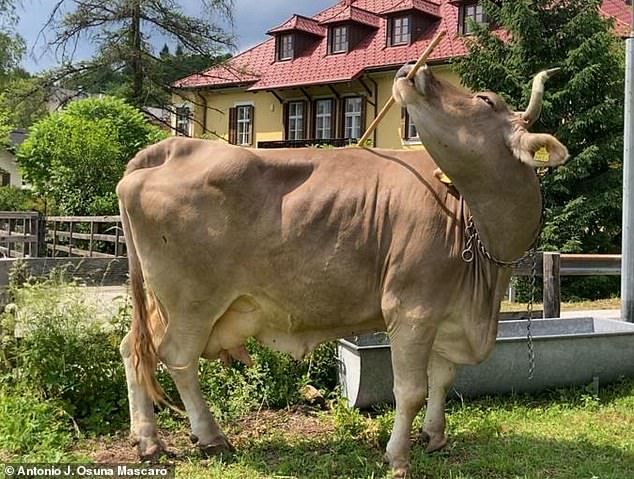
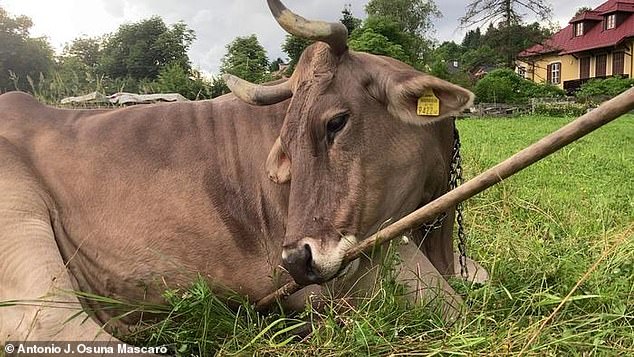

The behavior first attracted scientific attention when footage of Veronika was shared with Dr. Auersperg. Upon viewing the video, she immediately recognized it as a meaningful example of tool use in a species rarely considered from a cognitive perspective.
Dr. Auersperg and her colleague, Antonio Osuna-Mascaró, a post-doctoral researcher, traveled to observe Veronika and conduct tests. In a series of controlled trials, they placed a deck brush on the ground in random orientations and recorded which end Veronika chose and which part of her body she targeted.
Across repeated sessions, her choices were consistent and suited to the body regions she was scratching. The researchers concluded that Veronika is not just using an object to scratch herself. She uses different parts of the same tool for different purposes and applies different techniques depending on the function of the tool and the body region.
Veronika typically used the bristled end of the brush on broad, firm areas such as her back. When scratching softer and more sensitive areas of her lower body, she switched to the smooth handle. She also changed how she moved the object. Upper-body scratching involved wide, forceful movements, while lower-body scratching was slower, more careful, and highly controlled.
Tool use is defined as manipulating an external object to achieve a goal through mechanical means. The researchers state that Veronika’s actions meet this definition and go further. They describe her behavior as flexible, multi-purpose tool use, meaning different features of the same object are used to achieve different outcomes.
Outside humans, such behavior is documented in relatively few animal species, with great apes like chimpanzees being the most sophisticated. However, Veronika’s actions represent an egocentric form of tool use, which is generally considered less complex than tool use directed at external objects.
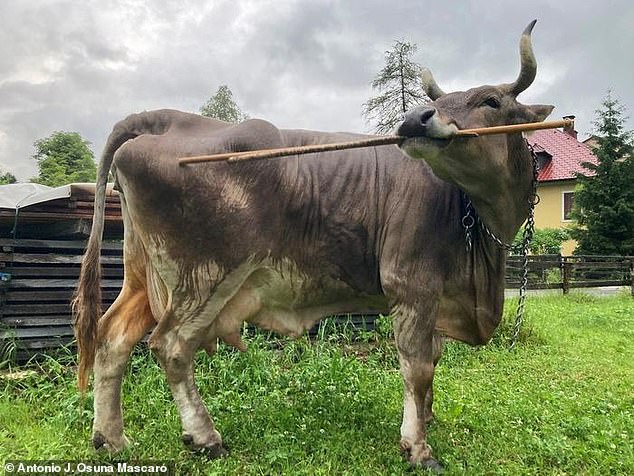
At the same time, she faces clear physical constraints, as she must manipulate tools with her mouth. What is striking is how she compensates for these limitations, anticipating the outcome of her actions and adjusting her grip and movements accordingly.
The study represents the first documented case of tool use in cattle and the first evidence of flexible, multi-purpose tool use in the species. The researchers suggest that Veronika’s unusual life circumstances may have played a key role. Most cows do not live as long, do not experience open and complex environments, and are rarely able to interact with a range of objects.
Her long lifespan, daily contact with humans, and access to a varied physical landscape may have created the conditions needed for exploratory behavior. The team is keen to hear from other farmers to learn how widespread such behavior might be.
“We suspect this ability may be more widespread than currently documented,” Mr. Osuna-Mascaró said. “We invite readers who have observed cows or bulls using sticks or other handheld objects for purposeful actions to contact us.”
Gary Larson’s 1982 Far Side cartoon, Cow Tools, featured a cow standing behind a table of shoddily crafted items. It confused readers, including his mother, forcing him to explain: “While I have never met a cow who could make tools, I felt sure that if I did, they [the tools] would lack something in sophistication and resemble the sorry specimens shown.”
The researchers had a message for Larson. “Veronika did not fashion tools like the cow in Gary Larson’s cartoon, but she selected, adjusted, and used one with notable dexterity and flexibility,” the researchers wrote. “Perhaps the real absurdity lies not in imagining a tool-using cow, but in assuming such a thing could never exist.”