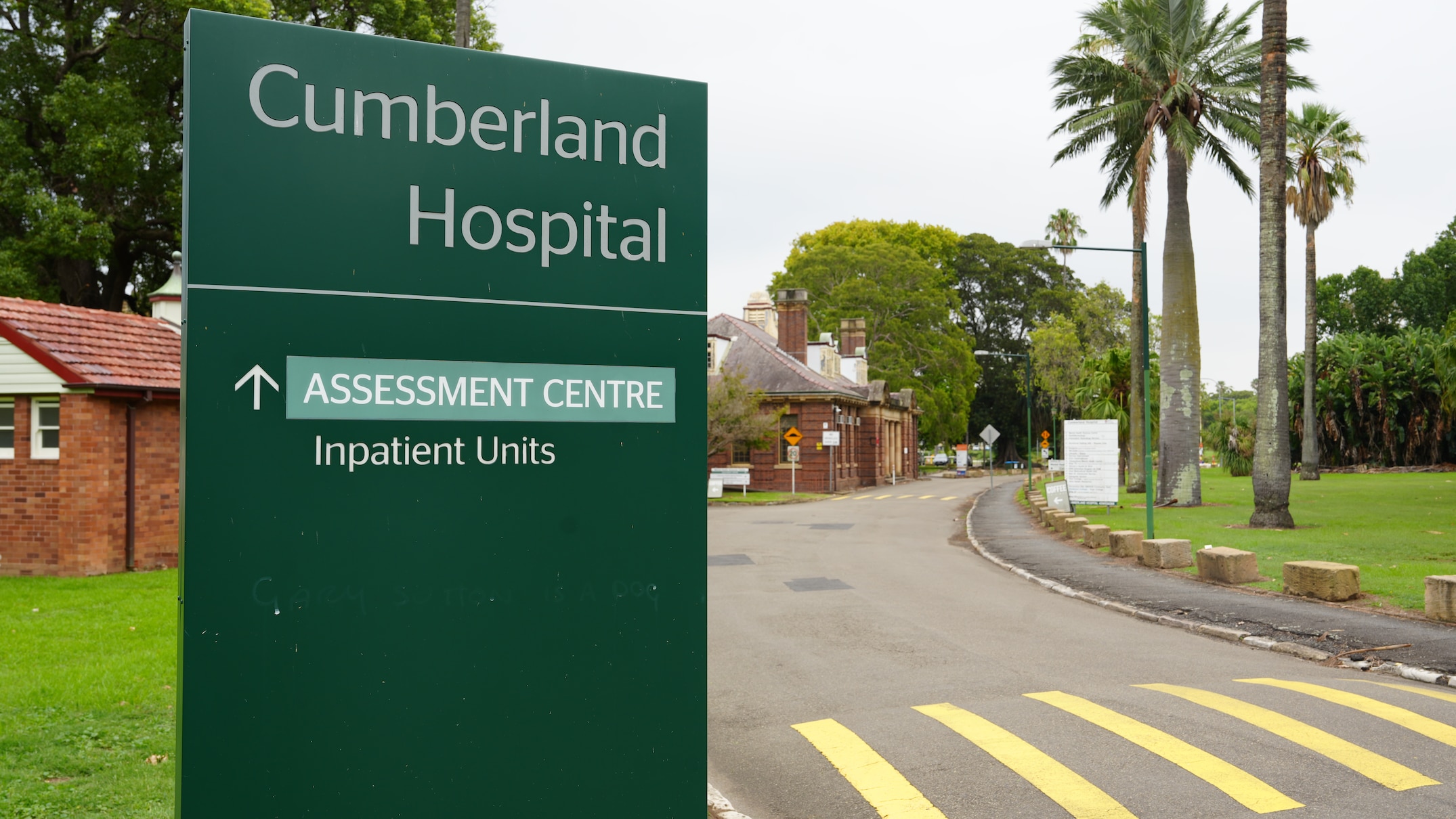
Cumberland Hospital, Sydney’s largest mental health facility, is facing intense scrutiny following a formal investigation this week. The spotlight was cast after two patients absconded from the hospital’s care within a single 24-hour period, with tragic consequences that allegedly led to three deaths. This incident has brought to light alarming data indicating that patients are three times more likely to leave Cumberland Hospital without permission compared to any other mental health unit across New South Wales.
A Stark Statistical Reality
The statistics paint a concerning picture. Across the state, an average of one patient absconds from an acute mental health unit every 4,348 days. However, at Cumberland Hospital, this unfortunate event occurs with a significantly higher frequency, averaging once every 1,333 days. This data, obtained by the ABC from NSW Health, highlights a systemic issue at the prominent facility.
While the rate of patients absconding during escorted leave is slightly better than the state average – occurring every 4,347 days at Cumberland compared to every 3,571 days statewide – the overall rate of patients leaving without approval is still substantially higher.
Systemic Issues and Resource Constraints
Dr. Anuradha Kataria, a psychiatrist who dedicated 23 years to Cumberland Hospital before resigning last year, has shed light on some of the contributing factors. She stated that patients admitted to Cumberland often have longer stays.
“We’re taking the highest-risk patients and clumping them together in a small space with not a lot to do, very limited resources to look after them,” Dr. Kataria explained. “The boredom factor, the factor… they are held in hospital involuntarily for a long period of time against their will, can lead to a higher level of frustration and a higher desire, possibly, to get away.”
Dr. Kataria pointed to the perceived disappearance of crucial therapeutic programs, such as day programs and work skills training, which once helped combat patient boredom and frustration. She lamented that these programs, vital for a holistic approach to mental health, were often cut due to funding shortages. “The standard answer every time we lost the service was there’s ‘no funding’… they were somehow considered luxuries,” she said. “They were not considered a basic, integral part of mental health.”
Calls for Increased Staffing and Security
The concerns are echoed by healthcare staff on the front lines. Teaghanne Sarina, a registered nurse at Cumberland Hospital and the NSW Nurses and Midwives Association’s Cumberland branch delegate, described the situation as a “long-term systemic problem.”
“We’ve been requesting extra resources, extra pay, extra people on the floor,” Ms. Sarina stated. She highlighted instances where nurses might be responsible for up to eight patients simultaneously in some wards.
Increased staffing levels, Ms. Sarina believes, could significantly improve patient safety. More staff would enable earlier detection of warning signs, allowing for behavioural de-escalation before a patient becomes violent or attempts to abscond. “We would be better able to manage, better able to behaviourally de-escalate,” she said. “I’m not going to say it’s the exact solution, but it could go a long way to help preventing these types of situations from occurring.”
The current security presence at Cumberland Hospital is also a point of contention. With only three security guards patrolling the precinct at any given time, Ms. Sarina noted that many critical situations, including code blacks and incidents involving aggressive patients or those attempting to abscond, are nurse-led due to a lack of adequate security personnel. “We just don’t have access to appropriate levels of [security] staffing.”
Unexplained Ward Closures
Adding to the challenges, one of Cumberland Hospital’s major mental health wards and its assessment centre were quietly closed last year and have not yet been reopened. Ms. Sarina expressed frustration over this situation, stating, “There’s a whole heap of resources that are just being inadequately utilised.” She added, “We don’t have access to these wards that were closed a year ago, and the psychiatrists haven’t been replaced.”
A Patient’s Family’s Experience
The impact of perceived inadequate care at Cumberland Hospital is starkly illustrated by the experience of Sarah (name changed for privacy), whose sister was a patient. After her sister’s discharge, Sarah witnessed a rapid deterioration in her mental state.
Sarah’s sister, who had been admitted for schizophrenia and drug-induced psychosis, displayed paranoia and hallucinations shortly after leaving the hospital. During her two-week involuntary admission, Sarah felt her sister’s condition was not adequately monitored.
“I would have a conversation with the psychiatrist and say, ‘This is what happens out in community’, but they’re saying to me, ‘Well, she’s not exhibiting those symptoms here in the hospital,’” Sarah recounted. “She was laying low… the majority of the patients in there do that. They’re very good at masking their symptoms… I don’t believe a two-week admission is enough to actually observe somebody.”
Sarah has lodged a formal complaint with NSW Health and contacted the Mental Health Minister, Rose Jackson, alleging substandard care. She claims staff were dismissive and too quick to discharge patients. While NSW Health has acknowledged looking into the issues, Sarah expressed her deep dissatisfaction.
“It’s a terrible place to be in. I would fight black and blue to get her out of that place,” she declared, emphasizing her strong desire to prevent her sister from ever returning to Cumberland Hospital, even if readmission were involuntary.
[Zendesk]