A Tiny Implant’s Big Impact: Rewiring the Heart’s Fuel Source for Better Health
A groundbreaking development is offering a beacon of hope for thousands battling heart failure. A small, watch-sized implant, known as a cardiac resynchronisation therapy (CRT) pacemaker, is demonstrating remarkable success by cleverly recalibrating how the heart fuels itself. This innovative approach has the potential to significantly improve the lives of those with this debilitating condition.
The Heart’s Fuel Dilemma: Fat vs. Glucose
Under normal circumstances, a healthy heart primarily relies on burning fat for energy. This is its most efficient fuel source, enabling it to maintain strong, consistent beats and efficiently pump oxygenated blood throughout the body. However, in individuals suffering from heart failure, where the heart muscle has been weakened by damage from heart attacks, high blood pressure, or faulty valves, this crucial fuel preference shifts.
When the heart becomes weak and less effective, it begins to rely more heavily on glucose, or blood sugar, for energy. This switch occurs because burning glucose requires less oxygen, a vital resource often in short supply for those with compromised cardiac function. While cardiac cells possess an innate mechanism to toggle between fat and glucose as fuel sources, adapting to demands like exercise, this shift in heart failure patients creates a significant problem.
The issue lies in the fact that glucose simply doesn’t provide the same powerful output as fat. Consequently, the weakened heart must work harder to pump blood, leading to increased strain and gradual exhaustion of the cardiac muscle.
A Remarkable Shift: The CRT Pacemaker’s Effect
Recent research spearheaded by the University of Oxford, with funding from the British Heart Foundation (BHF), has revealed a truly astonishing effect of the CRT pacemaker in heart failure patients. The study found that upon implantation and activation of these devices, many patients’ hearts almost immediately reverted to their preferred, more efficient fuel source: burning fat.
The implications of this fuel switch are profound. Findings published in the European Heart Journal indicate that after just six months of CRT treatment, the size of the left ventricle – the heart’s primary pumping chamber, which often becomes dangerously enlarged due to the relentless workload in heart failure – reduced by an impressive half. Furthermore, the heart’s pumping function, its ability to effectively eject blood to the rest of the body, saw an improvement of over a third.
Scientists are hypothesising that this dramatic improvement is directly linked to the implant’s ability to reactivate the heart’s fat-burning mechanisms while simultaneously suppressing the signals to burn glucose. The precise molecular pathways involved are still being investigated, but the clinical outcomes are undeniable.
Expert Reactions and the Scale of the Problem
Professor Neil Herring, a leading figure in cardiovascular medicine and the study’s principal investigator, described the results as “remarkable.” He expressed surprise at the extent of the improvements observed, noting that such significant gains are typically seen with potent medications like ACE inhibitors or SGLT2 inhibitors, yet the patients in his study were already on these drugs without experiencing substantial benefits. Professor Herring highlighted the speed of the change, stating that “within two minutes of turning on the pacemaker the heart had changed back to burning fat as it normally would.”
The prevalence of heart failure in the UK is substantial, with over a million individuals affected and an estimated 200,000 new diagnoses each year, according to the BHF. Projections suggest these numbers could double by 2040, underscoring the urgent need for effective treatment strategies. Common symptoms include debilitating breathlessness, profound fatigue, and swollen ankles due to fluid accumulation, all stemming from the heart’s inability to circulate blood effectively. While heart failure is not currently curable, medical interventions and lifestyle adjustments can significantly prolong survival and enhance quality of life.
How CRT Pacemakers Work and Future Directions
CRT pacemakers are already a valuable tool in managing heart failure. In many patients, the heart’s lower chambers, the left and right ventricles, fail to contract in a coordinated manner, leading to blood pooling within the heart. These devices function like traditional pacemakers by regulating the heart rate, but crucially, they also deliver electrical signals to synchronise the contractions of the ventricles. This synchronisation can reduce the risk of premature death and improve the overall quality of life for many patients.
The recent study aimed to explore whether the success of CRT in synchronising contractions was intrinsically linked to its impact on the heart’s fuel metabolism. Researchers enrolled 14 heart failure patients scheduled for CRT implantation. Before the procedure, and again after the device was activated, MRI scans were performed. These scans, utilising either glucose or fat tracers, revealed that within minutes of the CRT device being switched on, patients whose hearts had been predominantly burning glucose shifted to a fat-burning metabolism.
Over the subsequent months, these patients experienced a strengthening of their hearts, a reduction in the size of their ventricles to more normal dimensions, and an enhanced capacity to pump oxygenated blood, thereby alleviating symptoms like breathlessness.
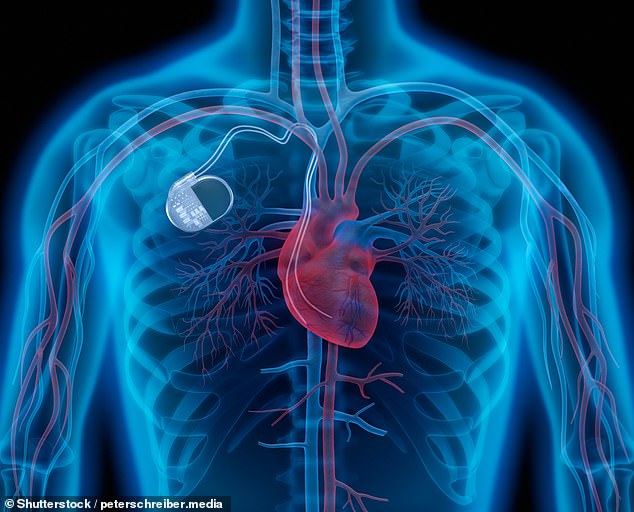
Professor Herring is now expanding his research to include up to 100 heart failure patients. This larger study will investigate whether standard pacemakers, which regulate heart rate but do not synchronise ventricular contractions like CRT devices, might inadvertently hinder the heart’s ability to switch to fat metabolism. If this proves to be the case, it could pave the way for a much wider adoption of CRT pacemakers. Currently, approximately 12,000 CRT devices are implanted annually in the UK. These devices are implanted just beneath the skin near the collarbone and are connected to the heart via leads.

Commenting on the findings, Professor Francisco Leyva-Leon, a consultant cardiologist, described the research as “promising” and noted that these early results suggest CRT can indeed shift the heart’s fuel preference back to fat, potentially leading to stronger and more efficient heartbeats. He believes this may partly explain the significant benefits observed with CRT in improving survival and reducing symptoms in heart failure patients.
However, Dr. Lisa Anderson, a consultant cardiologist, offered a more measured perspective, characterising the study as “rather technical” and suggesting it’s unlikely to prompt an immediate shift in standard heart failure treatment protocols. Nonetheless, the potential of this technology to fundamentally alter the heart’s energy dynamics offers a compelling avenue for future therapeutic development.