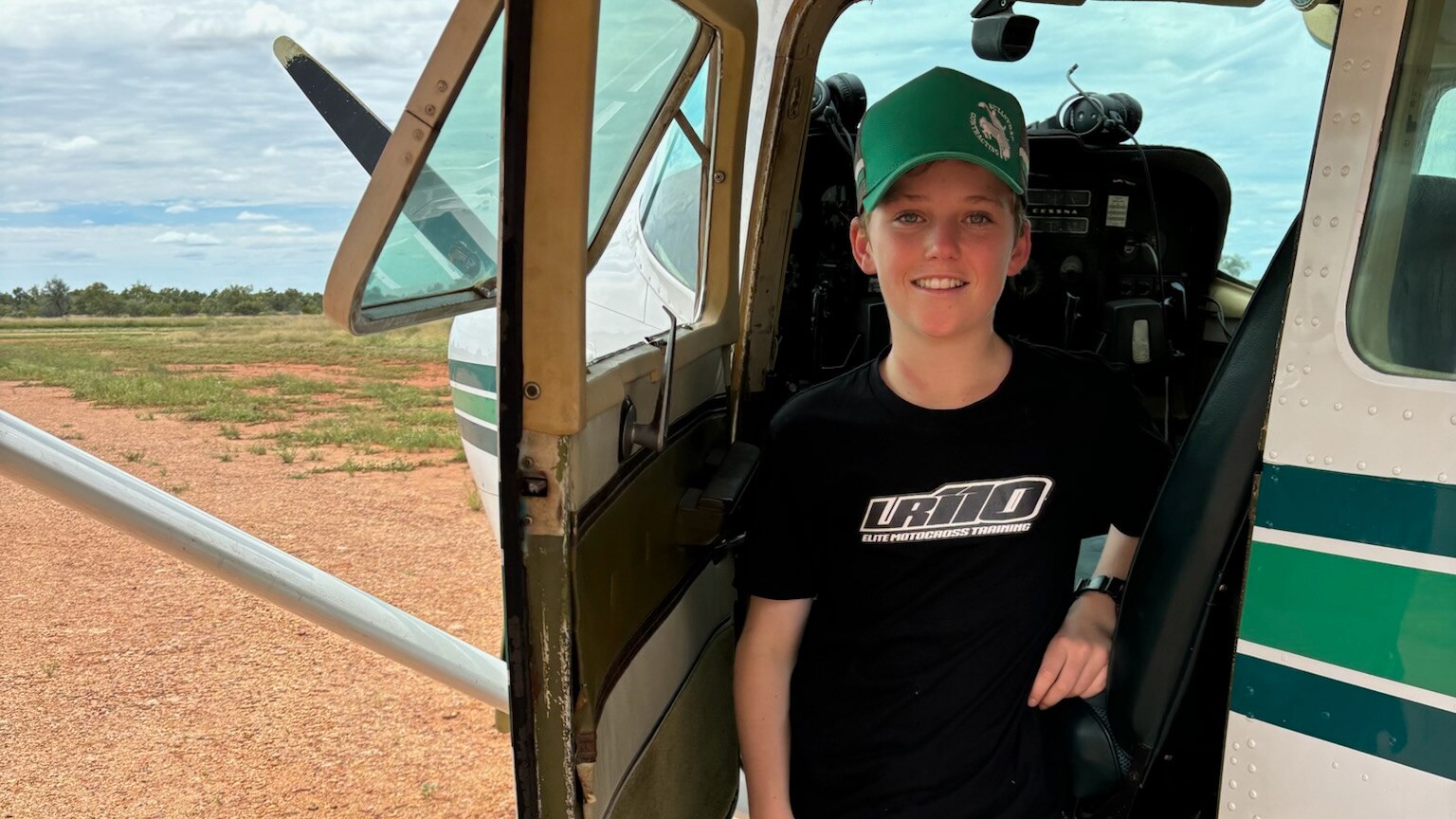
The escalating cost of fuel and widespread disruptions are forcing families in Australia’s vast rural and remote regions to make heartbreaking decisions about their children’s education. For grazier Amber Driver, the daunting 4,000-kilometre round trip for her son Ruben to attend boarding school in Adelaide is now under serious reconsideration.
Normally, Ms. Driver would drive Ruben 400 kilometres to Alice Springs, from where he would then fly or catch a bus to his school. However, recent floodwaters have rendered the usual road access to their remote cattle station impassable, leaving air travel as the sole viable option. This, coupled with a near doubling of diesel prices since last year – a year that saw the family spend a staggering $16,000 on school-related travel – has sent shockwaves through their household budget.
“I would assume that travel costs would at least increase by 50 to 100 per cent,” Ms. Driver stated, highlighting the immense financial strain. “The cost of travel to and from places of education are equal to or greater than boarding school fees.”
The Emotional Toll of Distance and Disruption
For students attending boarding schools, the journeys between home and school typically occur at the beginning and end of each term, with families often visiting throughout. However, the current economic climate and logistical nightmares are threatening to extend these periods of separation significantly.
“It could be 11 weeks before we see our children,” Ms. Driver lamented, articulating the profound emotional burden this places on both children and parents. “That’s a huge burden for children to face when they are away from their family. The sacrifices are huge and they have a lasting effect on family dynamics. That weighs heavily on every parent’s heart.”
As a member of the federal council of the Isolated Children’s Parents’ Association, Ms. Driver voices the widespread concerns of families facing not only increased costs but also a genuine lack of access to fuel. “We’re not guaranteed that we will be able to make those trips backwards and forwards to our places of education,” she explained. “There needs to be some significant assurances for people in rural and remote Australia that we can access the fuel that we need to have our children get education.”
Teachers Grapple with Rising Costs
The impact of the fuel crisis is not confined to parents of boarding school students. In the New South Wales central-west, Blayney school teacher Cath Hudson faces a daily 60-kilometre round trip to work, with no public transport options available. This necessitates refuelling her vehicle every other day.
The financial pressure has become so acute that Ms. Hudson revealed discussions at her school about temporarily reverting to online learning for at least a fortnight, a measure aimed at alleviating the financial strain on both teachers and families. “There needs to be a stopgap. I think they need to put something in place and be proactive,” Ms. Hudson urged. “If we end up at $5 a litre, it’s really going to hurt people’s pockets. [Teachers] will have to make the decision of actually, I can’t afford to go to work.”
The repercussions extend beyond the classroom. Ms. Hudson noted that some students have already been unable to attend school, while others have had to forgo driving lessons crucial for obtaining their licenses. Even essential services, like deliveries of wood to heat homes, are reportedly being halted due to the prohibitive cost of fuel.
Examining Support Mechanisms
In response to these challenges, the New South Wales government offers a School Drive Subsidy program, providing eligible families with 74 cents per kilometre in areas with limited or no public transport. Steph Cooke, the Member for Cootamundra, highlighted the immense strain this places on families, with many in regional areas undertaking 100-kilometre round trips twice daily for school drop-offs and pick-ups.
“That is putting tremendous strain on a family budget just to get their child to and from school,” Ms. Cooke stated. She advocated for an increase in the rebate to reflect the current fuel price hikes and the potential for fuel scarcity. “That rebate should be increased to take account of the increases in fuel prices and the potential inability to access fuel at all.”
Ms. Cooke stressed that parents should not be forced into a position where they must choose between the cost of fuel and their child’s education. “It is more important than ever that we support our children … so they aren’t left in a situation where it is school from home or nothing,” she said.
Expanding Support to Essential Workers
Furthermore, Ms. Cooke suggested that the existing subsidy could be temporarily extended to encompass essential workers in regional communities, such as teachers, nurses, and police officers. She contrasted the situation in urban areas, where public transport and numerous fuel stations are readily available, with the reality in rural and regional locales. “In many of our rural and regional areas there are only one or two fuel stations in town and this has big impacts.”
Ms. Hudson acknowledged that while she could currently manage the financial burden, she felt disadvantaged compared to her “city cousins.” She pointed out the stark difference in travel motivations: “We’ve got a lot further to travel, so if people are travelling for an hour in Sydney, I know that’s due to traffic, mine’s due to distance.”
Despite the resilience of students, Ms. Hudson warned that this resilience has its limits. “The students are incredibly resilient, but your resilience only holds up for so long … people are already carpooling … people are trying to do this as sensibly as they can.”