Aston Martin Valhalla: A Breathtaking Leap into the Future of Performance
The Aston Martin Valhalla isn’t just another supercar; it represents the most significant technological evolution in the storied 113-year history of the British marque. This isn’t a car you simply hop into and floor it. It’s an experience that demands anticipation, a symphony of mechanical violence and exhilarating consequence that redefines what a production car can be.
When you finally summon the courage to pin the throttle, the cabin erupts with the guttural roar of its AMG-sourced 4.0-litre V8. Vibrations surge through the bulkhead, creating a visceral sensation that the engine is about to break free. The tachometer needle races towards the 7000rpm redline, each gear change a forceful thump accompanied by the brief flutter of turbos. The world outside blurs through the narrow windscreen as the speedometer continues its relentless climb. It’s a sensation that is both terrifying and utterly addictive.
While our test drive included exhilarating laps on a dedicated race circuit, we also put the Valhalla through its paces on public roads, allowing for a comprehensive assessment of this technological marvel.
A Tumultuous Genesis: From Concept to Production
The Valhalla’s lineage traces back to the striking AM-RB 003 concept unveiled at the 2019 Geneva motor show. This design, heavily influenced by the extreme Valkyrie, was part of a vision to reintroduce mid-engined supercars to Aston Martin’s lineup. While the company referenced the seldom-seen 1980 Aston Martin Bulldog, the path forward proved anything but smooth.
Aston Martin’s recent history has been marked by leadership changes, akin to a revolving door in the executive suites. The original concept, envisioned with a V6 engine and a 1000hp target, saw its direction shift dramatically with the arrival of former AMG executive Tobias Moers. His mandate was clear: a V8 engine, sourced from AMG. This led to the adoption of a modified version of the M178.980 engine found in the Mercedes-AMG GT Black Series.
In its original form, this engine produced 537kW. However, for the Valhalla, extensive modifications, including larger turbos, a new intake manifold, reinforced pistons, and updated camshafts, boost the internal combustion engine’s output to a staggering 609kW. This powerhouse necessitated a slightly longer wheelbase and a revised, albeit still extroverted, styling.
Further leadership changes saw Amedeo Felisa, formerly of Ferrari, take the helm before Adrian Hallmark, ex-Bentley boss, assumed the role of CEO in March 2024. The Valhalla, with its complex development history and multiple influential figures, has clearly borne the imprint of each. However, Tobias Moers’ influence on the production-ready version is undeniable, particularly his insistence on the V8 and the car’s fundamental architecture.
The Hybrid Heartbeat: Power and Performance
The Valhalla’s powertrain is a testament to cutting-edge hybrid technology. It features a mid-mounted V8 engine driving the rear wheels, complemented by a pair of electric motors on the front axle and a third integrated into the Graziano-developed eight-speed dual-clutch transmission.
The combined output is a colossal 794kW (1079PS or 1064bhp). This immense power, coupled with all-wheel drive, propels the Valhalla from 0 to 100km/h in a mere 2.5 seconds, with a top speed of 350km/h. While straight-line acceleration figures are impressive, they no longer hold the shock value they once did. The Valhalla’s true brilliance lies in its dynamic capabilities.
Despite its complex engineering, the carbon-fibre chassis and bodywork contribute to a surprisingly manageable kerb weight of 1655kg (tare). The Valhalla measures 4727mm in length and 2208mm in width, making it a substantial presence on the road.
A Price of Admission: Value in the Hypercar Realm
Priced at approximately £850,000 in the UK, the Valhalla’s Australian dollar equivalent, including Luxury Car Tax, pushes the figure towards $2,000,000 before on-road costs. With typical options, the final price can easily reach $2.5 million, positioning it as one of the most expensive production cars available in Australia.
However, when compared to hypercars like the Ferrari F80, which commands upwards of $7 million, the Valhalla presents a compelling value proposition. Aston Martin plans to build just 999 units, with right-hand-drive markets, including Australia, being catered for. A customer launch event is scheduled for later in the year at Sydney Motorsport Park.
Stepping Inside: A Driver-Centric Cockpit
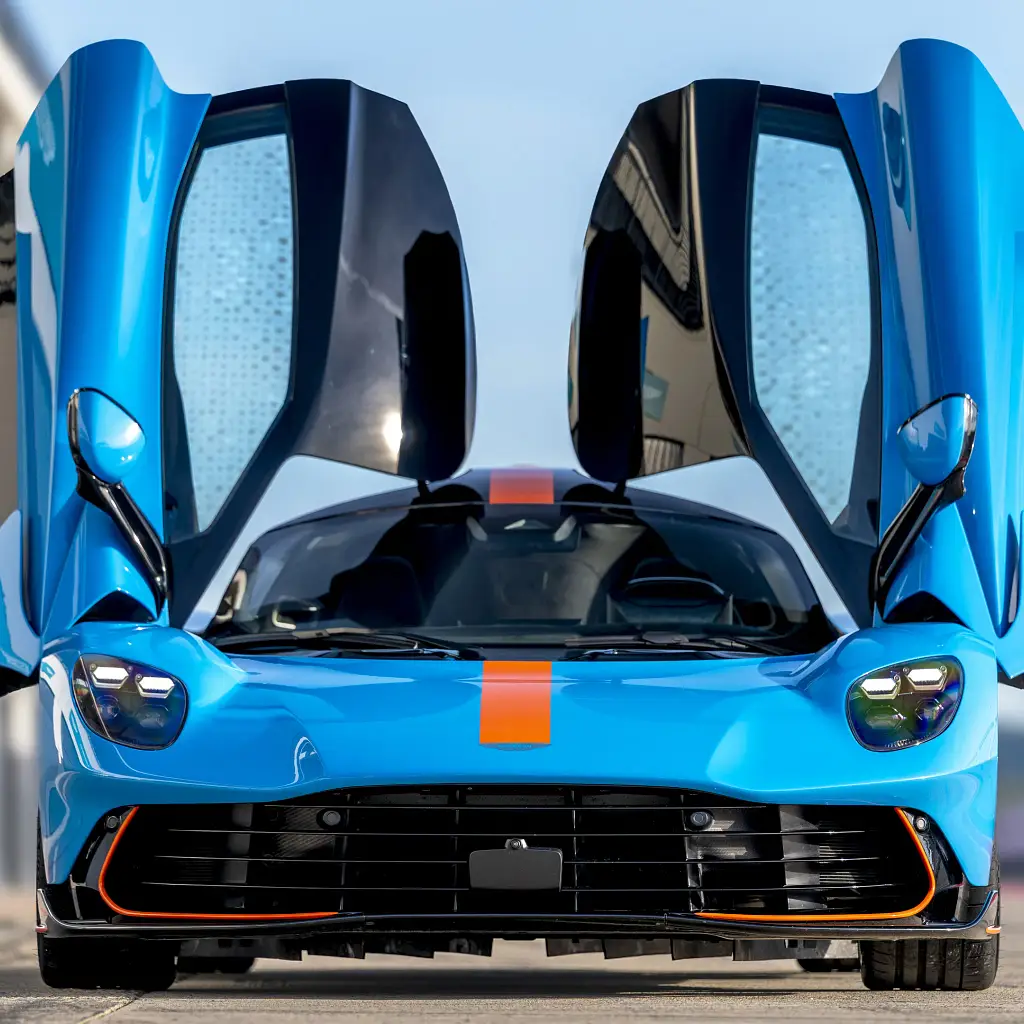
Gaining access to the Valhalla requires a degree of agility, with a microswitch hidden beneath the lower intake activating the dihedral doors. Once settled into the carbon-fibre seat, the cabin feels surprisingly spacious, even for taller drivers. The low cowl height, facilitated by inboard pushrod front dampers, allows for a commanding view of the front tyres. The windscreen’s low profile means taller drivers might find their eye level slightly compromised, peering through a narrow aperture.
The interior features two screens that replace traditional Aston Martin dials, offering support for wireless Android Auto and Apple CarPlay. A 14-speaker Bowers & Wilkins sound system delivers a powerful 745W output. The seat frames can be manually adjusted for height, allowing drivers to achieve a low, racy seating position, almost skimming the road surface. This low-slung posture is also a practical solution for packaging the car’s numerous electronic control units.
Practicality is not the Valhalla’s strong suit when it comes to luggage. There is virtually no storage space – no boot, no frunk, and no cubby behind the seats. For those with such concerns, a complementary Aston Martin DBX SUV might be a necessary addition.
On the Move: Modes and Electrification
The Valhalla’s V8 engine awakens with a purposeful rumble, a sound that is never intrusive but always present. For shorter journeys or silent departures, the Valhalla can be driven on electric power alone for approximately 14km, thanks to its 6.1kWh battery pack.
The default driving mode is Parallel Hybrid Sport, offering a blend of V8 power and electric assistance. Engaging Sport+ mode keeps the engine running continuously, prioritising maximum performance. This mode is ideal for extracting the fastest lap times, as it allows for battery depletion in favour of immediate power delivery.
Race mode, conversely, prioritises maintaining a residual battery charge, preventing on-track power de-rating. This “tortoise and hare” approach ensures sustained performance during track sessions.
Power-to-Weight: A Class-Leading Proposition
With a power-to-weight ratio of 480kW/tonne, the Valhalla significantly outperforms rivals like the Lamborghini Revuelto (397kW/tonne) and the Bugatti Veyron (370kW/tonne). It even surpasses the hypercar “holy trinity” of the LaFerrari (447kW/tonne), McLaren P1 (452kW/tonne), and Porsche 918 Spyder (379kW/tonne), underscoring the Valhalla’s exceptional potency.
Dynamics and Ride: A Surprising Balance
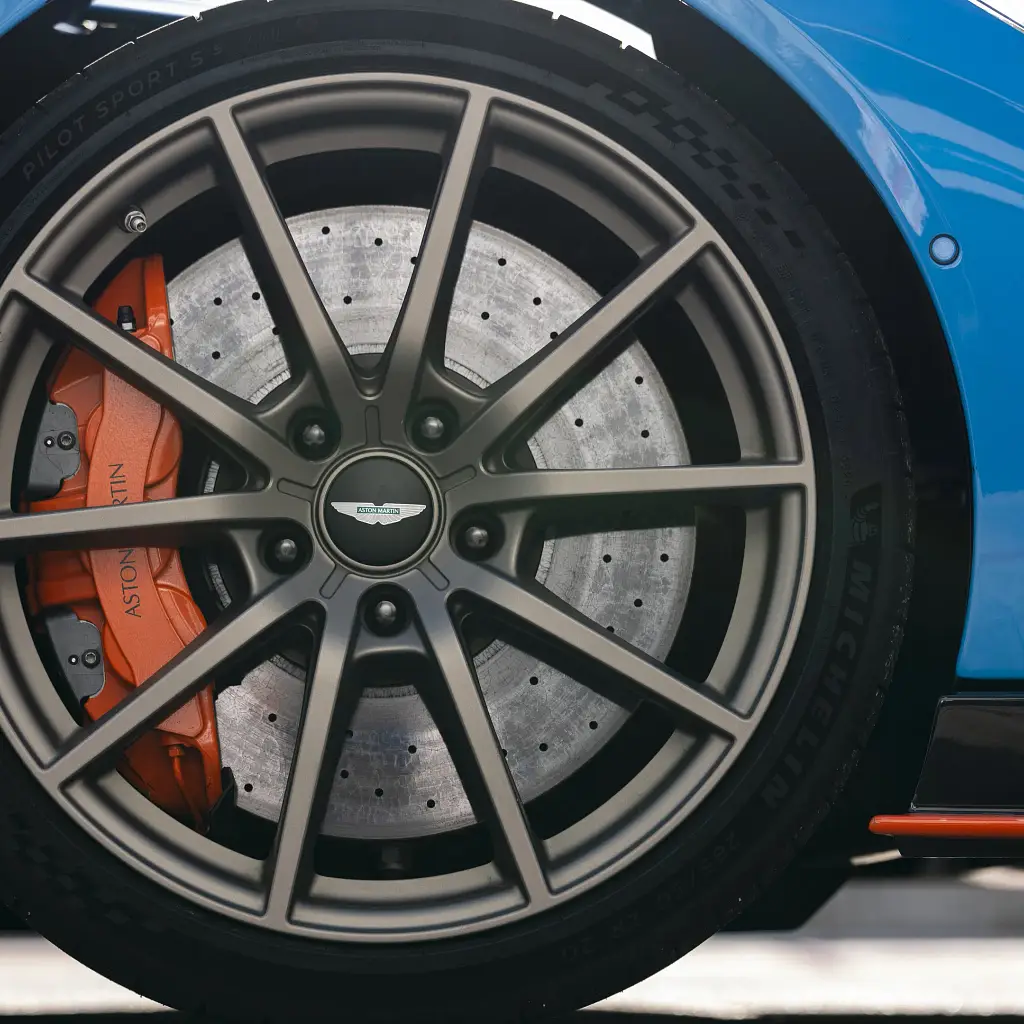
The steering is weighted and consistent across drive modes, though the steering wheel itself can feel a little cramped for those with larger hands, with the placement of grips and paddles dictating hand position. The brake-by-wire system requires some pedal effort, but the massive carbon-ceramic brakes provide formidable stopping power.
Aston Martin offers two tyre options: Michelin Pilot Sport 5S for road use and the more track-focused Pilot Sport Cup 2. Despite its low-slung nature and performance tyres, the Valhalla delivers a surprisingly compliant ride. This is attributed to the adaptive Bilstein ATX dampers and a remarkably stiff carbon tub.
A key innovation lies in the Valhalla’s active aerodynamics. Instead of maximising downforce at top speed, it achieves its peak 610kg of downforce at 250km/h, progressively bleeding it off at higher speeds. This strategy allows for less aggressively stiff springs, resulting in a malleable ride that doesn’t punish occupants over uneven surfaces. A standard nose-lift system is included for navigating obstacles.
The Magic of Three Electric Motors
The Valhalla’s trio of electric motors is central to its performance. The two front motors provide crucial functions: enabling a reverse gear (as the Graziano gearbox lacks one), facilitating all-electric front-wheel drive, and offering advanced torque vectoring. Aston Martin claims the electric reverse is theoretically capable of 140km/h, but it’s electronically limited to 30km/h for safety.
The true genius lies in the front motors’ ability to deliver immense traction and cross-axle torque vectoring. With a potential of 1500Nm of differential torque, the system can instantaneously shift power between front wheels, enhancing yaw rate control during corner entry and providing exceptional traction on corner exit. This sophisticated system replaces traditional braking-based stability control with additive torque vectoring.
The third electric motor, nestled within the gearbox, operates on even-numbered gears. This means the Valhalla can effectively be in two forward gears simultaneously, a concept that is both bewildering and brilliant in its execution. The integration of all these systems – hydraulic e-diff, electric motors, stability control, torque vectoring, adaptive damping, and transmission logic – is a monumental engineering feat that results in a remarkably cohesive and intuitive driving experience.
Engineering Purity: Invisible Technology
The engineering team’s commitment to making these complex systems feel invisible to the driver is commendable. Rather than showcasing ostentatious “look at me” party tricks, Aston Martin focused on seamlessly fusing diverse technologies to create an organic and engaging driving feel. The result is a hypercar that, despite its immense power, feels as playful and accessible as a much smaller sports car.
On Track: Unleashing the Valhalla’s Potential
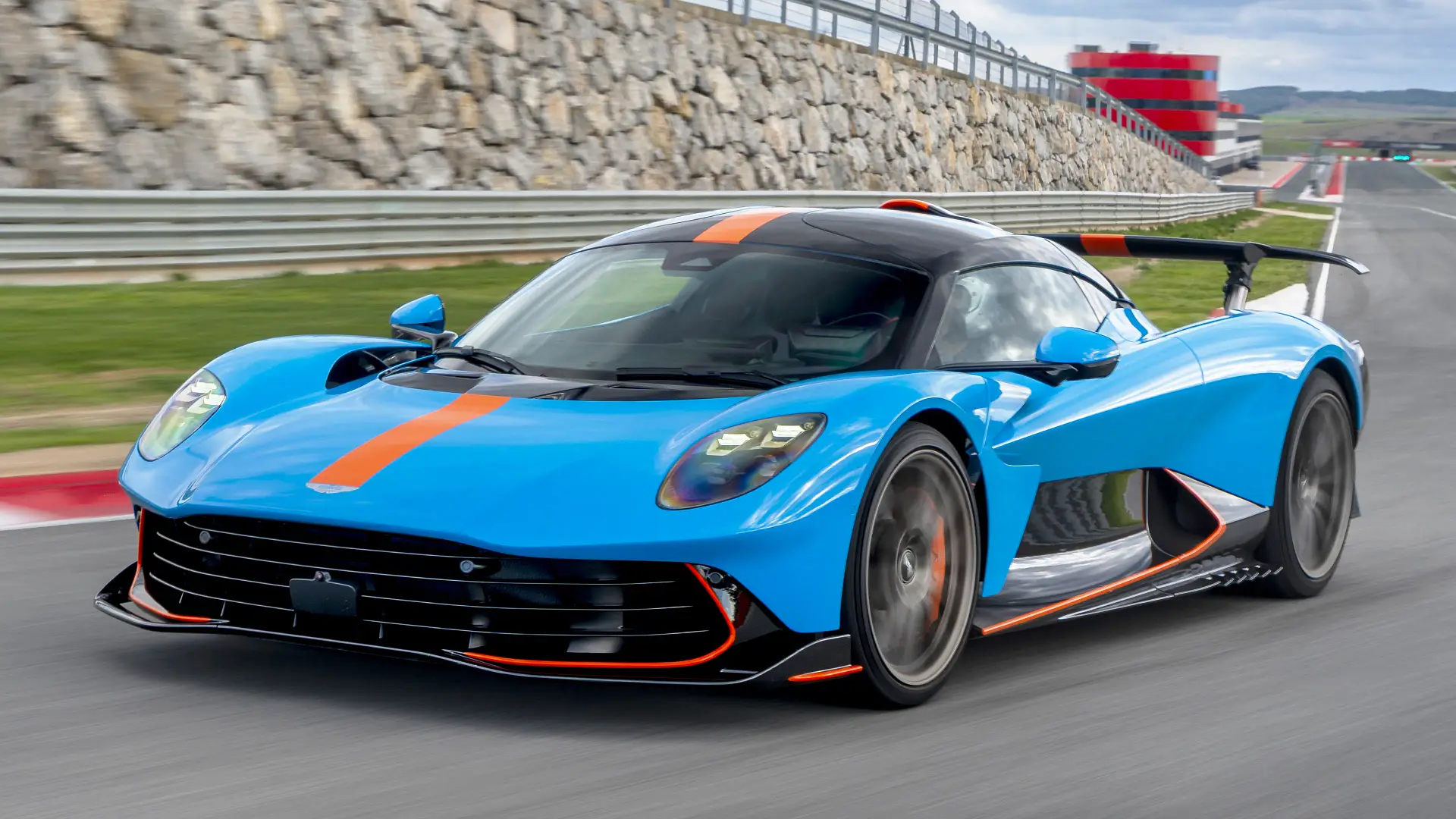
The Navarra circuit in northern Spain provided the perfect playground to explore the Valhalla’s capabilities. Aston Martin’s confidence in their product was evident in their approach, allowing drivers the freedom to explore the car’s limits without the usual restrictive convoy laps.
The Valhalla proved adept at both controlled drifts and razor-sharp lap times. The nine-stage traction control system is intuitive and user-friendly. As speeds increased, the car’s true potential emerged. The active aerodynamics, including the deployable airbrake and drag reduction system, become evident, working in concert with the front-end aero elements to provide immense stability and grip.
The front end feels incredibly strong, with reassuring turn-in response and remarkable braking stability, thanks to the e-diff. The Valhalla consistently offered more front-end grip than anticipated, encouraging drivers to push deeper into corners.
Traction out of corners is, quite simply, astonishing. While power oversteer is achievable with deliberate provocation, the car typically grips and accelerates with ferocious tenacity. The Valhalla communicates its limits clearly through both the steering and seat-of-the-pants feedback, feeling predictable and confidence-inspiring.
The rear axle boasts exceptional lateral stiffness, significantly exceeding that of other Aston Martin models and key competitors. This rigidity provides the chassis engineers with greater freedom to tune the front end, allowing for aggressive torque vectoring without compromising the car’s inherent balance.
The Sound and the Fury: Engine Notes
While the V8 engine delivers immense power, its soundtrack doesn’t quite reach the dramatic crescendo some might expect from a flat-plane crank V8. The aural reward for revving it out is more of a volume increase than a spine-tingling crescendo. However, what the Valhalla may lack in top-end aural drama, it more than compensates for with its low-end tractability.
The engine produces its peak torque of 868Nm at 6700rpm, but at a mere 2500rpm, it’s already delivering over 800Nm. With electric assistance, this figure escalates to an incredible 1100Nm. This immediate and accessible torque means the Valhalla is never caught wanting, delivering effortless acceleration whenever required.
Design Details: Functional Artistry
The Valhalla’s exhaust system is a marvel of engineering. The visible top-mounted pipes are designed for noise compliance, while a secondary, lower-mounted system handles high-speed acoustics. An ingenious solution was developed to prevent the heat from the top exhausts from damaging the rear panel paint: cool air is scavenged from the roof snorkel and re-routed to create an insulating blanket.
The carbon-fibre chassis, manufactured by Aston Martin Performance Technologies (the same team behind their F1 cars), is a two-part structure. The upper section, weighing just 74kg, is produced using a high-consistency resin transfer moulding technique. The cabin showcases a liberal use of exposed carbon fibre, offering a dizzying array of customisation options, including bespoke finishes from Q by Aston Martin.
Customers can opt for lightweight magnesium wheels, saving around 12kg of unsprung weight, a popular choice despite their significant cost. The intricate multi-element headlights, with gold accents reminiscent of the Valkyrie, are a lengthy manufacturing undertaking.
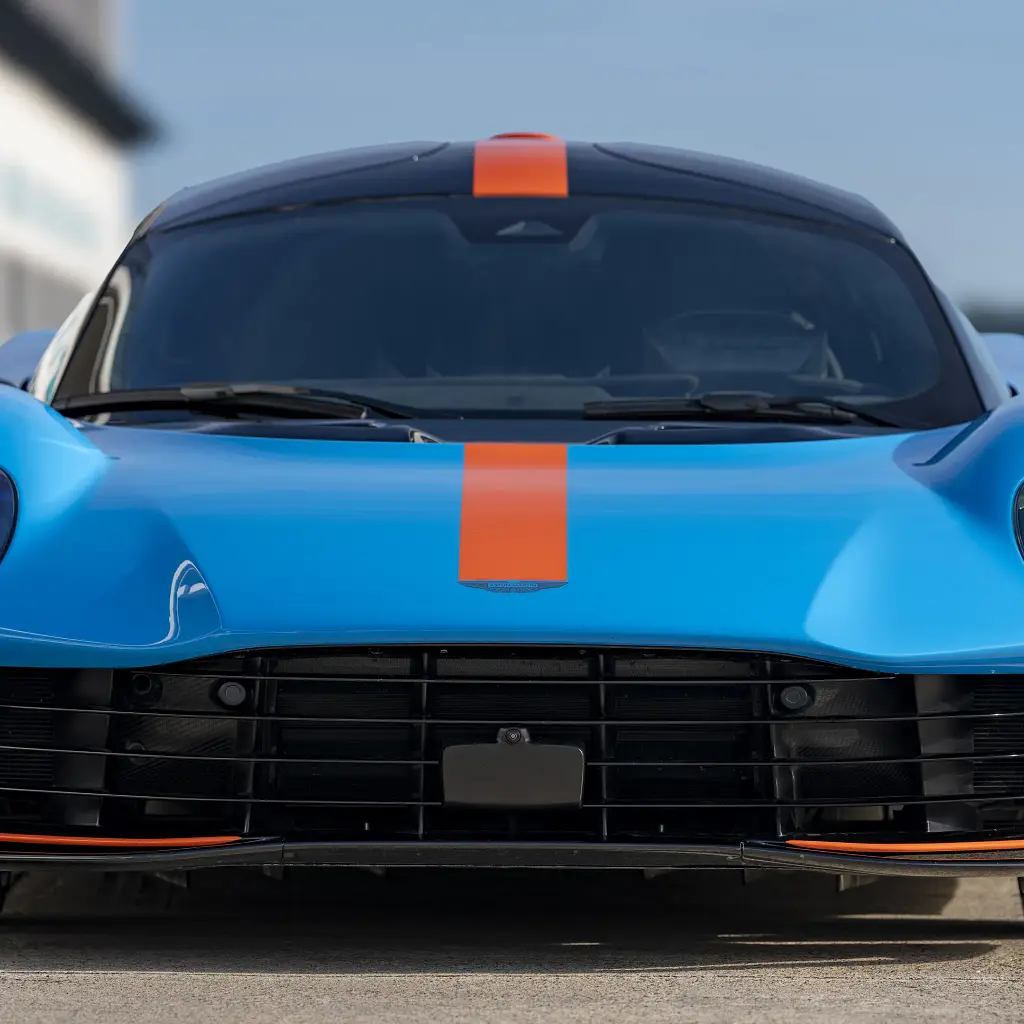
Long, tapered carbon panels on the flanks conceal ancillaries like fluid fillers and the charging socket. The front end, while featuring a more traditional Aston Martin grille than the concept, houses three radiators, with side intakes feeding oil coolers and transmission and engine coolers.
The roof-mounted snorkel supplies the 609kW combustion engine with air, feeding two large air-to-air charge coolers mounted above the engine. A central duct within the snorkel directs air directly onto the turbochargers, aiding cooling and also drawing heat from the exhaust system.
The exterior design cleverly integrates functional elements, such as the air intakes and active aerodynamic parts, with sleek painted surfaces. Subtle vortex generators ahead of the rear wheels, a personal touch from Aston chairman Lawrence Stroll, visually link the car to Aston Martin’s F1 technology and contribute an additional 10kg of downforce per side.
The Valhalla’s aesthetic is a masterful blend of aggression and elegance, maintaining a cohesive design from front to rear. It’s a shape that lends itself equally well to understated or extrovert colour schemes.
A New Audience and Future Possibilities
Aston Martin reports that approximately 55 per cent of Valhalla orders come from new customers to the marque, a significant achievement for a company navigating challenging financial waters. This influx of new buyers is expected to generate further interest in Aston Martin’s broader model range.
Rumours of an open-topped version and a more track-focused “Valhalla S” variant are circulating, suggesting further evolution of this potent platform.
Verdict: A Masterpiece Forged in Adversity
The Aston Martin Valhalla defies expectations. It’s a dynamically polished and brilliant driver’s car in a segment often populated by mere showpieces. Aston Martin deserves immense credit for its bold undertaking, introducing a raft of firsts for the brand: a dual-clutch transmission, plug-in hybrid technology, three electric motors, and a flat-plane crank V8. What could have easily devolved into hubristic overreach has instead resulted in a car that delivers pure, unadulterated driving joy.
Securing 999 owners at this price point may take time, but with production scheduled across 2025 and 2026, and potential for further variants, Aston Martin appears poised for success. While its long-term investment potential remains to be seen, the Valhalla’s breathtaking looks, exceptional driving dynamics, and groundbreaking engineering are undeniable. Aston Martin has taken on a monumental challenge and delivered a spectacular result. The wait has been long, but the reward is truly worth it.