The Changing Landscape of Grammar Schools
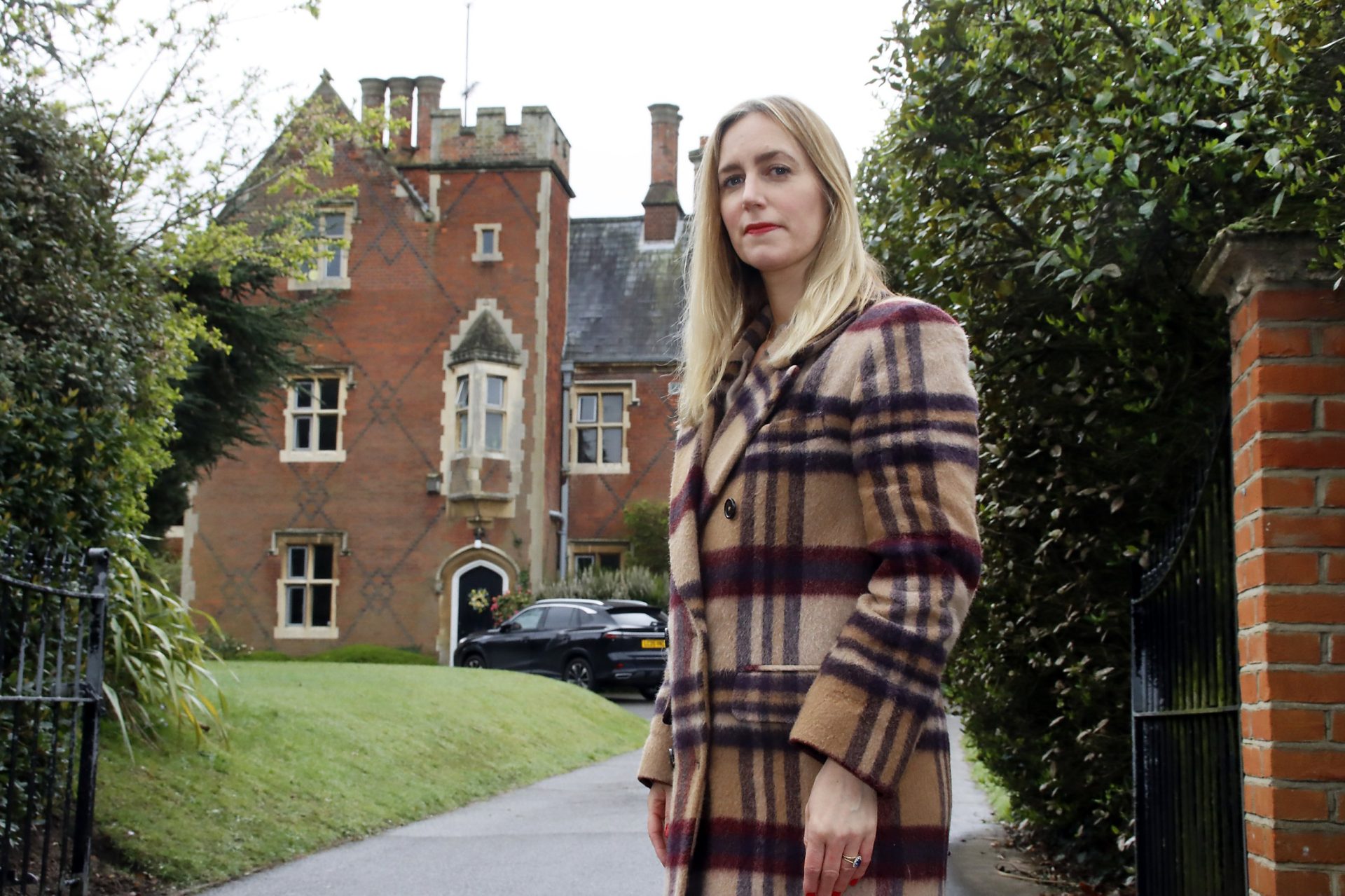
In the past, I naively believed that grammar schools were a powerful tool for social mobility. However, my perspective has shifted over time. I now struggle to see Colchester Royal Grammar School (CRGS) as the same institution it once was.
Gary Howard and I are old friends. We both grew up in Essex and attended CRGS during the late 90s and early 2000s—though I went to its counterpart for girls before joining the boys’ school for my A-levels. Now, Gary’s 17-year-old son is in his final year at the school, but he feels the institution has changed significantly.
“I was living on a council estate,” Gary recalls. “Before sitting my 11 plus, I used to do past papers with my great uncle, who was a primary school teacher, which I think helped me get in. I didn’t have a tutor or anything like that. Now, there’s no hope of getting in without extensive tutoring for your child—which comes at a price. There’s no catchment area, so the competition to get into the school is huge.”
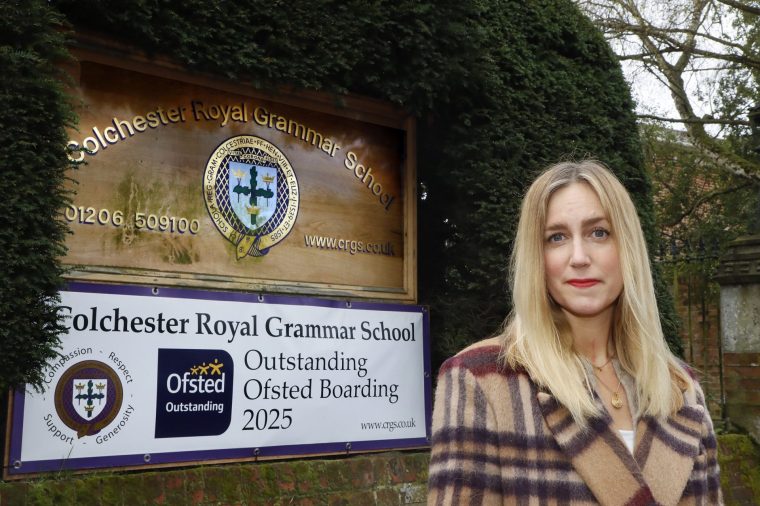
CRGS has long been known for its competitive nature. Founded in 1128, it’s one of the oldest schools in England and widely considered one of the best state schools in the country. But Gary isn’t alone in feeling things are getting out of hand. A group of parents have started a petition calling for the introduction of a catchment area at the school after their Freedom of Information request revealed only 30% of children offered places in 2025 live locally. Locals say coach loads of children now arrive from London—over 50 miles away—each morning. Another FOI found that feeder schools for CRGS are located all around the UK, and internationally including China and the US.
“This situation disadvantages local children and families, harms social mobility, fragments our community, and increases traffic congestion and environmental impact from long-distance commuting,” argue the petition organisers, adding that “it also undermines the principle that local schools should serve local communities.”
The petition points out that other grammar schools have introduced catchment areas, including Colchester County High School for Girls. When Gary and I went to CRGS, the 11 plus was far from easy—but our experience was nothing like that of today’s grammar school children, many of whom are tutored from the age of eight and compete against hundreds or even thousands for a place.
The Escalating Arms Race of Education
The clash over our Colchester grammar school represents a wider debate over selective education. Labour prohibited the creation of new grammar schools under the Blair government in 1998, but Nigel Farage has said he would consider rolling out new ones if Reform wins the next general election.
There are currently 163 state-funded grammar schools in England, serving approximately 176,000 pupils. While most of these schools use some kind of catchment area to prioritise local children, roughly 40% accept children from further afield, and some schools like CRGS have no geographical restrictions at all.
Lee Elliot Major, former chief executive of the Sutton Trust and professor of social mobility at the University of Exeter, describes the level of competition this creates as an “escalating arms race of education.” He notes examples of grammar school catchments crossing counties, with reports of people relocating or travelling hundreds of miles to get into these schools. And then you’ve got unimaginable amounts of money being spent on tutoring.
Some point to Labour’s decision to add VAT to private school fees as a contributing factor. “It has been going on for many years,” he says, “but I think it’s now reached levels that have warped the whole system.”
Certainly, private school is now out of reach altogether for many middle-class British parents. On average, fees have increased in real terms by 20% since 2010, and by 55% since 2003—before VAT is even factored in. Against this backdrop, funding a tutor to help your kids get into a state grammar school may seem like a more affordable alternative.
And although overall application numbers to grammar schools haven’t increased—reflecting broader demographic shifts such as falling birth rates—competition for places remains intense, with some schools now receiving more than 30 applications per place. Tutoring agencies report that children are being trained for exams at increasingly younger ages, and with longer sessions.
Despite many grammar schools claiming to have improved their admissions policies, around a quarter have been found to admit disproportionately few poorer pupils. Just 4.5% of pupils at Colchester Royal Grammar School are eligible for free school meals, compared to a national average of 25.7%.
Grammar schools, Major contends, are “rewarding privilege and practice over promise.” Parents will always try to do the best for their children, whatever the system, so as competition increases, those with the resources will spend them on tutoring.
The Cost of Tutoring and the Struggle for Social Mobility
One parent in Colchester tells me he is spending hundreds a month on tutoring for his son, who is nine, in the hope he’ll be accepted at CRGS. “Nobody is getting in off the back of picking up half a dozen practice papers from WH Smith in the summer of year 5 anymore,” he tells me. On top of the weekly one-and-a-half-hour group sessions are summer schools and mock exams. “I reckon all told, year 5 is probably costing us about £2.5k,” he confesses. He says he’ll do the same for his daughter when she reaches year 4, bringing the total for both children to close to £7,500.
He considers it worthwhile, given that if his kids pass their 11 plus, there will be no private school fees to pay, which is where he will otherwise send them. “We’re increasingly unimpressed with their state primary as they get older,” he insists. “The standard of work considered ‘good’ is pretty low, and when you have limited resources and kids with very diverse needs, the resources tend to get aimed at bringing the bottom of the pile up rather than pushing the top as far as they can go. I have very little faith in our catchment state secondary.”
Amid rising concerns that tutoring is fuelling inequality in education and impacting child mental health, some grammar schools have taken action. Last year, Pate’s Grammar School in Gloucestershire announced it was reserving 15 places a year for more disadvantaged pupils, even if they scored lower than their “tutored” peers in the entrance exam, and prioritising places for local children. Reading School has overhauled its exam to make it “tutor-proof”—with surprise elements and a focus on creativity and flair. Its headmaster, Chris Evans, said the amount of tutoring given to many children is “a pestilence.”
A Pressurised Environment and the Question of Purpose
Gary feels grammar school is “a pressurised environment. Certainly since I was there, it was churning out a specific kind of pupil to a specific kind of career.” From both personal experience, and from speaking to his son, he adds: “I think there can be some trauma in that pressure if you don’t fit the box. I don’t think my son’s destiny is to become a high-powered accountant or lawyer, and that maybe makes a grammar school approach a bit less tailored to him.”
For Major, the solution lies in reforming how places are allocated. “Personally, I would have a threshold approach—you have to get above a certain score to qualify,” he suggests, with criteria such as proximity and background then taken into account to make the system fairer.
Sir Michael Wilshaw, the former chief inspector of schools in England, has said grammar schools “hold back social mobility” and that governments should insist that their admission policies reflect the local averages for free school meal admissions.
Who Is This School For?
So why haven’t some grammars, such as CRGS, done something like this already, given the mounting pressure? Gary suspects its position in the league tables may be a factor—those annual published rankings based on exam results. Colchester Royal Grammar School regularly ranks among the top five state schools in England, but as competition for places intensifies, maintaining a high position in relation to similar schools becomes more challenging.
He questions whether there may be a commercial incentive for the school in attracting wealthier parents who make large “donations.”
Gary and I both have very happy memories of our time at the Colchester grammar schools. He stresses that he remains grateful to CRGS for the education he received. “I’m now an editor, and I’m doing that off the back of a GCSE in English,” he says. “I think there must be some quality to the teaching there, to help me get that foundation. I wouldn’t have been able to pay for the education that CRGS offers with my background—for myself, or for my son.”
But he’s clear that things need to change in terms of how the school selects its pupils. “You have to kind of wonder who the school’s for, and what it’s trying to achieve,” he considers. “Is it ultimately to the benefit of people that live here? Or are local kids missing out on their chance to be uplifted by this great asset that we have in the city?”
A spokesperson for Colchester Royal Grammar School said: “Colchester Royal Grammar School is proud to be one of the highest-performing state schools in the country, offering an exceptional education and wide-ranging opportunities to students from diverse backgrounds. Our admissions procedures follow national legislation and are administered independently to ensure fairness and transparency. We remain committed to providing an enriching, supportive and aspirational environment for all students, and we are proud of the contribution our school makes to both the local and wider community.”