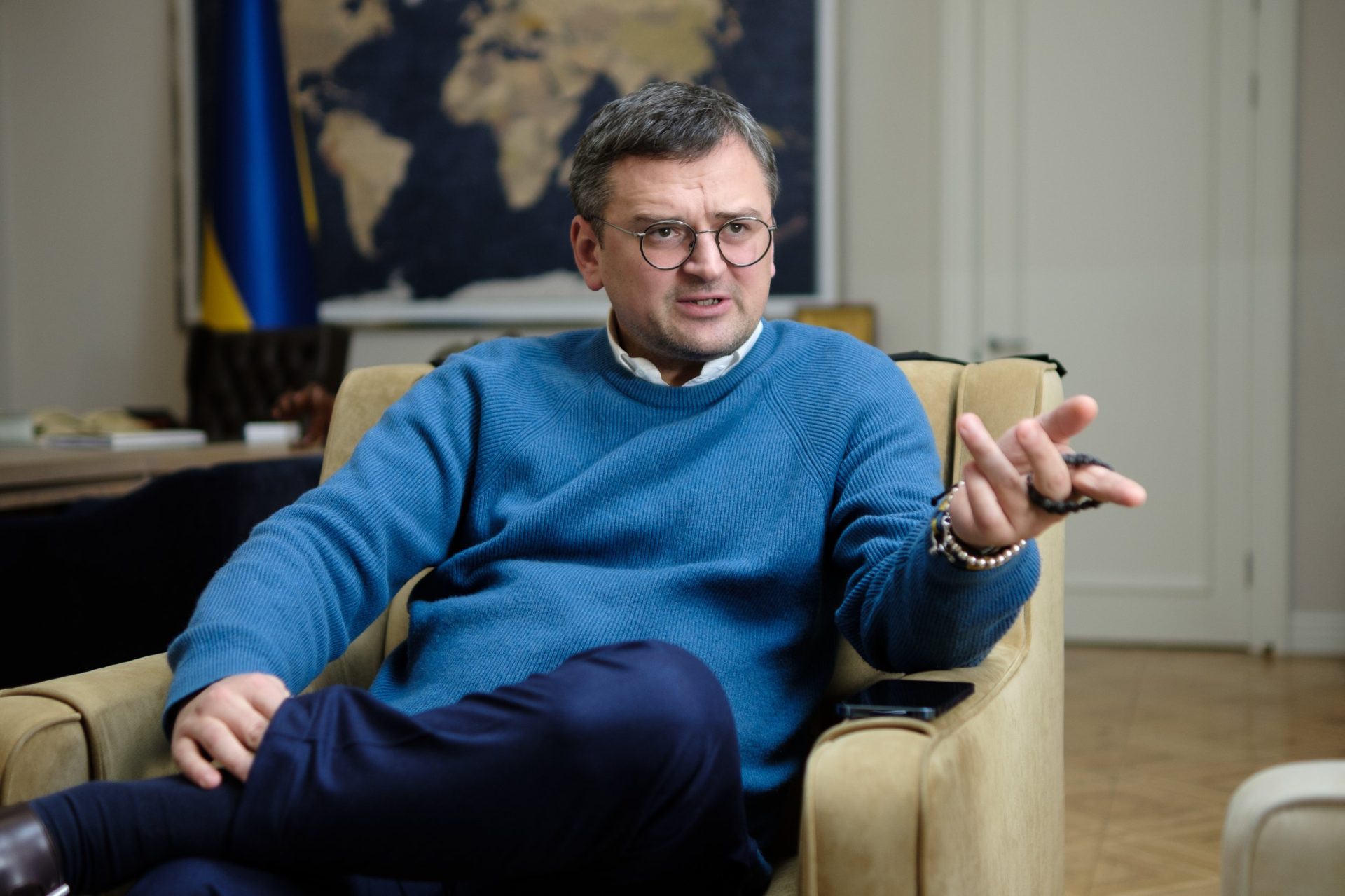
Understanding the Mind of a Leader
As Ukraine’s foreign minister through the most perilous years in Europe since the Second World War, I sat in rooms where distinguished men and women tried to make sense of Vladimir Putin. Most argued that the Russian president was a rational actor who could be managed, persuaded, accommodated, and, if necessary, moderately deterred. Their arguments, solid as they sounded, failed for one simple reason: they tried to explain Putin as if he were one of them. He is not.
Who is he then?
Putin wraps himself in the myth that he is part wizard, part riddle, and the keeper of some mysterious Russian soul.
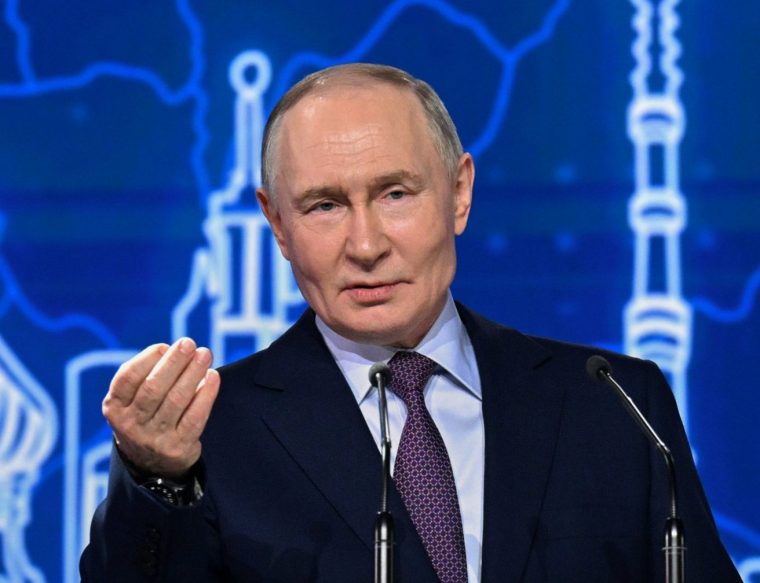
It must be acknowledged that, by waging wars and killing thousands of civilians, Putin offers his own answer to the eternal question first posed by one of Fyodor Dostoyevsky’s main characters – Raskolnikov. In Crime and Punishment, he asks himself: “Am I a trembling creature, or do I have the right?” He then kills an old woman because he decides that he does.
Long before Syria, Ukraine and Salisbury, Putin asked himself a version of the same question: must I obey rules written by stronger powers, or do I have the right to write my own? He chose the latter—and began killing, convinced it was the only way to rewrite the rules and assert his and his country’s greatness.
This is where Putin and Raskolnikov part ways. The latter spends hundreds of pages tormented by his choice, ultimately recognising his grave mistake and seeking redemption. The former cloaks himself in a cross and sends more of his people, drones and missiles to kill and destroy – because he believes he is doing nothing wrong.
Take the war on Ukraine. It is not about a list of grievances – Nato enlargement, language rights, imagined threats from Kyiv, or alleged disrespect for Russia’s concerns. These are props. At its core lies Putin’s belief that he has the right to conquer. That Ukraine still stands proves that while his assumption remains intact, he has gravely overestimated his ability to turn belief into reality.
The Nature of Putin’s Belief
Putin is neither a genius nor an enigma. He is not invincible. That myth grew because he was never confronted at a scale commensurate with his aggression. Putin is a man who makes mistakes – and makes millions pay for his failure to correct them. And there appears to be no one willing and able to steer him back to the path laid out in Dostoyevsky.
What do Sergei and Yulia Skripal, the victims of the Salisbury poisoning, Ukraine, and Europe have in common? In Putin’s view, they all betrayed him. Skripal worked for British intelligence and defected. Ukraine refused to submit, choosing Europe over Russia. Europe began to free itself from dependence on Russian energy while offering countries like Ukraine a future beyond Moscow’s grip. A Westerner sees these as trade-offs. Putin follows a different rule, one rooted in his KGB past: death to traitors.
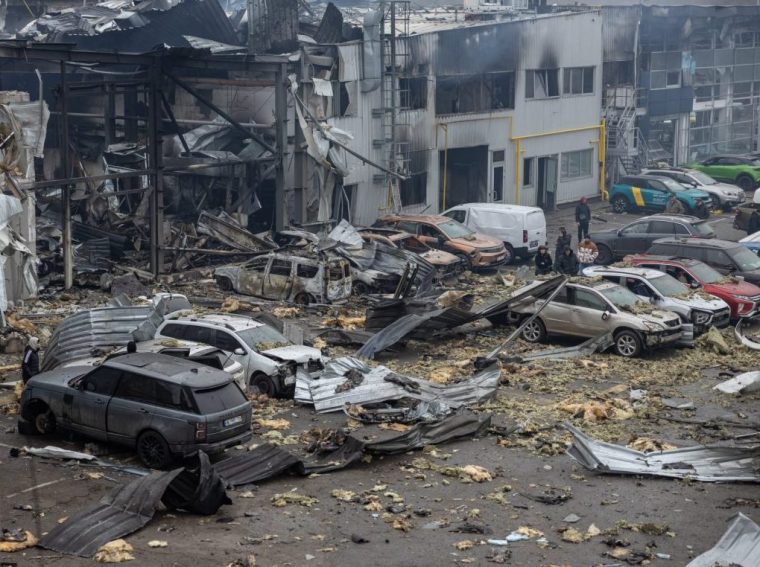
This brings us to the second truth: Putin’s war against Ukraine has always been about more than Ukraine. Europe is his theatre, and Ukraine lies at its heart. As we have seen in Syria, Venezuela and Iran, Putin cannot fully commit to saving his allies elsewhere because his resources are tied up in Ukraine and Europe. It is here that the fate of his grand strategy will be decided. It is here he must prove that force works, that freedom is weak, and that the West no longer has the will to defend its own rules. Russia may no longer be a global superpower, but it remains strong enough to drag an entire continent into instability.
The Power of Corruption
Third, the army is not Putin’s greatest foreign policy weapon. Nor is it oil and gas. It is corruption. Corruption is how he penetrates other countries without sending in tanks. There are many ways to do this: infiltrating institutions with agents and money, as in Ukraine before the invasion; investing heavily in real estate and finance, as in the UK; financing major political parties, as in France; or making business and political elites dependent on cheap energy, as in Germany. And always, everywhere, he sows distrust, deepens social divisions, and exploits fault lines through disinformation and social media polarisation.
Corruption buys silence and amplifies useful voices. It buys delay and creates moral fog. It softens political systems from within. It makes clear decisions harder. It makes cowardice look respectable. And from corruption grows something even more valuable to him: doubt.
Yes, Putin uses missiles, terror, assassination, sabotage, blackmail and lies. But before he takes land, he tries to break will. He wants free societies to doubt their values, their leaders, their alliances, the cost of resistance – even the very existence of truth. Corrupt the will, and everything else becomes easier. This is the rule Putin follows with ruthless consistency.
The Illusion of Peace
The fourth truth is the hardest: Putin is not looking for peace. He finds it entirely convenient to run a country at war, so long as his people do not call him to account and he fails to silence them.
Putin does not view compromise as Western leaders do. For him, compromise is not an end – it is a pause. A chance to rearm, regroup, corrupt, divide, and return stronger. A ceasefire is merely a pause that buys time: either for subjugation through political means, as in Georgia, or for preparation for the next war, as in Ukraine.
Any plan built on the assumption that peace can be achieved through further concessions to Russian demands only paves the way for more war. It produces deferred war instead of deterring Russia.
Finally, there is a misconception that must now be abandoned: Putin is not an evil tsar who has taken his nation hostage. Putin will die one day. But the danger will remain as long as the imperial idea that drives him endures. The real problem is not one man. It is the widespread belief in and outside Russia that it has a historic right to dominate others. That belief must fail.
The fear of cornering Putin, lest Russia weaken or even begin to fracture, has paralysed thinking for years. Too many have preferred a violent empire to an unstable one. That is not realism. It is surrender dressed up as caution. Lasting peace is only possible with the fall of the imperial mindset that sustains it.
Putin is dangerous, but he is not 10 feet tall. Nor is he invincible. He has been made to appear stronger than he is by years of wishful thinking, self-deterrence and delay in the West. Russia can be contained. Ukraine can prevail. All that is required is clarity: to call Putin what he is – an enemy.