A Remarkable Comeback
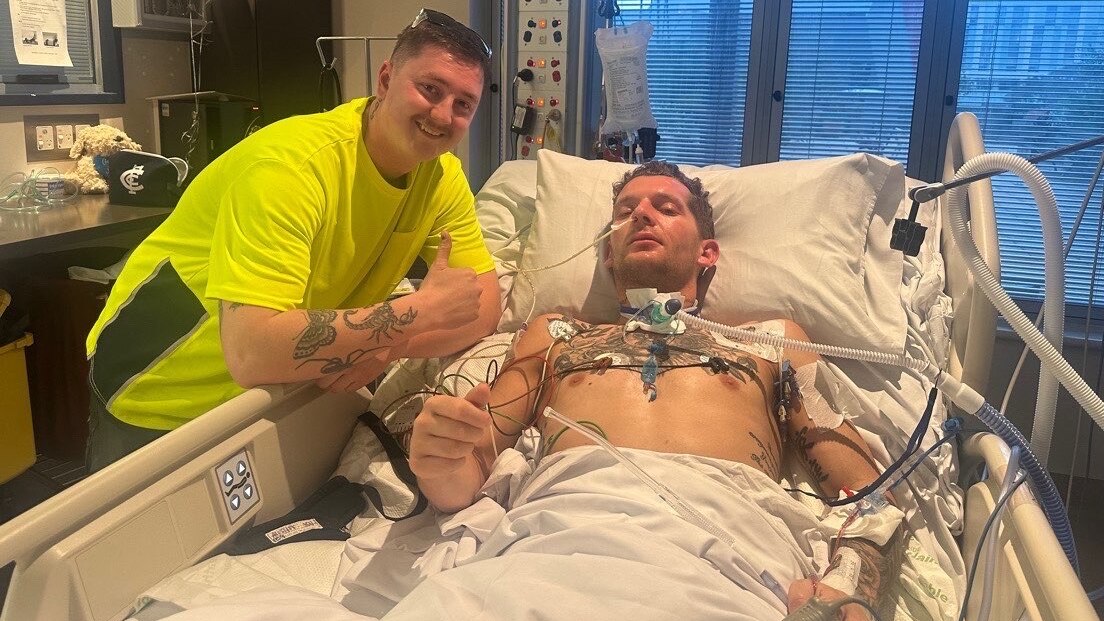
When Sale City vice-captain Jaxsyn Whitehill ran onto the field for the first time this year, he felt unstoppable. This moment was a testament to his incredible journey and resilience. Seven months earlier, Mr Whitehill was in an induced coma after contracting Guillain-Barré syndrome (GBS), a rare condition in which the immune system attacks the body’s nerves. He spent 15 days in that coma. Doctors told him he might not be able to play again for up to two years. So when he ran onto the field in the Gippsland town of Yarram, about three hours south-east of Melbourne, it was a moment to savour.
“I was very emotional; when you’re running out, you just feel unbreakable, really,” he said. “You just feel like nothing can get in your way anymore.”
The Beginning of a Crisis
Mr Whitehill was playing finals football in Gippsland last August when he first became sick. “I just thought that I got the flu and, yeah, I didn’t think nothing of it,” the 26-year-old said. His condition quickly worsened. He became violently unwell during a match, before losing balance and vision. “It was [a] blackout from there,” Whitehill said.
In September, Mr Whitehill was rushed to the hospital after his breathing worsened. He was placed in an induced coma for 15 days. “When my parents and all my family were in a meeting, the doctors said that they don’t know if I’m going to come out the same … because I could have brain damage,” he said. “When my family told me that, I broke down.”
A Confusing Recovery
When he woke up, he was disoriented and unsure what had happened. “I saw pictures on the wall and balloons and stuff; I was so confused,” he said. His father became his full-time carer for at least three months. “When I had a shower, he had to like dress me, give me dinner and put me to bed and [they were] pretty crazy times.”
The Psychological Impact
Mr Whitehill said the psychological impact of his illness continued long after the hospital. “Sometimes I still stay awake and I think about the hospital and stuff … it’s always going to be in the back of your head,” he said. He is still managing fatigue. “My face drops a bit,” he said. “It just mentally gets a bit challenging.”
Medical Perspective
St Vincent’s Hospital neurologist Mark Cook said Mr Whitehill’s return was exceptional. “He’s probably a young, fit guy; he’s in a good position to make a good recovery in that situation,” he said. “But the elderly, for instance, they might find it a lot harder to get over something like that.”
A New Outlook
Mr Whitehill is continuing to manage fatigue, despite his successful return to the football field. He said the successful return had helped reshape his outlook on life. “You just got to enjoy your life and not worry about the little things,” he said. “Just never give up on anything and have little goals every day, and you’ll see the result at the end of it.”
Key Takeaways
- Resilience and determination are crucial in overcoming serious health challenges.
- Support from family and medical professionals plays a vital role in recovery.
- Mental health should not be overlooked, even after physical recovery.
- Setting small daily goals can lead to significant long-term results.
- Gratitude and appreciation for life can transform one’s perspective and outlook.