
A Growing Debate Over ADHD and Financial Penalties
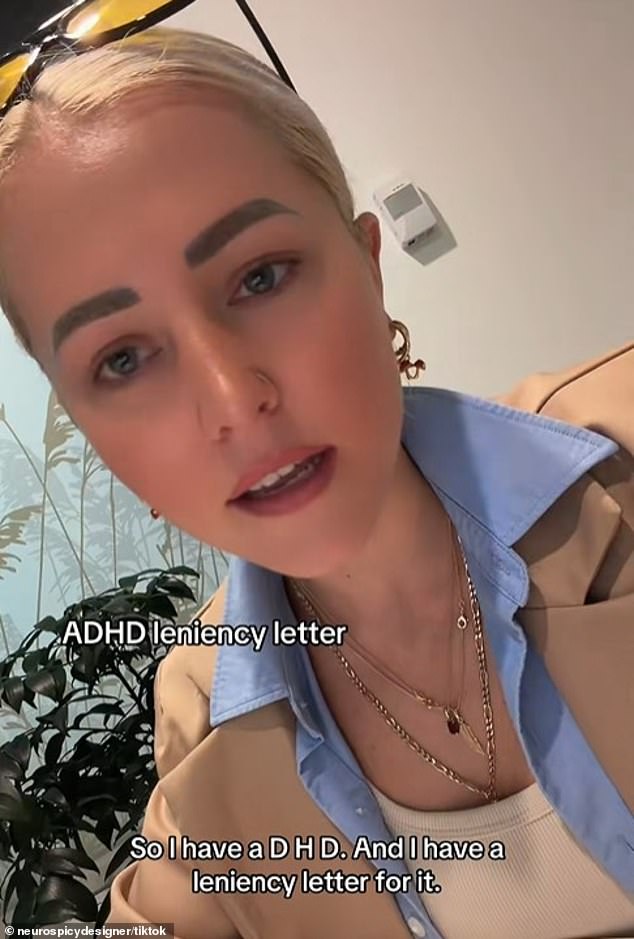
A Sydney-based designer has sparked a significant conversation after revealing she uses her ADHD diagnosis to have parking fines and late fees waived, even enlisting her doctor to support her claims. Zoe Sheehan, who was diagnosed with ADHD in recent years, argues that her condition should exempt her from penalties for memory lapses, stating she is “not a criminal, just confused.”
Sheehan claims that her psychiatrist agrees with this perspective and has written a “leniency letter” to help with any appeals. She is now working on a petition to make such leniency mandatory for people with ADHD.
“It’s not just being forgetful, ADHD is clinically impairing,” Sheehan told the Daily Mail. “It impacts executive function, memory, time blindness, organisation, and impulse control, which are the exact things our systems rely on to avoid fines, late fees, missed payments, and subscriptions slipping through.”
She added that people with ADHD often end up paying thousands of dollars annually due to the challenges they face. “We’re actively trying to manage it, but the system still penalises us for key symptoms of the condition.”
The ‘ADHD Tax’ and Its Impact
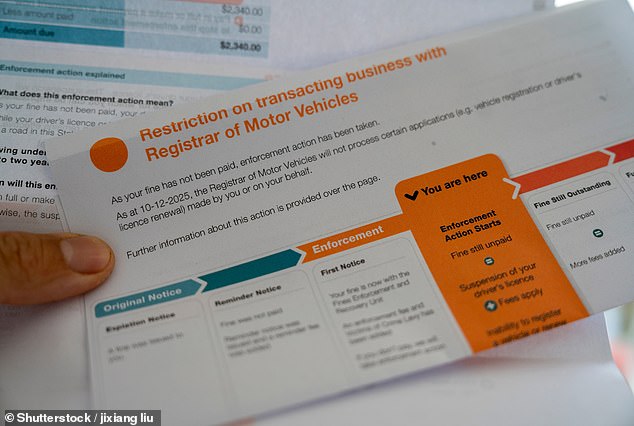
It is estimated that one in 20 Australians live with ADHD, and financial obligations related to the condition have been dubbed the “ADHD tax.” This includes situations like leaving a car in a zone past the time it needs to move, forgetting to transfer money into an account and getting charged overdraft fees, or missing a paper bill for car rego renewal or insurance.


Sheehan shared a personal story about driving to a shopping centre, parking in a 30-minute zone, and then forgetting she had arrived by car. “I went back and obviously I got fined. So these are the kinds of situations where a leniency letter helps.”
Her social media posts received hundreds of responses from people thanking her for the advice, with many vowing to try the same approach.
One person shared: “The amount of money this would have saved me if I knew this was possible, literally got a fine, a court date and a suspended licence because I forgot to renew my licence.”
Another said: “I parked in a loading zone, forgot and it stayed there over a four-day long weekend and got a ticket every hour over the entire weekend resulting in almost $7k worth of parking tickets with 25 days to pay then they basically doubled due to non-payment.”
Sheehan was so moved by the responses that she started sharing templates of the letters people can use to appeal. She is also planning to launch a petition calling for businesses to be legally required to consider ADHD when making decisions about fines.
“We need to create a petition to say we get reimbursed the fines we received before we were diagnosed and medicated, because it is not fair that we are copping the most extortionate fines,” she said. “Options would include flagged accounts for neurodivergent users, additional reminders before penalties, discounted fines or late fees, grace periods, or structured support pathways when someone has a diagnosis.”
She added that she has had to build her own apps for finance reminders, regulation, and health check tracking because the current tools and support don’t exist.
Mixed Reactions and Concerns
While Sheehan’s comments were largely met with praise, they have also sparked backlash. One person said, “You guys need to start setting reminders on your phone and stuff.” Another commented, “I live in America and they’d laugh in my face.”


Connor Greene, an ADHD speaker and educator, told the Daily Mail that a diagnosis should not automatically be seen as a free pass. “It genuinely has me torn,” he said. “ADHD tax is very real. It can be incredibly overwhelming and costly over time, no question. But I don’t think that means we’re absolved of responsibility.”
Greene pointed out that there are already measures in place to help people with ADHD, including payment plans, fee reductions, and, in some cases, the removal of late fees. “I think reasonable adjustments make sense,” he said. “But not when it comes at the cost of other people’s safety or wellbeing.”
He emphasized that while ADHD explains the struggle, it doesn’t remove the outcome. “The focus has to be on finding what works for you, not expecting the world to absorb it.”