Taylor Swift Takes Legal Steps to Protect Her Voice and Image
Taylor Swift, one of the most iconic pop stars in the world, has taken a significant step to safeguard her voice and image from potential misuse by artificial intelligence. The singer has filed three trademark applications in the United States, aiming to protect her unique identity from AI impersonations.
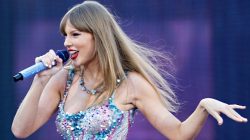
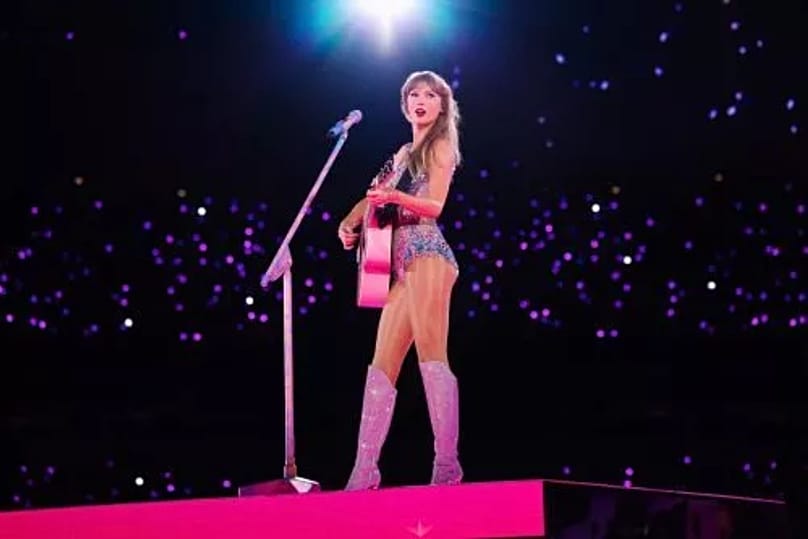
One of the applications includes a visual representation of Taylor during her Eras Tour, capturing her on stage in a memorable performance. The other two applications involve audio clips where she introduces herself while promoting her latest album, The Life Of A Showgirl. These steps are seen as a proactive measure to ensure that her likeness and voice remain exclusively hers.
Here is the visual image protected by Swift:
Trademark lawyer Josh Gerben, who first shared details of the applications on his blog, explained the significance of these filings. He noted that by registering specific phrases linked to her voice, Swift could potentially challenge not only exact reproductions but also imitations that are “confusingly similar,” which is a key standard in trademark law.
Gerben added that these applications could offer Swift an “additional layer of protection.” He suggested that if a lawsuit were to arise over an AI using Swift’s voice, she could argue that any use of her voice that sounds like the registered trademark violates her trademark rights.
Similarly, with the image filing, if someone creates an AI-generated version of Taylor in a jumpsuit with a guitar or something close to it, she would have a federal trademark claim to assert her rights.
Recent Incidents Highlight the Need for Protection
This move comes in response to several instances where AI-generated versions of Taylor Swift have appeared online. These include sexually explicit images and a doctored election ad where the singer seemed to endorse Donald Trump. Such incidents have raised concerns about the potential misuse of her image and voice without her consent.
In addition, Oscar-winning actor Matthew McConaughey became the first Hollywood celebrity to use trademark rules as protection against AI. Earlier this year, he told The Wall Street Journal that he had trademarked his voice and likeness to prevent AI rip-offs.
The Broader Implications
The trend of celebrities protecting their identities through trademarks is becoming more common as AI technology advances. With the ability to create realistic imitations of voices and appearances, the risk of unauthorized use increases. By securing these trademarks, Taylor Swift is setting a precedent for other artists and public figures to follow.
This legal strategy not only protects individual rights but also sets a standard for how AI-generated content should be regulated. It highlights the importance of clear laws and guidelines to ensure that creators retain control over their work and identity.
As AI continues to evolve, the need for such protective measures will likely grow. Taylor Swift’s actions demonstrate a forward-thinking approach to addressing the challenges posed by emerging technologies. Her efforts could inspire others to take similar steps, ensuring that the digital landscape remains respectful of personal rights and creative ownership.