Personal Experiences Shape Defensive Driving Lessons
Driving instructor Tom Hart has witnessed numerous tragic incidents throughout his career, both as a police officer in regional Western Australia and now as an educator. One of the most unforgettable events was a fatal crash near Kambalda in 1999, which claimed the lives of two teenage boys. This experience has significantly influenced his approach to teaching defensive driving.
Last week, Mr Hart conducted a defensive driving course for 30 teenagers in Kalgoorlie-Boulder, about 600km east of Perth. During the session, he shared his personal story with the students. “I told them about the crash where three 16-year-olds and a 17-year-old were involved, and two of the boys died,” he said. “The aftermath was heartbreaking—having to inform the parents and dealing with the emotional impact on the entire family.”
This real-life account serves as a powerful reminder of the consequences of reckless driving, especially for young drivers who may not yet fully understand the risks they face on the road.
Unique Road Hazards in Regional WA
Road safety remains a critical concern in Western Australia, with 64 fatalities recorded so far this year, including 32 on regional roads. The challenges faced by drivers in these areas are unique and often overlooked. To address this, the Middle Island Fishing Crew, a local community group, developed a defensive driving course aimed at helping young drivers navigate the specific dangers of outback roads.
John Bruce, known as “Admiral” within the group, explained that many new drivers rush to get their license and then immediately drive long distances, such as 600km to Perth. “There are unique challenges like overtaking road trains, managing fatigue, driving at night, encountering animals, and dealing with poor road conditions,” he said. “A standard driver’s test doesn’t prepare you for these situations, so we created this course to bridge that gap.”
Gaining Practical Skills
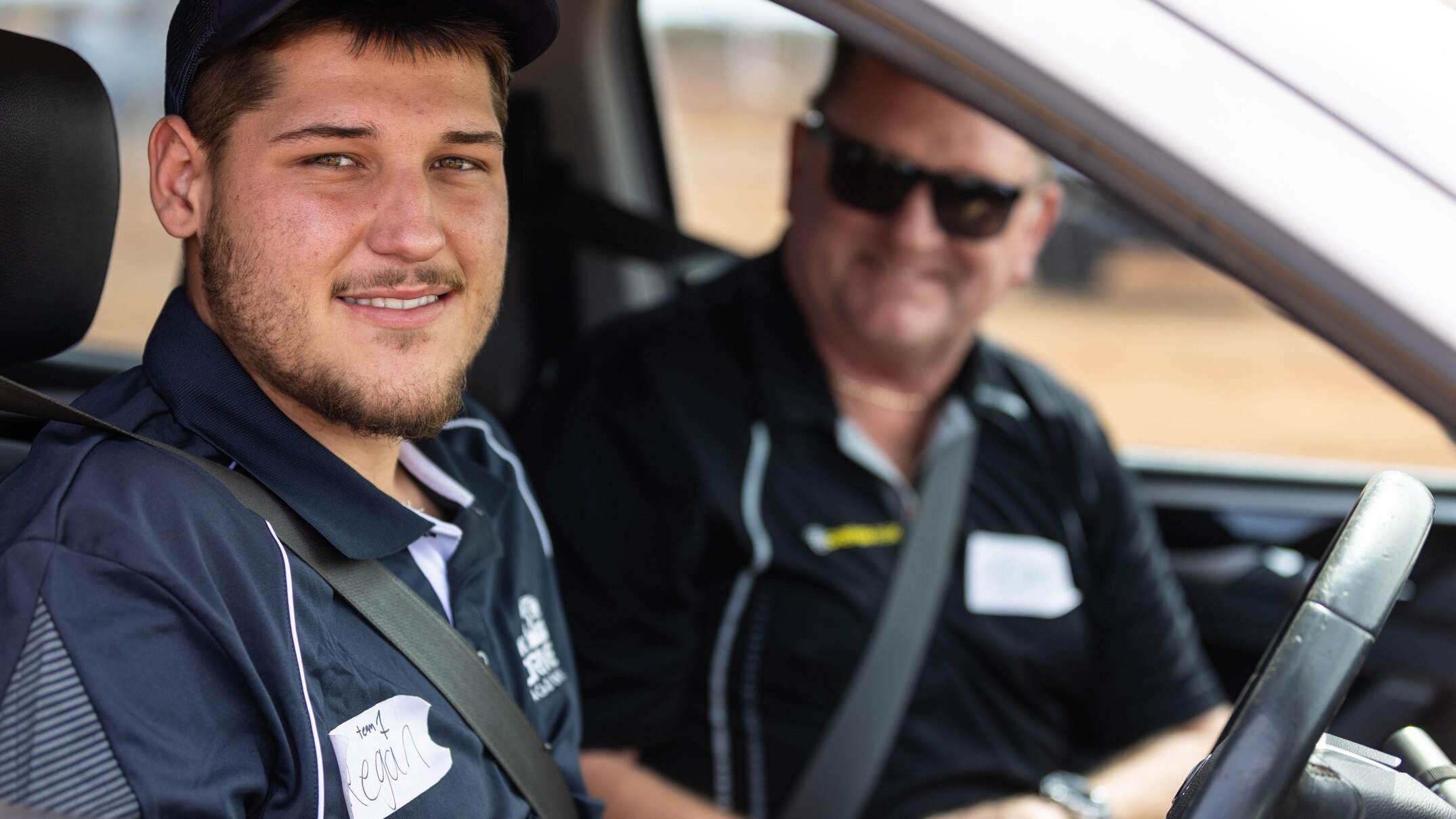
The defensive driving course attracted participants who had recently obtained their provisional licenses, or P-plates. Regan Wiese, a 17-year-old participant, was enrolled by his employer to gain more experience behind the wheel. “I’ve been on my Ps for a couple of months, and I’ve learned more than what I did on my test,” he said. “They taught me about emergency stopping distances and how to properly control the car. They also showed us how to drive on dirt and gravel, not just on paved roads, and what to watch out for in different situations.”
This hands-on training is essential for young drivers who may not have encountered such conditions before. It equips them with the skills needed to handle unexpected challenges on the road.
Changes to WA’s Licensing System
This week, the state government announced plans to overhaul WA’s licensing system. Key changes include increasing the minimum supervised driving hours from 50 to 80 hours. Learners will now need to spend 12 months on L-plates, while provisional drivers will remain on P-plates for at least three years instead of two.
Assistant Transport Minister Jessica Stojkovski highlighted that some jurisdictions on the east coast require learners to complete 120 hours of supervised driving. However, she noted that WA’s vast size makes it impractical for remote and regional learners to meet this requirement. “WA is such a big state, and requiring some of our remote and regional learners to do 120 hours is just not feasible,” she said. “That’s why we settled on 80 hours.”
These reforms aim to improve road safety by ensuring that young drivers gain more experience before being granted full licenses. With ongoing efforts to educate and prepare new drivers, the hope is that future tragedies can be prevented.