Geely Australia’s Ambitious Plans for 2027
Geely Australia has set its sights on a bold future, with 2027 marking a significant milestone in the brand’s expansion. Central to this vision is the introduction of its new “box-style” off-road SUVs, starting with the production version of the 2025 Galaxy Cruiser prototype. This development was confirmed by Alex Gu, managing director of Geely Auto Australia and vice president of Geely Auto, during an interview with media in Hangzhou, China.
Mr. Gu shared insights into the company’s plans, stating: “Next year we’ll bring big five-seat and seven-seat SUVs, and a box-style SUV – it’s all under process.” He added, “In H2 [2027] I think we will bring those box-style models.”
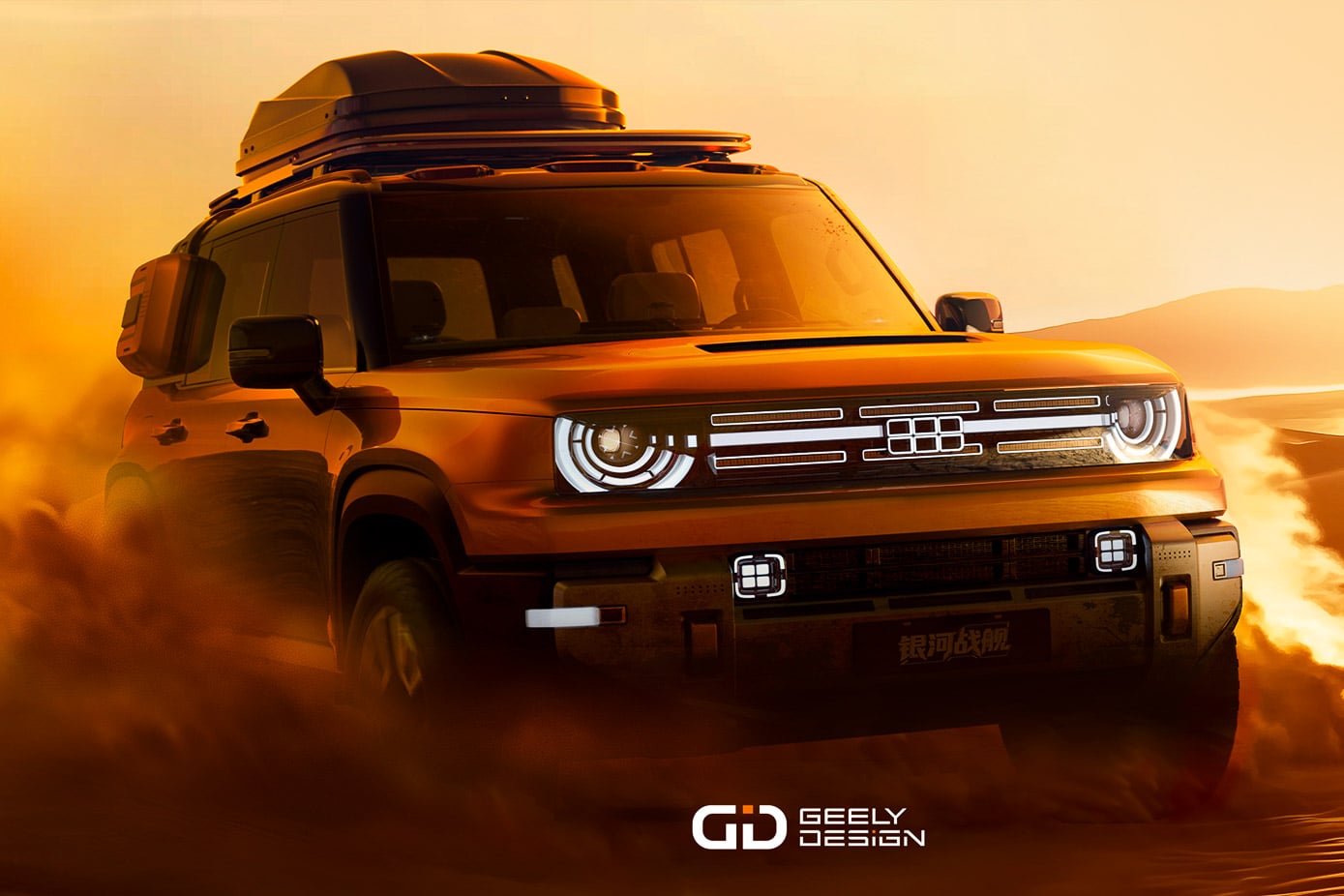
The box-style model in question is the K011, also known as the Galaxy Cruiser. Mr. Gu emphasized that this model will differ from the seven-seat SUV, offering a unique proposition in the market.
Geely’s local boss confirmed that next year’s new models will all be ‘new energy’ or “plug-in [hybrid] and BEV” vehicles. This suggests that the Chinese brand’s first off-roader in Australia will likely feature a plug-in ‘Super Hybrid’ drivetrain, similar to the concept vehicle.
At Auto China 2026 in Beijing, Geely Auto unveiled its ‘New Energy Off-Road Vehicle Architecture’, which strongly indicates what’s coming for the production Galaxy Cruiser. The platform even showcased the same wheels as last year’s bright orange 4WD prototype.
Key features of the new platform include a tri-motor powertrain that delivers a claimed system power output “exceeding” 1000hp (745kW), providing 0-100km/h acceleration capability “in the four-second range”. Additional highlights include a rear differential lock that can “rapidly and intelligently engage the dual rear motors”, front and rear double-wishbone suspension, and a dedicated off-road thermal management system.
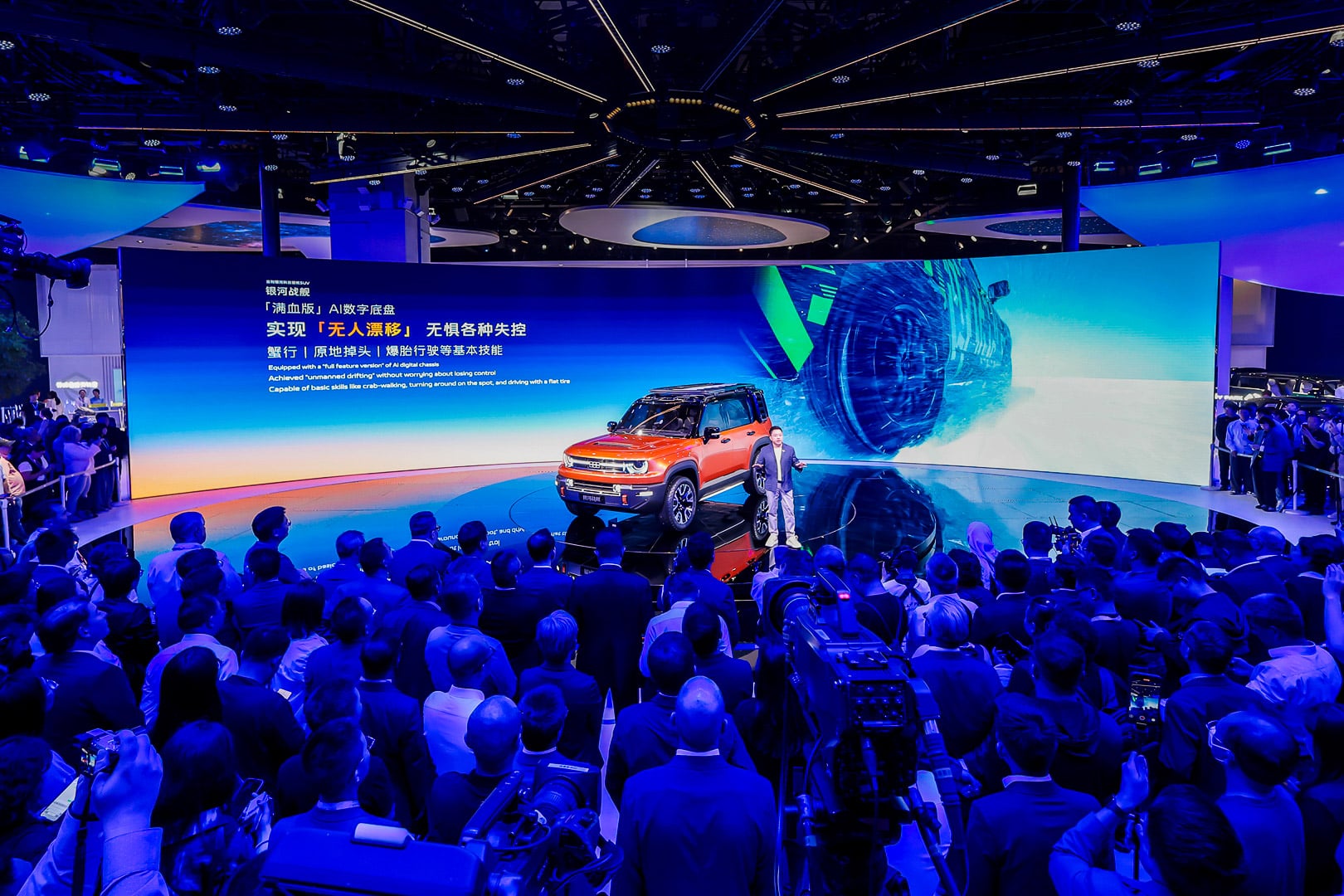
The new body-on-frame platform is powered by Geely’s AI ecosystem and includes features such as AI-driven intelligent torque distribution, intelligent all-terrain drive modes, “one-touch intelligent vehicle recovery”, and AI-assisted “active body posture adjustment”. Geely claims that the platform has been designed to balance “extreme off-road capability and refined urban comfort”, with a space-efficient design that minimizes cabin intrusion from the battery, motor, and ECU.
At the reveal of the Geely Galaxy Cruiser at Auto China 2025 in Shanghai, the brand confirmed that the 4WD prototype’s PHEV system featured the Golden Short Blade Battery. This battery is “fortified with exclusive patented bulletproof materials and coatings to prevent deformation, fire, or explosion”.
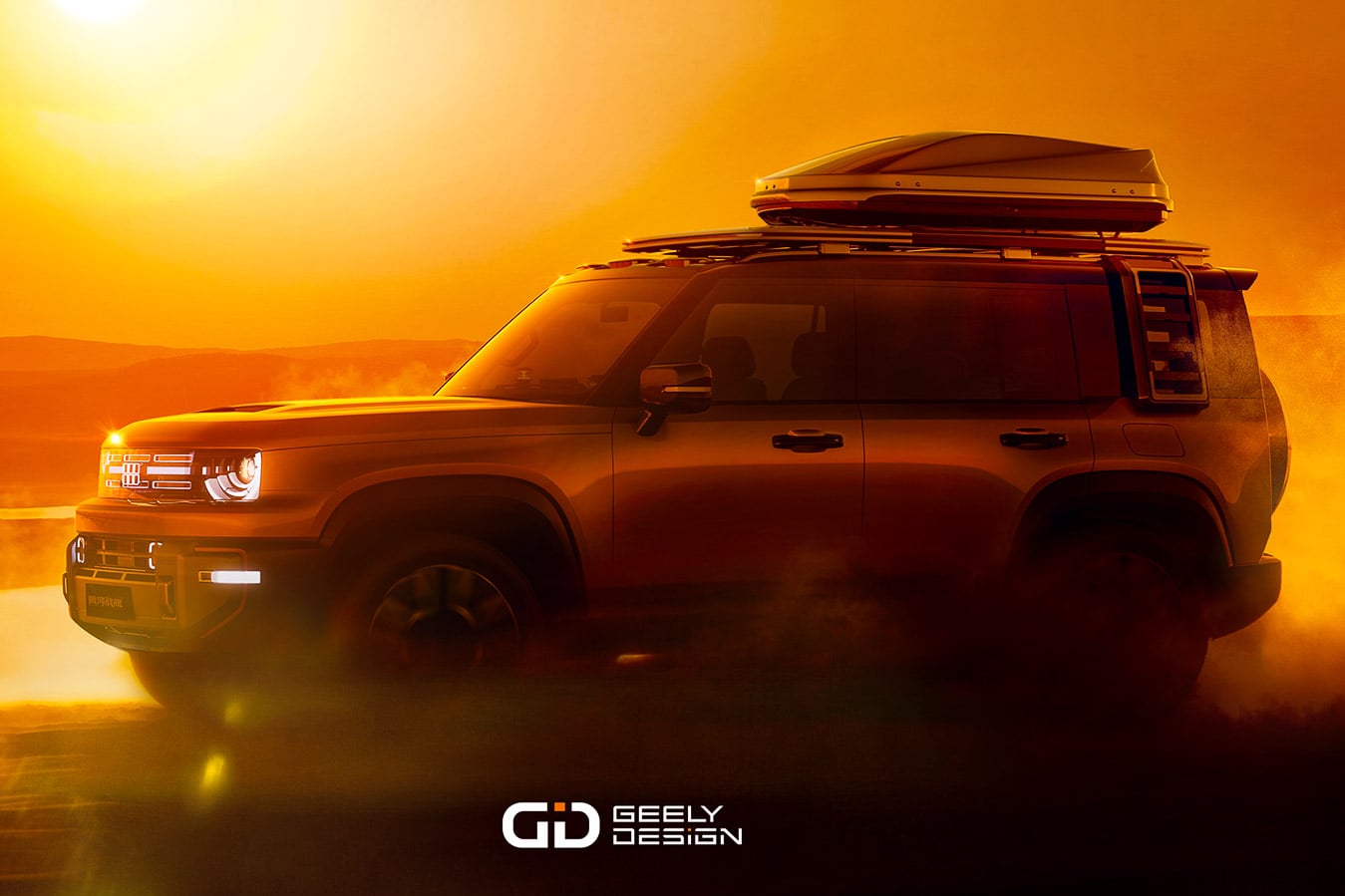
Its “full-power” AI-developed digital chassis is claimed to be capable of “crab walking, on-the-spot turning, driving with a flat tyre, and even autonomous drifting”. Furthermore, the Chinese brand states that its industry-first “vehicle-mounted sonar and water radar” enables the Galaxy Cruiser to “safety float on water for up to two hours at a cruising speed exceeding 8.5km/h (4.6 knots), with a maximum wading depth of over 800mm”.
Satellite connectivity ensures the vehicle (in prototype form, at least) remains reliably connected even in remote areas. The vehicle’s advanced safety features were developed by the world’s largest standalone safety laboratory – the Geely Global Safety Center.
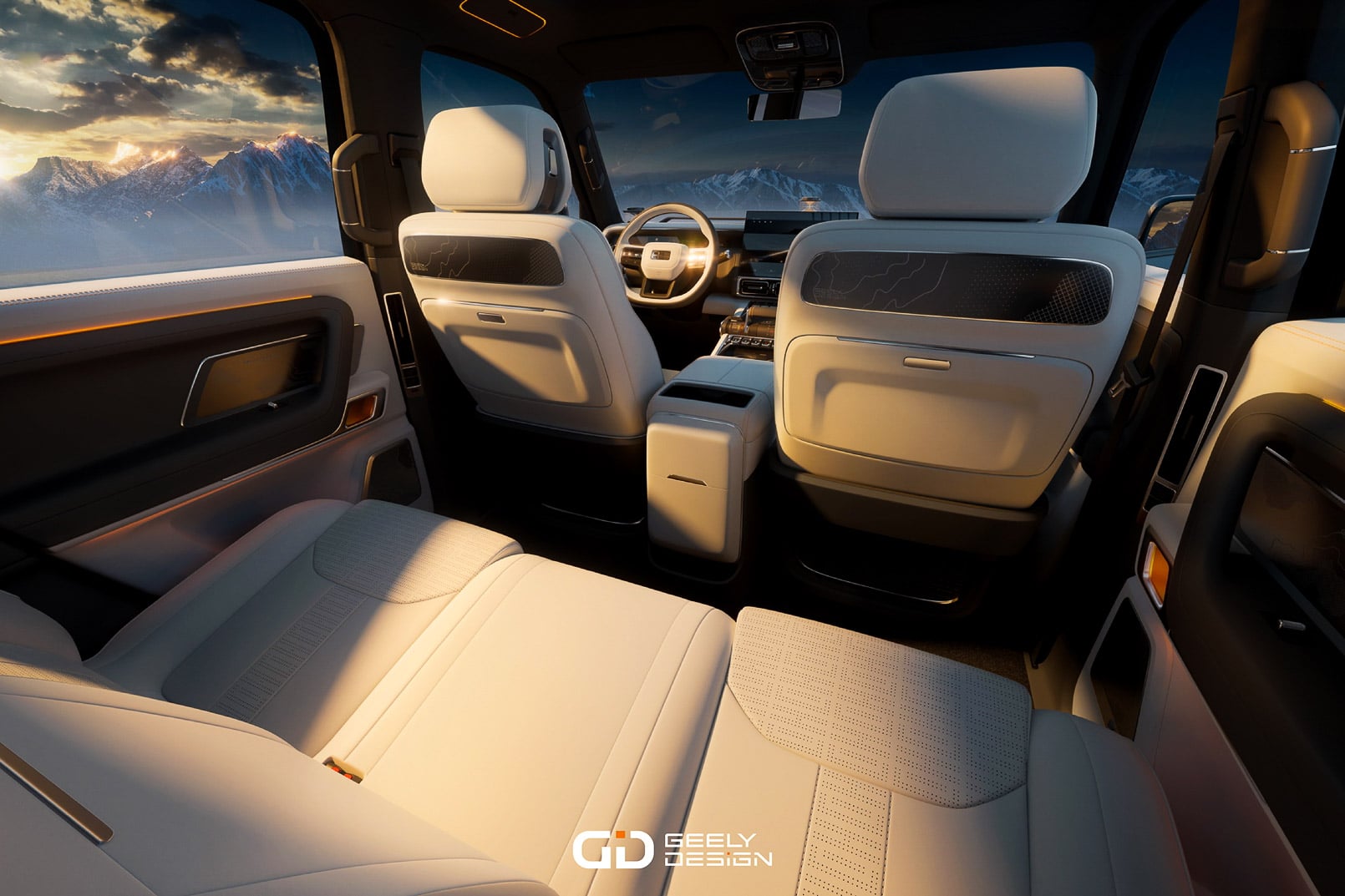
Should it retain the size and form factor of last year’s prototype, the Geely Galaxy Cruiser will be a more premium offering from the Chinese brand. It is likely to be pitched as a rival to higher-spec versions of the popular Ford Everest and Toyota Prado, as well as the likes of the Denza B5 and Land Rover Defender.
It is unclear whether the Galaxy Cruiser will be strictly a five-seater or offer up to three rows of seating to better challenge the segment favourites. However, the new platform will likely underpin a range of new models, which could include Geely’s new Ranger-fighting dual-cab ute.
The incoming model onslaught is a core part of Mr. Gu’s ambitions to make Geely the number one Chinese auto brand in Australia by the end of this decade. Based on last year’s VFACTS sales figures, Geely would need to eclipse GWM’s 52,800 units to take out the top gong among Chinese brands. However, GWM and BYD are both forecasting much higher volumes in 2026 as their ranges continue to expand.
GWM says it’s on track to hit 60,000 sales in 2026, with plans to reach 75,000 units annually in the coming years. BYD, meanwhile, is on track to hit 70,000 units this year and potentially edge out the likes of Ford, Hyundai, and Kia for a podium position behind Toyota and Mazda. Thus, Geely has plenty of work to do based on current trajectories.
Are you excited for the Geely Galaxy Cruiser? Tell us your thoughts in the comments.