
Resmed Expands into Restless Leg Syndrome Market
An Australian-American medical giant, known for its innovative products to treat sleep apnoea, is now expanding its reach into another significant sleep disorder—restless leg syndrome. This move marks a major step in the company’s strategy to address a wide range of sleep-related conditions.
Resmed has acquired Noctrix Health, a California-based company that specializes in wearable devices designed to treat Will-Ekbom Disease, also known as restless leg syndrome. The acquisition was completed for $US360 million ($500 million). According to Resmed’s CEO, Mick Farrell, this condition is the third most common sleep disorder, affecting up to seven per cent of the adult population in the United States.
Farrell explained that the symptoms of this syndrome can be quite disruptive, with patients experiencing involuntary leg movements that can significantly impact their bed partners. “Their legs will pivot and kick, and it’s very bad for the bed partner, obviously,” he said. He added that while there are drug treatments available, they often come with severe side effects, leading many people to avoid treatment altogether.
Noctrix’s latest product, the Nidra device, uses cuffs that wrap around a patient’s legs and deliver electro-stimulation to reduce the twitching associated with restless leg syndrome. This technology is similar to the continuous positive airway pressure (CPAP) machines that Resmed is well-known for, which help mitigate sleep apnoea by keeping the airway open during sleep.
The Nidra device is a non-invasive solution that requires a prescription from a sleep specialist, much like Resmed’s CPAP machines. This aligns with Resmed’s broader approach to developing accessible and effective treatments for various sleep disorders.
Resmed, which is listed on both the US and Australian stock exchanges, has also expanded into digital solutions for patients suffering from insomnia. This diversification highlights the company’s commitment to addressing a wide spectrum of sleep issues through innovative technology.
In recent financial results, Resmed reported an 11 per cent increase in revenue for the third quarter, reaching $US1.4 billion ($A2 billion). The company’s gross margin also improved by 2.9 percentage points during the same period.
Farrell noted that evidence has emerged suggesting that Ozempic-style GLP-1 drugs could be beneficial for Resmed rather than a hindrance. Initially, investors were concerned that these weight-loss drugs might negatively impact the demand for CPAP machines, given the link between sleep apnoea and obesity. However, data from Resmed’s tracking of 1.7 million patients showed that those prescribed GLP-1 drugs were five per cent more likely to continue using a CPAP machine two years later compared to those who did not receive such prescriptions.
While the exact cause of this correlation remains unclear, Farrell suggested that weight loss may reduce the pressure needed to keep the tongue from blocking the airway, making CPAP machines more comfortable to use.
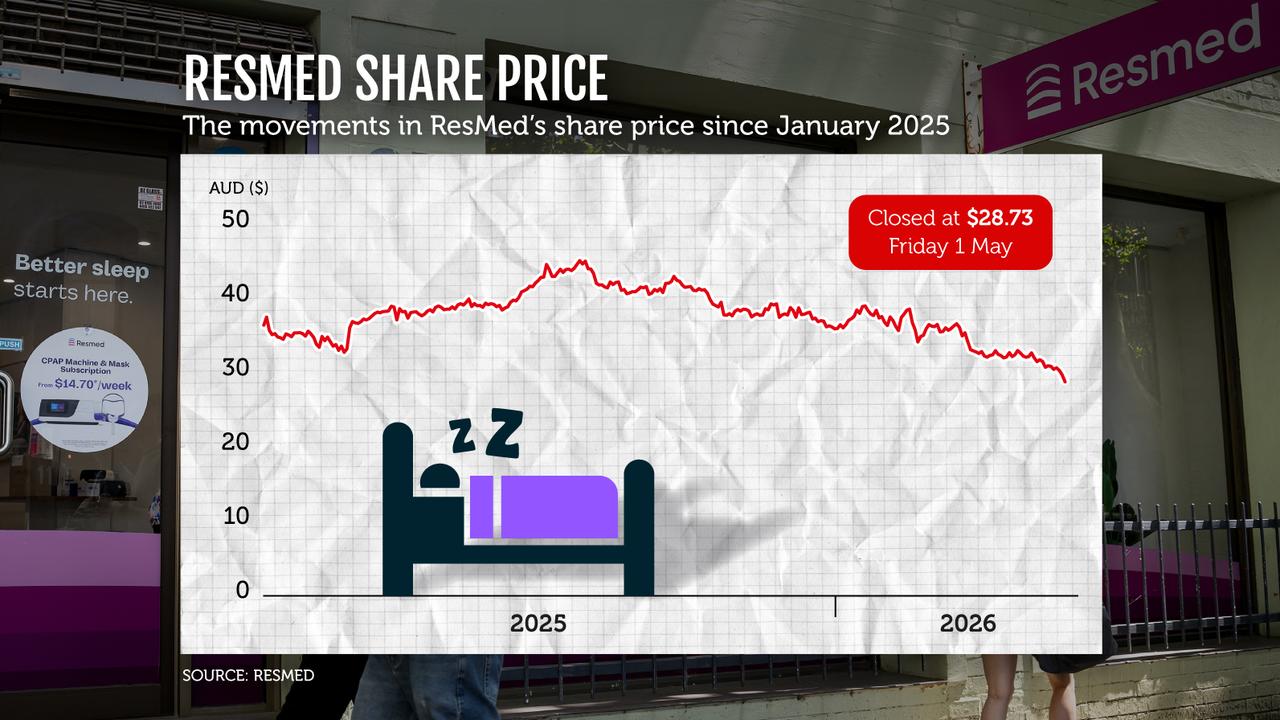
Analysts at RBC Capital Markets noted that Resmed’s quarterly results slightly exceeded expectations. However, the company’s Australian shares experienced a decline of 4.3 per cent to $28.51 in afternoon trading. Investors may have been concerned about the retirement of the company’s chief financial officer, Brett Sandercock, who has served in that role for the past 20 years. He will be succeeded by Aaron Bloomer, who previously held a similar position at cancer diagnostics company Exact Sciences.