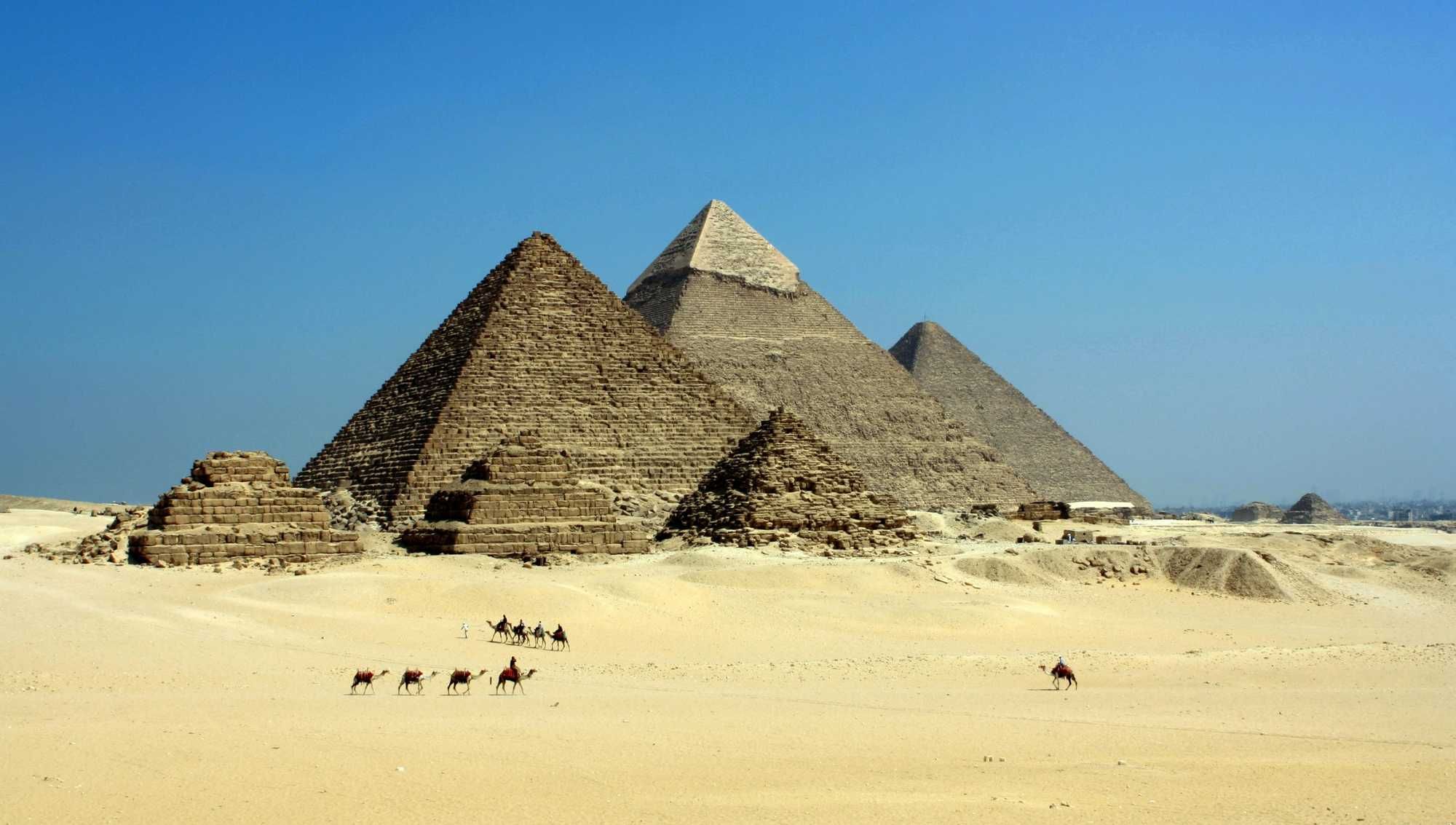
A New Clue in the Mystery of Pyramid Construction
A groundbreaking discovery has shed light on one of the most enduring mysteries of ancient Egypt: how the pyramids were built. Researchers have uncovered an ancient branch of the River Nile that may have played a crucial role in transporting the massive stones used to construct these monumental structures.
The now-dried-out waterway, known as the Ahramat Branch, once flowed through Giza and could have been instrumental in moving materials to the construction sites. This finding not only offers insight into the logistics of pyramid building but also explains why there is such a concentration of pyramids in this area of Cairo.
According to Dr Eman Ghoneim, who led the research, the river was not a small tributary but a major waterway. She described it as being “half a kilometer or more in terms of width,” which is comparable to the current course of the Nile. The river ran from Giza to Faiyum and passed through 38 different pyramid sites, suggesting its significance in the region’s history.
The Role of the Ahramat Branch
Ghoneim used radar satellite data to study the Nile Valley, revealing an “invisible world of information beneath the surface.” Her findings were presented at the 13th Congress of Egyptologists earlier this year. Speaking about her research, she emphasized the scale of the ancient river, stating that it was “really, really long” and had a width that would have made it suitable for transporting large objects.
While the exact timeline of the river’s activity remains uncertain, there are indications that it may have been used during the Old and Middle Kingdoms, around 4,700 years ago. One clue is that many of the pyramids are located exactly at the banks of the Ahramat Branch, which could suggest they served as “valley temples” acting as ancient ports.
Implications for Understanding Ancient Egypt
This discovery could have far-reaching implications beyond the pyramids. It might help uncover lost parts of ancient Egypt, including towns that disappeared when the Nile naturally shifted its course. Ghoneim noted that as branches like the Ahramat disappeared, cities and towns silted up and vanished without a trace.
She explained, “We have no clue actually where to find them.” This highlights the importance of studying these ancient waterways to better understand the civilization that once thrived along the Nile.
Future Research and Discoveries
While the Ahramat Branch provides a new perspective on pyramid construction, further research is needed to confirm its role in the building process. Scientists will need to analyze sediment layers and other geological evidence to determine when the river was active and how it was used.
This discovery adds to a growing body of research that continues to unravel the secrets of ancient Egypt. Other recent findings include never-before-seen photos of “Egypt’s Area 51” and the resolution of a 4,500-year-old mystery involving hydraulics in an ancient pyramid.
As technology advances, more discoveries are likely to emerge, offering new insights into the lives and achievements of ancient civilizations. The study of the Nile and its branches remains a key area of interest for archaeologists and historians alike.