
A Fingerprint in the Tar
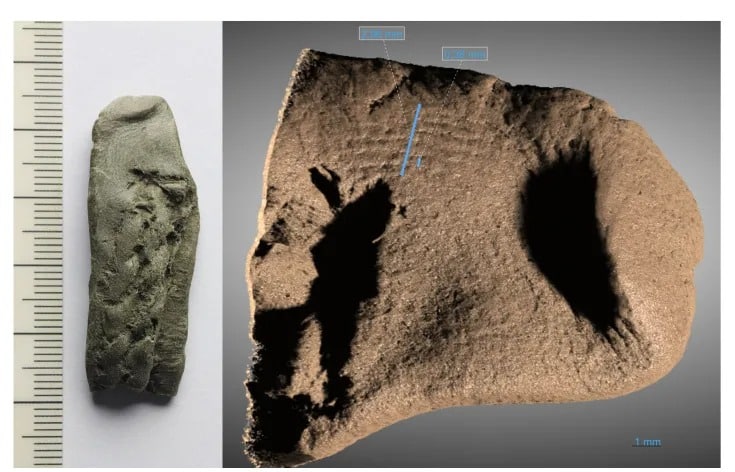
A faint fingerprint pressed into black tar more than two millennia ago may help archaeologists solve one of Northern Europe’s oldest maritime mysteries. The print was discovered on the Hjortspring boat, a prehistoric vessel linked to a violent raid on the Danish island of Als during the fourth century B.C.E.
Researchers believe the tiny fingerprint was left by someone directly involved in the construction or preparation of the vessel before it vanished into history. Now, this nearly invisible trace is raising new questions about who the attackers were, where they came from, and what really happened during the ancient assault that ended with the boat sinking into a bog for more than 2,000 years.
A Fingerprint Hidden Inside Ancient Boat Tar
The fingerprint was found in dried pine tar that had been used to make the ancient boat waterproof. Archaeologists believe the mark was accidentally left by one of the people who built or repaired the vessel before it sailed into battle more than 2,000 years ago. The Hjortspring boat was first discovered in a bog in Denmark during the 1880s and later excavated in the 1920s. Historians think the vessel belonged to an invading fleet that attacked the island of Als.
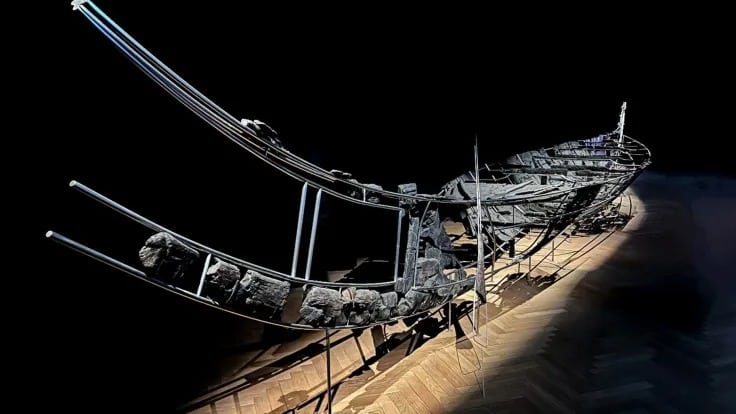
The local population appears to have repelled the assault, and the captured boat was likely placed in the bog as a ritual offering after the victory. The vessel remains unique. It is still the only prehistoric plank-built boat ever recovered in Scandinavia.
“Where these sea raiders might have come from, and why they attacked the island of Als has long been a mystery,” said Mikael Fauvelle in a statement published by Lund University.
Baltic Sea Mystery Takes New Turn
For years, researchers suspected the raiders may have originated near present-day Hamburg in Germany. New analysis, published in PLOS One, suggests the attackers probably came from much farther east. Scientists found that the boat had been waterproofed with pine pitch instead of the more commonly used birch tar, a surprising detail that could change where the vessel originally came from. Pine forests capable of producing this material were common along parts of the Baltic Sea coast.
“The boat was waterproofed with pine pitch, which was surprising,” Fauvelle explained. “This suggests the boat was built somewhere with abundant pine forests.”

The evidence now points toward regions east of Rügen and Scania. If correct, the attackers may have crossed hundreds of kilometers of open sea before launching their assault on Als.
Researchers Scan Ancient Boat with High-Tech Imaging
The research team reexamined surviving fragments of the vessel preserved at the National Museum of Denmark. Some parts had escaped older chemical conservation methods, giving scientists a rare opportunity to study original materials with modern technology.
The study team used X-ray tomography to capture detailed scans of the fingerprint and create a 3D digital model. They also relied on mass spectrometry and chromatography to analyze the composition of the tar.
Carbon dating of rope fragments confirmed the boat belonged to the pre-Roman Iron Age. The team also studied surviving cordage and sewing marks, revealing surprisingly advanced rope-making and construction techniques.
Researchers Turned the Ancient Vessel Into a Cold Case
Researchers now hope the tar itself could preserve fingerprints of ancient human DNA. As Fauvelle stated in the same source:
“We are also hoping to be able to extract ancient DNA from the caulking tar on the boat, which could give us more detailed information on the ancient people who used this boat.”
If genetic material survives, scientists could gain unprecedented insight into the people who built and sailed the vessel. Combined with the fingerprint, the evidence could offer one of the closest direct connections ever found between modern researchers and prehistoric European seafarers.