Key Focus Areas of the EU Defence Meeting
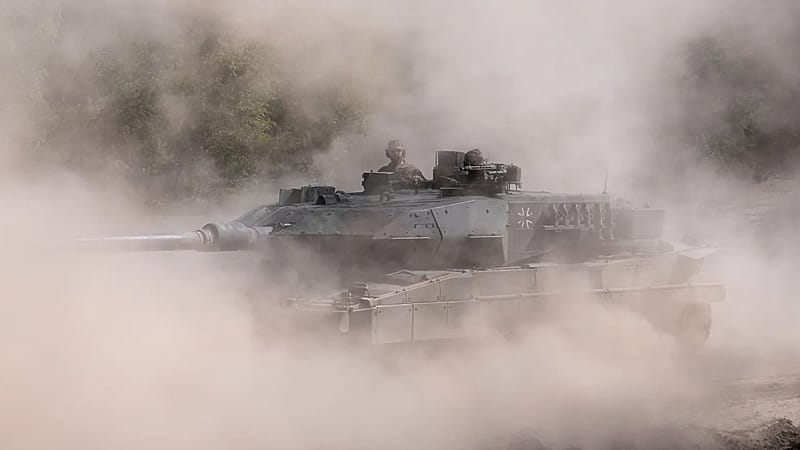
Defence, in its various forms – military, political, and strategic – is at the forefront of discussions during the high-level meeting of EU defence ministers in Brussels. The agenda covers three critical areas: Russia’s invasion of Ukraine, the ongoing conflict in the Middle East, and European defence readiness.
Ukrainian Defence Minister Mykhailo Fedorov will join the meeting via video link to provide an on-the-ground update on the situation in Ukraine, which has been under attack for nearly five years. He will also outline what Kyiv needs from its allies to counter Russian forces. The conversation is expected to focus on the types of weapons, ammunition, and defence capabilities required.
A senior EU source emphasized that “Ukraine is in the driving seat,” highlighting the importance of allowing Ukraine to decide its own needs and ensuring predictability in procurement. This principle was reinforced by the European Commission’s confirmation of a €9.1 billion loan as part of a larger €90 billion package to be dispersed in the second quarter of 2026. The challenge lies in determining how much of the €60 billion allocated for defence will be spent on European arms and which specific systems will be prioritized.
Addressing Regional Conflicts and Security Concerns
The second major topic on the agenda is the Iran war. EU top diplomat Kaja Kallas is expected to stress the need for increased support for the Lebanese Armed Forces to help disarm Hezbollah and restore state control in Lebanon. Discussions will also include measures to secure the Strait of Hormuz, especially if the Iranian blockade ends. A senior EU source noted that member states must demonstrate their willingness to ensure freedom of navigation through the strait.
This follows recent discussions involving over 50 countries led by Britain and France to facilitate passage through the Strait of Hormuz once hostilities cease. The EU’s role in these efforts remains a key point of debate.
Strengthening European Defence Capabilities
The final agenda item focuses on enhancing the bloc’s own security. Micael Johansson, President of the Aerospace, Security and Defence Industries Association of Europe, will address gaps in defence production and ways to close them. This discussion aims to inform the Commission’s strategy for responding to potential crises.
A senior EU source highlighted the importance of having the capacity to act, noting that the dialogue should follow up on theoretical wargames conducted among ambassadors recently. While this is the core of the talks, other issues, such as whether the EU should engage directly with Russia, remain a topic of debate.
EU-Russia Relations and Internal Divisions
The question of whether the EU should engage with Russia continues to divide member states. Ukrainian President Volodymyr Zelenskyy has expressed frustration with the White House’s diplomacy and called for a unified European voice. However, the topic remains contentious, as seen during yesterday’s foreign ministers’ meeting. Some members advocate for a seat at the table and a negotiating team, while others insist on imposing further sanctions to weaken Moscow’s position.
Kallas acknowledged that the issue is not yet mature and requires further discussion to reach a common position. She stated, “For Europe to take a more active role, we must agree amongst ourselves what we want to talk to Russia about and what our red lines are.”
Additional News Highlights
Evading Justice: Former Polish Minister Fled to the US
Zbigniew Ziobro, former justice minister of Poland, has confirmed he fled to the United States after receiving asylum in Hungary. He faces up to 25 years in prison if convicted of charges including abuse of power, leading an organized criminal enterprise, and using funds meant for crime victims to purchase Israeli Pegasus spyware.
After Hungary’s new Prime Minister Péter Magyar took office, he announced that Hungary would no longer protect individuals wanted in other countries. Ziobro and his former deputy, Marcin Romanowski, were named as examples of those who may now face legal consequences.
EU Sanctions on Israeli Settlers
The EU approved sanctions on Israeli settlers involved in violence against Palestinians in the West Bank, with support from Hungary’s incoming government. The measures, including asset freezes and travel bans, target extremists and entities linked to Hamas, which the EU designates as a terrorist organization.
The move comes amid concerns over Israel’s unlawful settlement expansion and ongoing violence in the occupied West Bank. Kallas emphasized that the agreement marks a shift from previous political deadlock, stating that “violence and extremism carry consequences.”
Other Notable Stories
Rents vs. Minimum Wages in EU Capitals
Euronews Business examined the relationship between minimum wages and average rent costs in EU capitals. In many cities, even the gross minimum wage is insufficient to cover housing expenses.
Amsterdam’s Meat Advertisements Ban
Amsterdam recently banned meat advertisements, with some far-right figures suggesting the move was intended to appease Muslims. However, the actual reasons behind the ban remain unclear.
Upcoming Events
European Commission President Ursula von der Leyen is set to visit Copenhagen, Denmark, for the European Summit on Artificial Intelligence and Children. Meanwhile, Executive Vice-President Roxana Mînzatu will meet Ukrainian Minister Oksen Lisovyi in Brussels.
That’s it for today.