A Rare and Extraordinary Sighting
In his 20 years of flying, Gavin Penfold thought he had seen it all. But nothing could have prepared him for the ‘incredibly rare’ sight he witnessed off the coast of Australia recently.
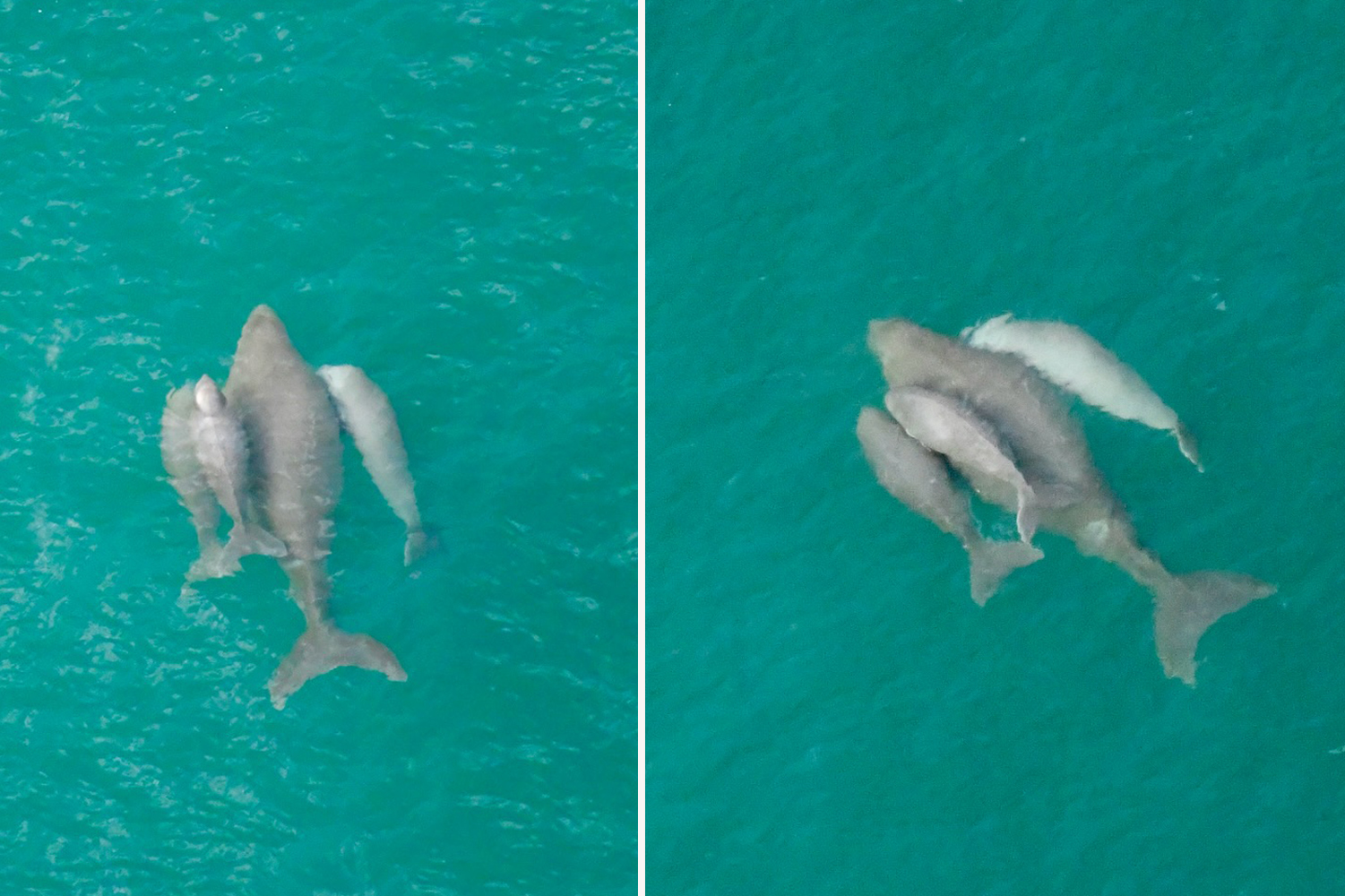
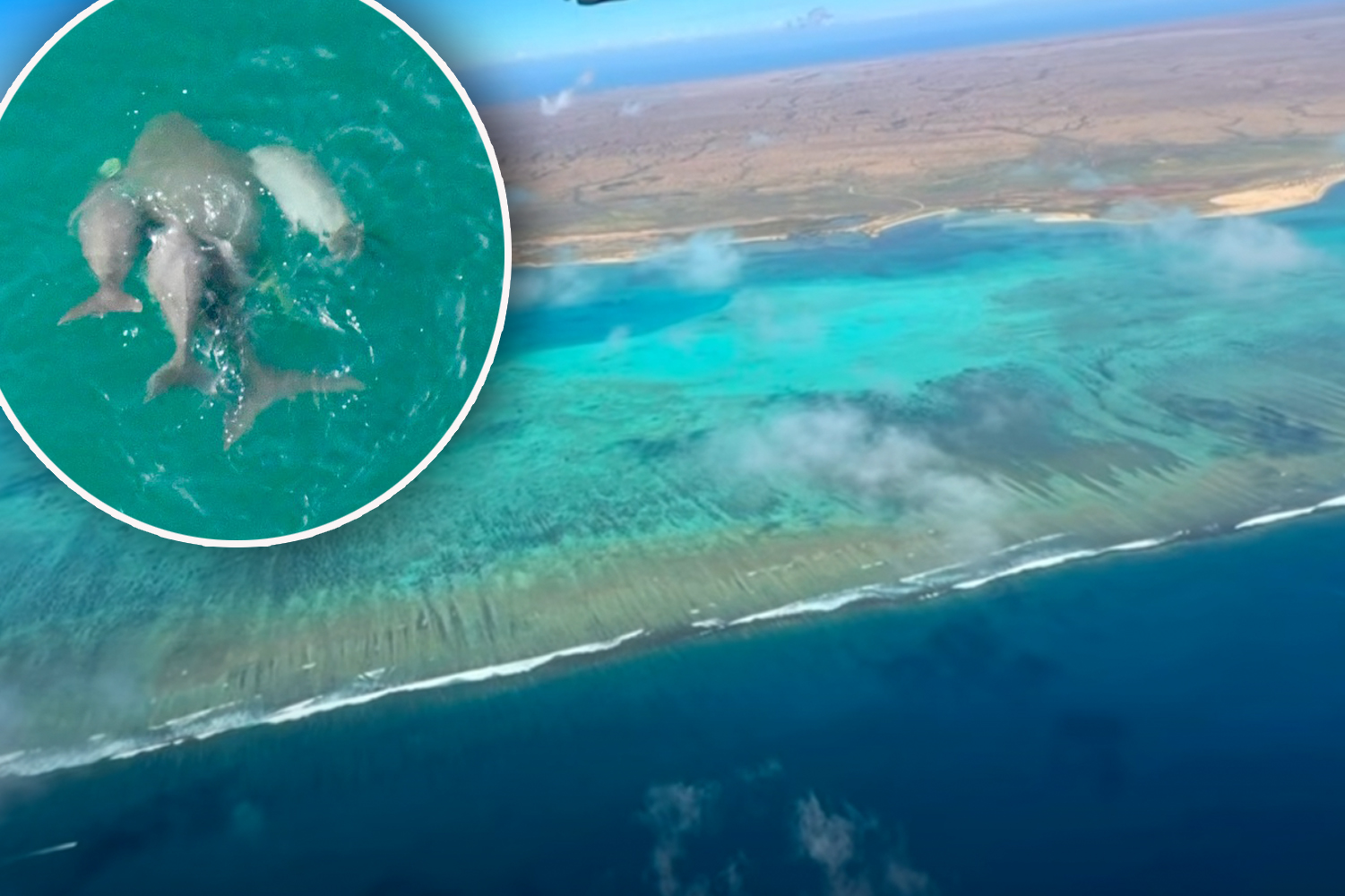
Flying over the Exmouth Gulf in Western Australia last weekend, Penfold, the owner and head chief instructor at Birds Eye View Ningaloo, captured something “truly extraordinary.” Below him in the ocean, he saw a female dugong swimming with triplets attached to her. The flying instructor described it as “an amazing sight to see.”
“We have witnessed diving twins before on several occasions, but this is the first time we have seen triplets,” he said.
Why Is It Rare to See a Dugong with Triplets?
Typically, female dugongs give birth to one calf per pregnancy and give birth every 3 to 5 years over their 70-year lifespan. This slow breeding rate makes the elusive marine mammal particularly susceptible to factors that threaten their survival.
It’s pretty uncommon for dugongs to birth twins, so it’s considered extraordinarily rare for “cows of the sea” to have triplets.
“I’ve been flying over this region for over 20 years and I am still amazed by the rare encounters we get to witness,” he said.
A Special Day and a Powerful Moment
Penfold was instructing a student during the flight on Sunday, which just happened to be Mother’s Day. “I have flown over the region, accumulating a whopping 12,500 hours, and this place continues to amaze me,” he told Yahoo.
“It’s a beautiful reminder that motherhood in the wild is just as powerful, protective, and inspiring.”
The Unique Characteristics of Dugongs
For female dugongs, their nipple is located under their armpit, Penfold explained, “so you can sometimes witness them feeding from that location.” That’s likely what is happening in the images.
Mothers nurse their young for up to 18 months to two years, which makes rearing multiple calves exceptionally demanding. They feed exclusively on seagrass and can consume up to 40kg daily to sustain their energy needs.
While they are social animals, mothers are usually seen with just a single calf.
Conservation Efforts and Protection
Globally classified as vulnerable, dugongs are heavily protected in Australia through marine parks, legislation, and Indigenous-led conservation efforts.
More About Dugongs
Dugongs are unique in many ways. Their anatomy is adapted to life underwater, and they have a special way of feeding. Unlike other marine mammals, they don’t have teeth; instead, they use their tough, leathery lips to grasp and chew seagrass.
They also have a highly developed sense of hearing, which helps them navigate and communicate in their aquatic environment.
Despite their importance to the ecosystem, dugongs face numerous threats, including habitat loss, pollution, and climate change. Conservation efforts are crucial to ensuring their survival.
Conclusion
The sighting of a dugong with triplets is a rare and remarkable event that highlights the beauty and complexity of marine life. For Penfold, it’s another unforgettable moment in his long career as a pilot and wildlife observer.
As he continues to explore the skies above the Exmouth Gulf, he remains in awe of the natural wonders that surround him. His experience serves as a reminder of the importance of protecting these incredible creatures and their habitats for future generations.