The Impact of Age on Parenting and Life Outcomes
New research has highlighted the significant influence that the age at which a person becomes a parent can have on their long-term health, happiness, and financial stability. According to the findings, 29 years old appears to be the optimal age for having a first child.
The study, titled Congratulations, it’s a risk factor!, found that individuals who become parents earlier in life, such as in their early twenties, tend to earn less money compared to those who have children later. Additionally, young parents often report worse physical and mental health, and they may experience less educational success.
The research suggests that both health and wealth improve as people delay parenthood, with these benefits stabilizing around the age of 30. According to author Jordan MacDonald, the findings indicate that younger parents are more likely to face long-term challenges, such as not finishing high school, reporting poorer health, and earning less over their lifetime. These patterns were observed in both teenage and young fathers and mothers.
In the journal Plos One, the researchers stated: “Based on the findings of the present study, the ideal age [to have your first child] is between 26 and 31. It is between these years that self-rated health and mental health, income and education appear to be stable.”
Key Findings from the Study
To conduct the study, a team from the University of New Brunswick analyzed data from 6,282 adults who had children. They recorded the exact age each participant was when their first child was born and collected information on their life outcomes.
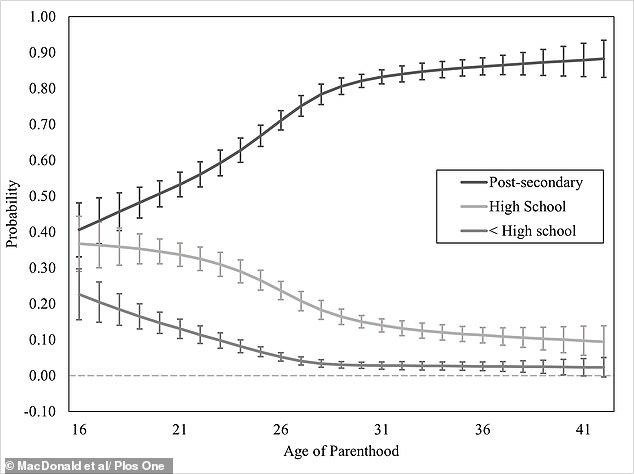
The analysis revealed a strong link between the age of first-time parenthood and educational success. As the age of becoming a parent increased, so did the likelihood of completing post-secondary education, such as attending university.
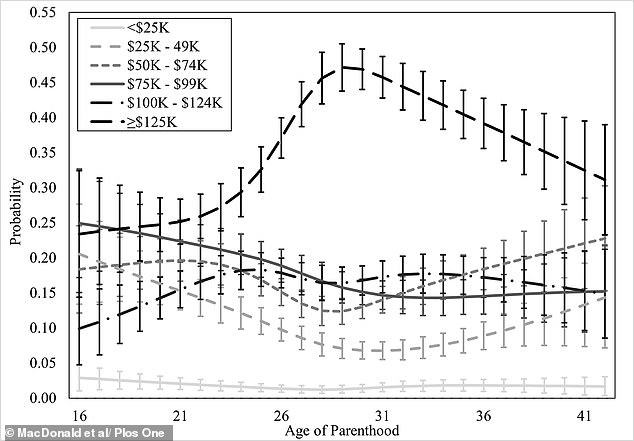
Furthermore, the probability of earning a higher income also rose significantly as people delayed having children, with this trend leveling off between the ages of 26 and 31. The researchers found that the chance of living in a household earning at least 125,000 Canadian dollars (£67,000) peaked for individuals who had their first child around the age of 29. After this age, the probability of reaching the highest income bracket slowly declined.
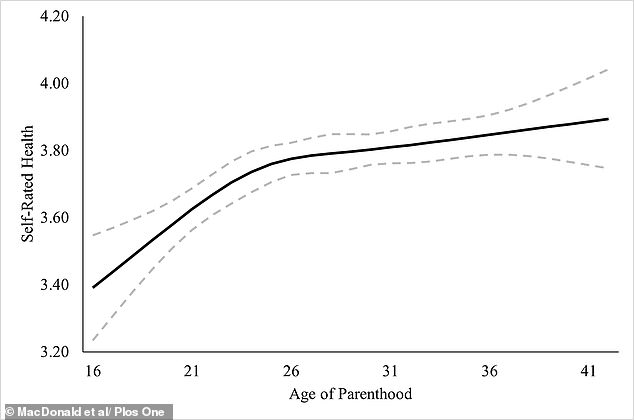
Participants who became parents in their teens or early twenties reported worse physical health later in life. However, this negative effect was reduced for those who delayed parenthood, stabilizing around the age of 26.

Mental Health and Life Satisfaction
Overall, the researchers found that older first-time parents reported slightly better mental health. However, life satisfaction did not seem to vary based on the age at which someone became a parent.
The authors suggested that their findings support the concept of liminality theory, which posits that becoming a parent during a transitional phase of life can stall personal development. This could explain why individuals who have their first child during key stages, such as leaving high school or moving out from their parents’ home, might feel “stuck” in that phase.
Despite these findings, the researchers emphasized that their results do not imply that teen or young parents cannot succeed. Instead, they highlight that success may become more difficult without adequate support.
“Teen and young parents, regardless of how they became parents or whether others approve of their situation, are not ‘doomed to fail,’” said Mr. MacDonald. “But they may face much greater barriers if the people and institutions around them do not offer support.”
Trends in Parenthood
According to official statistics, the average age of first-time mothers in England and Wales is now 29.4. Projections from the Office for National Statistics (ONS) suggest that women are likely to continue having babies later in life and having smaller families than previous generations.
Experts predict that girls who turned 18 in 2025 will have an average of one child per woman by the age of 35. This is different from their mothers’ generation, which had an average of one child per woman by the time they were 31. These women are also projected to have an average of 1.52 children during their lifetimes—down from 1.95 for their mothers and 2.04 for their grandmothers.