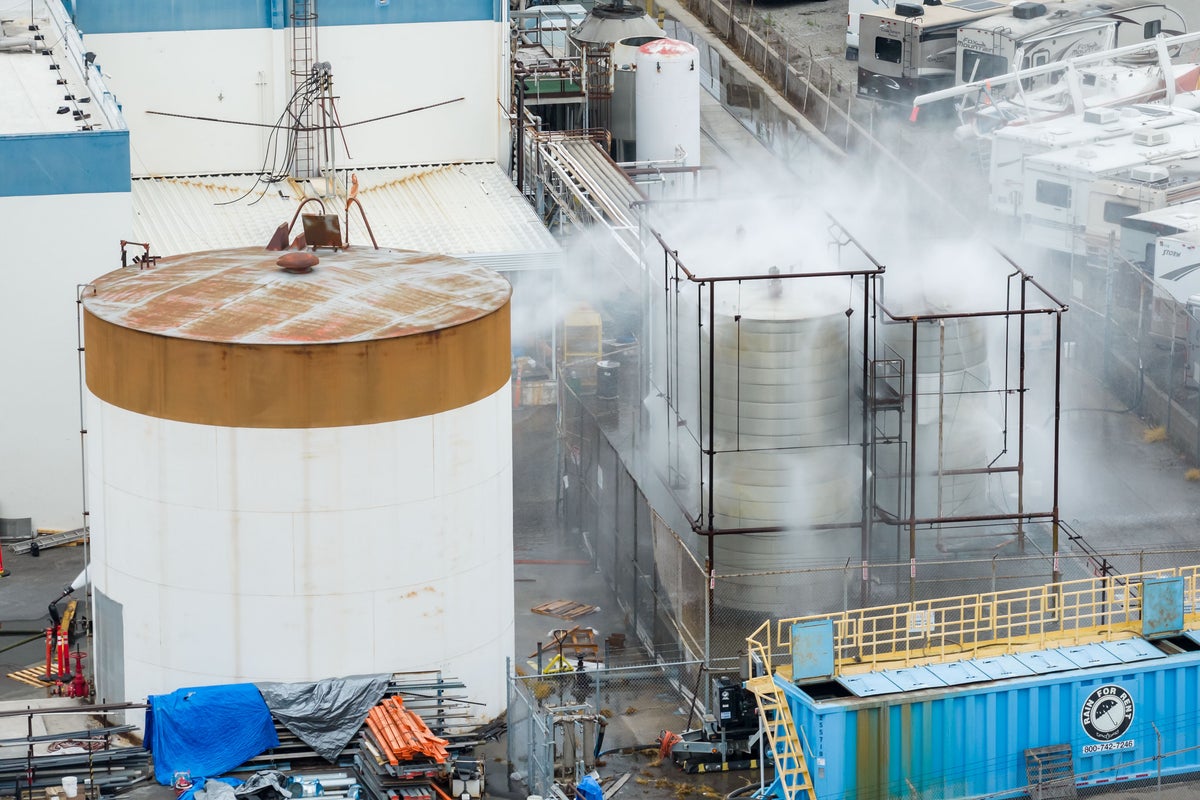
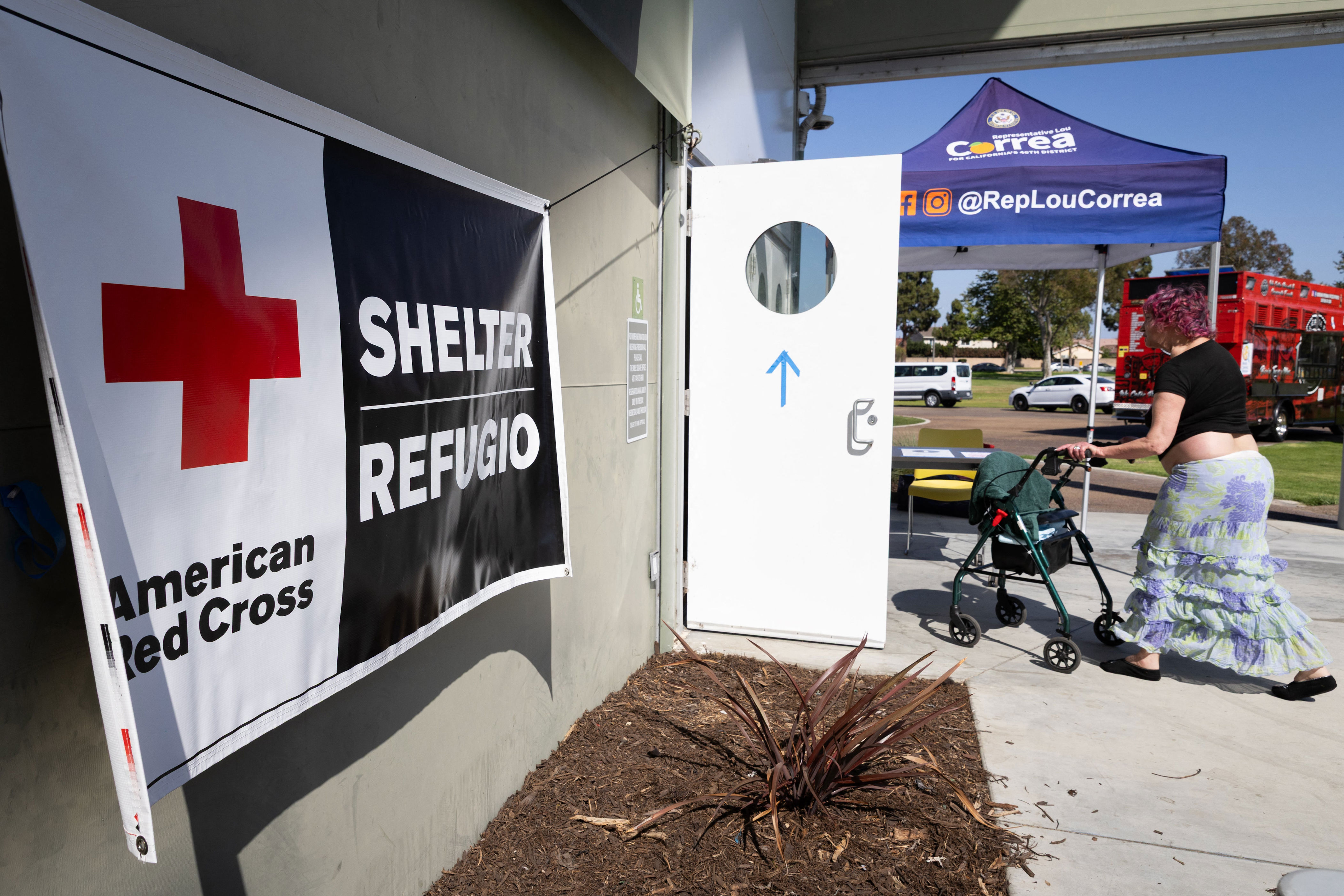
Thousands of residents in Southern California faced evacuation orders over the Memorial Day weekend as authorities worked to manage a hazardous chemical threat at an aerospace facility. The incident occurred at GKN Aerospace in Garden Grove, Orange County, where a damaged storage tank containing approximately 22,713 to 26,498 litres of methyl methacrylate overheated last week. This led to the release of vapours into the surrounding air, prompting immediate action from emergency services.
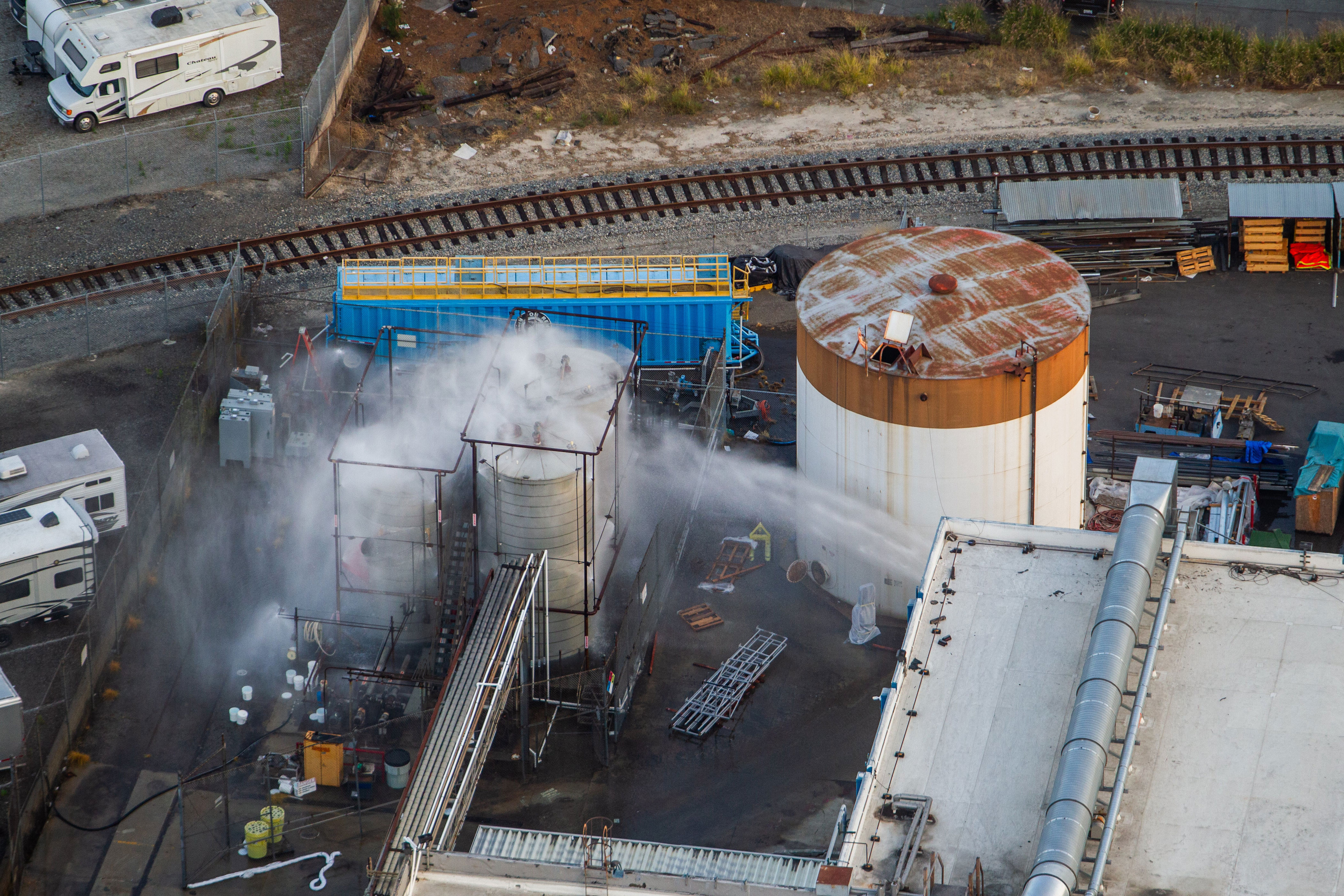
The crisis began when the tank, which holds around 6,000 to 7,000 gallons of the chemical, started to heat up. Officials warned that the compromised tank posed a risk of either fully discharging its contents or potentially exploding if the temperature continued to rise. Although no injuries have been reported, more than 50,000 residents were ordered to evacuate. Firefighters have been working tirelessly to spray the tank with water in an attempt to cool it down and prevent a catastrophic explosion.
Why is Methyl Methacrylate Dangerous?
Methyl methacrylate is a flammable, colorless liquid used in the production of resins, plastics, and even plastic dentures. It is classified as a hazardous substance by federal regulations. According to the Environmental Protection Agency (EPA), the chemical can irritate the lungs, eyes, and skin. In high doses, it may cause reduced lung function, dizziness, and memory problems. However, air monitoring tests conducted around the evacuation zone have shown that pollution levels are within normal limits.
What is the Problem with the Tank?
Officials have identified that the tank’s drainage valves are not functioning properly, leaving the situation unresolved as the threat of overheating persists. Without intervention, local authorities warned that there could be either a large chemical spill or an explosion. Firefighters have been focused on keeping the temperature of the tank below 85 degrees Fahrenheit (29.4 degrees Celsius) to reduce pressure. On Sunday, EPA chief Lee Zeldin stated that the most likely scenario is a “low-volume release” of the tank’s contents, allowing officials to monitor, neutralize, and contain the threat.
What Happens If It Explodes?
If the temperature inside the tank rises, it could cause pressure to build as the methyl methacrylate converts from a liquid to a gas, increasing the risk of an explosion. A blast could ignite other tanks at the site, creating a chain reaction. According to Dr. Regina Chinsio-Kwong, Orange County’s top health officer, a release of the chemical into the air would spread it over a wider area, creating vapors that are hazardous to inhale.
Chinsio-Kwong explained that inhaling the vapor could cause irritation to the eyes, nose, and lungs, leading to symptoms such as a sore throat, burning eyes, and dizziness. She also noted that while the chemical has a fruity odor, this does not necessarily mean it will cause health impacts.

Long-Term Effects of Exposure
Prolonged exposure to methyl methacrylate can lead to serious respiratory issues or even unconsciousness. The evacuation zone is located west of Anaheim, home to Disneyland’s two theme parks, which were not under evacuation orders. Chinsio-Kwong reassured that people outside the evacuation zone do not need to worry about health impacts.
What Happens Next?
On Sunday, officials reported that the tank may have developed a crack, potentially reducing the risk of an explosion. Orange County Fire Authority Capt. Wayhowe Huang mentioned that emergency crews observed the possible crack overnight. Despite this, the tank did not appear to be releasing any toxic chemicals into the atmosphere.
Zeldin said that a low-volume and controlled release of the chemical would allow officials to monitor the situation and relieve pressure on the tank. GKN Aerospace confirmed that it continues to collaborate with local authorities, stating that “the situation remains ongoing.”
Independent readers are known for their independent-minded approach, embracing global perspectives without being confined by traditional demographics. In a world increasingly divided, communities seek real facts and honest opinions from trusted news sources. Empowered by information and inspiration, these readers take a stand for the causes they believe in.