A Noir Crime Story That Just Happens to Feature a Spider-Man
Spider-Noir should not exist. Cynically, it could be said this series is a product of a long-term Sony Pictures deal that seems to dictate a constant flow of new Spider-Man adaptations each year. But even with this provenance, Spider-Noir has arrived as an artful period piece, elevated by strong casting choices and performances, and a tight plot that leans into noir tropes.
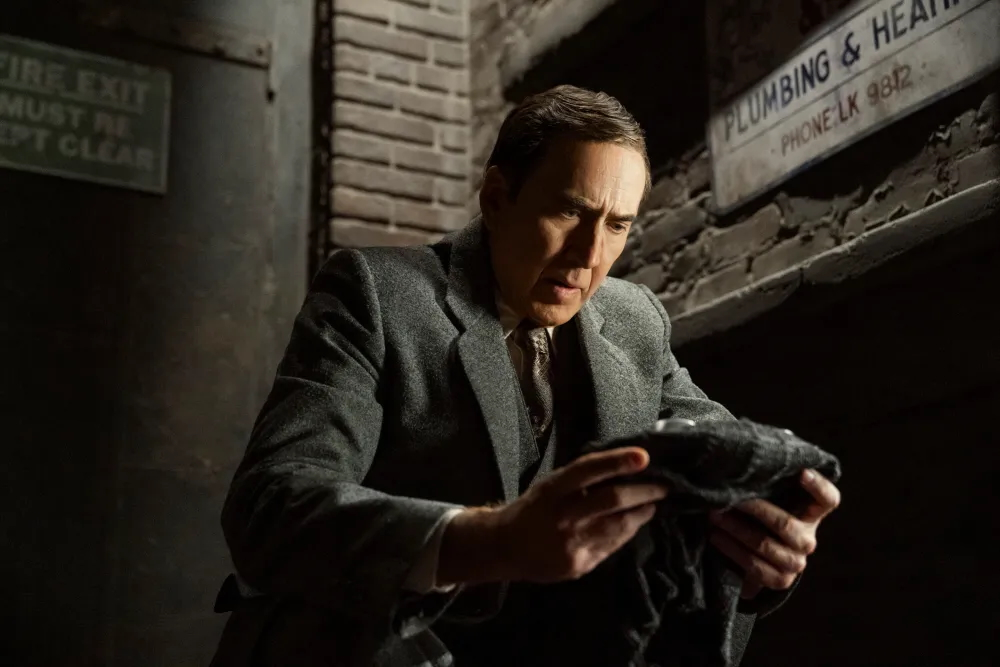
Nicolas Cage stars as the titular Ben Reilly, aka The Spider, returning to the character from the Spider-Verse animated films – although showrunners have tried to make clear this is a different version of the character, likely to dissuade younger audiences from seeking it out. (That said, there’s nothing much to distinctly separate this version of Reilly from his film counterpart.)
Cage is joined by a standout cast on their A-game, including an always-excellent, gravelly Brendan Gleeson as crime boss Silvermane, Lu Jun Li as the devilish Cat Hardy (analogous to Spider-Man’s Black Cat) and Lamorne Morris as Robbie Robertson, the plucky and intrepid reporter.
It’s to the benefit of Spider-Noir that Reilly’s identity as The Spider is not the most important part of its sweeping crime story. In fact, as the events open, we learn he’s retired from life as The Spider, following the tragic murder of his partner. Wearied by this tragedy and his older age, he’s settled into a more routine life as a private investigator, hiding his identity from the world while attempting to use his wits over his strength. Cage plays the disillusioned detective well, with a surprising calm and seriousness, and even a hint of roguish charm.
Of course, as in the tropes of all superhero stories – and also noir cinema – Reilly is eventually forced out of retirement, this time by the appearance of new superpowered individuals, all of whom share a strange connection to him.
A World of Dark Villains
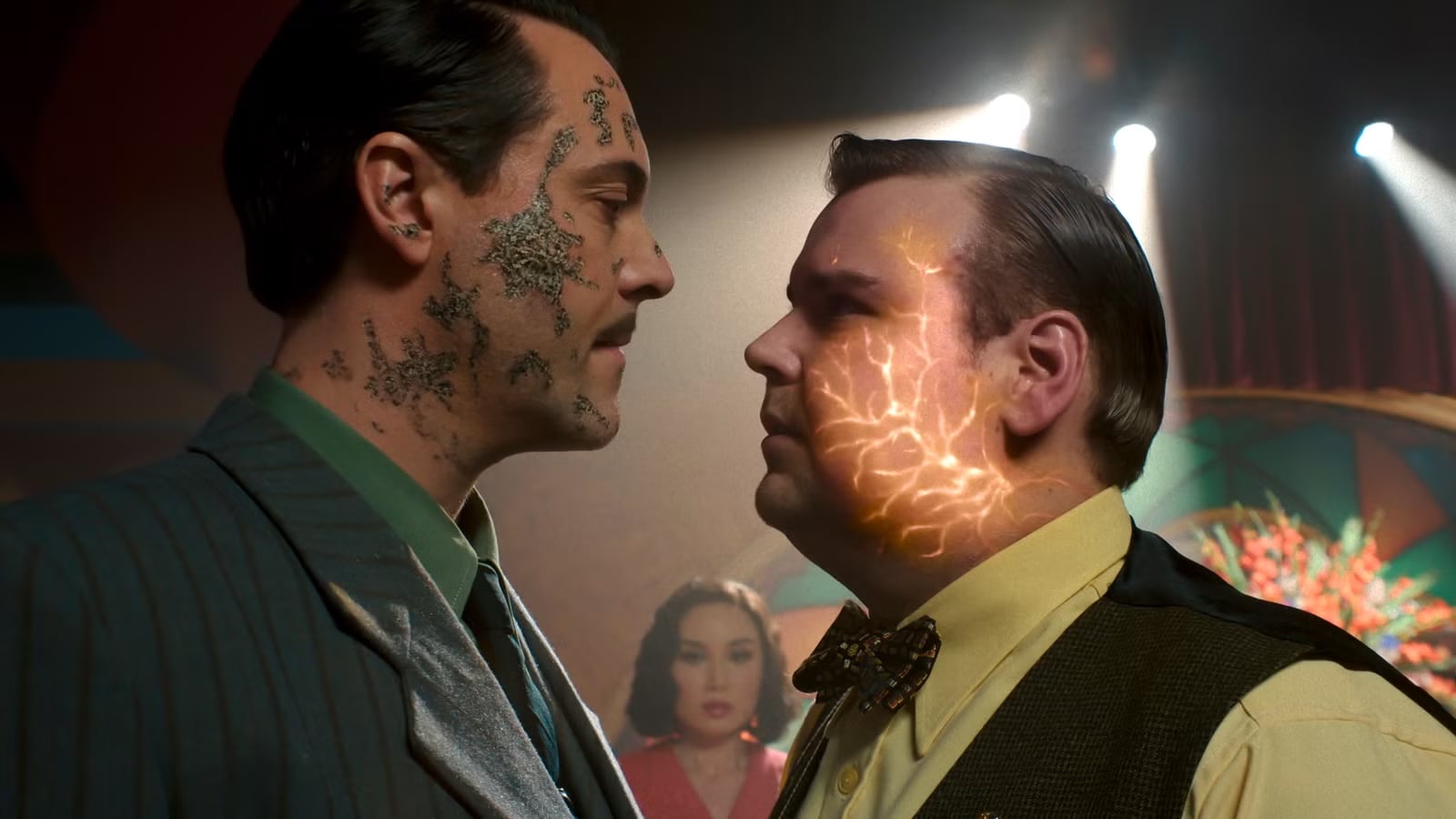
Spider-Noir is wonderfully creative with its depiction of these superpowered individuals, reimagining classic Spider-Man villains while couching their origins in a more grounded 1930s setting. Jack Huston plays a tortured version of Flinko Marko, aka The Sandman, with his abilities drawing on horror tropes. On the flip side, there’s also the gleeful Andrew Lewis Caldwall as Dirk Leydon, aka Megawatt, an electricity-powered villain who delights in chaos and frequently threatens to steal the show.
Spider-Noir gets oddly horrific in its depiction of these superpowers, with one particular episode feeling more Universal Monsters than classic noir – a flavour that will either delight or disgust, depending on your personal preferences. But it’s in this mid-season horror that Nicolas Cage’s casting makes the most sense, and the real heart of Spider-Noir is revealed.
At first, Ben Reilly is just a classic detective, all Humphrey Bogart charm and drawl. When his primary case unravels, Cage is allowed to let loose, revealing new layers to this version of Spider-Man that make him all the more fascinating.
Leaning Into Horror
Spider-Man’s origin is fairly terrifying in this particular retelling, surprisingly drawing in elements of human experimentation and horrific war crimes. Reilly’s powers are received unwillingly, and are more horrifying than those of his bright-eyed modern counterpart. Cage comes alive in this depiction, as he makes the choice to render Reilly as a naturally twitchy, lightly deranged fighter, with body movement to resemble that of an actual spider. This is something that’s been touched on in other films, but still more closely resembles the edgier interpretations of Spider-Man that are found in the Marvel Comics source material.
Reilly describes his powers as a condition, and reveals he must constantly fight his urges to maintain a ‘normal’ facade. When this facade slips, it’s all-out chaos delivered in wonderfully fluid fight scenes. Those familiar with Cage’s tendency for over-the-top interpretation of line readings and performance in general will know what to expect here. As Reilly’s case becomes more complex, he becomes significantly more unhinged, and Cage delights in this exploration, all wide eyes, aggressive notes and ridiculous emphasis.
This is, after all, a noir monster story – and so, Cage is perfectly at home, playing to his strengths. In one particular scene in a bar, a drunken fight allows him to release all his energy in spectacular fashion, for a fight scene that’s cathartic, even a bit silly, and yet still incredibly stylish.
Spider-Noir is filled with clever choices like these, all of which work together to elevate its action and narrative.
A Stylish Feast for the Senses

What takes the show further is the artful direction. There has been much publicity about this show’s dual release, in both full colour and black-and-white. The full colour release, one can only assume, is likely for general audiences who may be put off by a more old-fashioned styling. Yet it does feel like the series is intended to be viewed in this manner, with a delightful contrast and richness to this version. It allows you to better see the artistic intent in the filmmaking, and to note how heavily Spider-Noir is inspired by the noir genre.
Tension is ratcheted by intentionally low camera angles, and drama is often denoted by the handling of light and shade. There’s a focus on faces and emotions here, with the camera often seeking out smaller details – the tension shown in clenched mouths, the tightness of eyes and, in certain scenes, wide-eyed terror.
It’s rare, in the modern landscape of superhero cinema, to see such a considered approach. But it’s just part of how Spider-Noir defies expectations.
As a spin-off of a spin-off – definitely not set in the same universe as the Spider-Verse films – there was much riding against Spider-Noir, enough to form a lesser idea of what this series could accomplish. Perhaps it’s for this lack of expectations or regard that it’s arrived with such bombast.
In any case, it’s a worthy and artful adventure that plays to the strengths of Cage and his fellow performers, telling a story that is both trope-inspired and lushly original. Spider-Noir streams on Prime Video from 27 May.