The Incident at Philippe-Chatrier
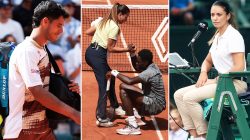
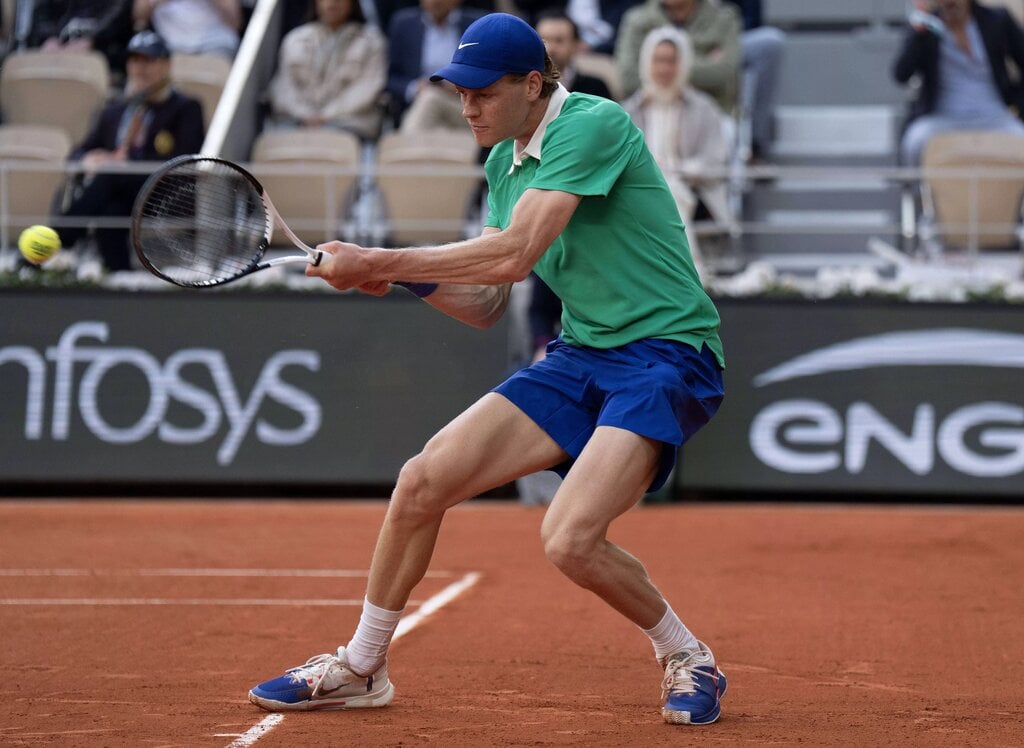
The events that unfolded on Philippe-Chatrier on Thursday afternoon were not primarily about Jannik Sinner. They were about a sport that has long avoided accountability and now seems to have lost sight of what it means to be responsible. The situation began when the World #1, leading 6-3, 6-2, 5-1 against Juan Manuel Cerundolo, started experiencing cramping in the intense Paris heat. He stopped play, sat by the side of the court, and approached chair umpire Aurelie Tourte to ask if he could take a timeout. Their conversation was captured by the broadcast microphones. Sinner expressed his concerns, and he was granted a ten-minute medical timeout.
The rules of professional tennis are clear on this matter. Players can receive treatment for verified injuries or illnesses, but cramping is explicitly excluded from medical timeouts to prevent strategic abuse. What followed was exactly what the rule was meant to prevent: a player gained time to recover from a physically weakened state, returned to the court, and attempted to continue playing. Cerundolo made an impressive comeback, winning the final three sets 7-5, 6-1, 6-1. However, the question of whether the timeout affected the match’s outcome will linger in the memory of tennis for years to come.
Jim Courier, watching from the broadcast booth, voiced what needed to be said:
“This is unquestionably not an injury. This is unfair for Cerundolo. The clock should be counting. He should be penalized for this. This is clearly cramping.” He then added that top players do not seem to play by the same rules. He was right. The fact that a former French Open champion had to address this live on television before anyone in authority showed any concern highlights the deep issues within tennis governance in 2026.
This was not an isolated incident. A similar situation occurred at the Italian Open earlier this year, when Sinner was granted a timeout for cramping during a match against Daniil Medvedev. Medvedev protested on court, arguing that it should not be allowed, but his concerns were ignored. Sinner won the match. Afterward, Medvedev called for a rule change to clarify the protocol for handling such situations. Nothing was done. Three weeks later, in Paris, the same scenario played out again, this time on a larger stage, in front of a bigger audience.
This Isn’t Just About Jannik Sinner
This issue is more than just about Sinner; it’s a symptom of a deeper problem. To understand what is wrong with professional tennis, one must look beyond the court and examine the decisions made by its governing bodies over the past few years. What emerges is a pattern of institutional failure that is consistent, predictable, and increasingly concerning. It is no longer just bad luck or unfortunate timing—it is deliberate in some ways and negligent in others, and it is getting worse.
Starting with the heat, temperatures in Paris reached 33 degrees Celsius, far above normal for late May. Players reported that they had not experienced such extreme conditions at Roland Garros since the 2024 Olympics. Six players retired mid-match in the first three days, and twelve more withdrew before their opening matches, including several top players. The Australian Open has had an extreme heat policy for years, with defined temperature thresholds and cooling break procedures. The French Open also has an extreme weather policy, allowing ten-minute cooling breaks if the Wet Bulb Globe Temperature reaches a specific threshold. However, it lacks a proactive plan for dealing with the increasing frequency of such conditions.
Cramping in 33-degree heat on a slow clay court after two and a half sets is not surprising. It is a predictable consequence of an inadequate response to a documented, recurring, and worsening problem. The medical timeout given to Sinner was not just a failure of rule application; it was the result of a tournament that placed its top player on court in conditions it had failed to adequately address, and then had no clear protocol for what to do when the obvious happened. The rules were bent mostly out of institutional confusion, which, in some ways, is even worse.
Then there is the calendar. The ATP season spans eleven months, with top players required to compete in eight of the nine Masters 1000 events, along with the four Grand Slams, across multiple surfaces and continents. By late 2025, the injury list had become so extensive that Andy Roddick publicly noted he could not definitively say that Holger Rune’s ruptured Achilles was caused by the schedule, but the implication was clear. Carlos Alcaraz, the best player in the world, is absent from this tournament due to a wrist injury classified as an overuse condition. His tenosynovitis is caused by doing the same thing too many times. The ATP’s response to the growing injury epidemic was to announce a new Masters 1000 event in Saudi Arabia. The patients reported that the hospital was making them sick, and the hospital announced it was adding another wing.
The Sport of Tennis Needs to Pay Attention
Then there is Fujairah. In March of this year, the ATP scheduled a Challenger event in the United Arab Emirates while the region was already experiencing military conflict. Bombs had been falling since the Sunday before play began. By Monday, players on site were telling French media that life felt completely normal. Within 24 hours, players were running off the court in visible fear as a drone was intercepted nearby. That is not misfortune—it is the foreseeable consequence of prioritizing a scheduled event and its associated revenue over the welfare of the athletes competing in it.
When the ATP eventually organized a flight out, it sent an email informing players the charter would cost them five thousand dollars each. Prize money for winning the tournament was less than ten thousand dollars. First-round losers had earned six hundred. After players made the situation public, the ATP reversed course and agreed to cover the costs. The reversal came not because the governing body reconsidered its position but because it was publicly embarrassed into doing so. That is how you know the instinct was always the wrong one, and external pressure was the only corrective mechanism available.
When the players ran off the court in Fujairah, the ATP posted a tweet. Need we say more?
A Sport That Believes Its Own Mythology
The deeper problem with tennis governance is not incompetence, though it is certainly present in abundance. It is arrogance. Tennis has always carried itself with the conviction that it is uniquely civilized, uniquely principled, and uniquely above the commercial vulgarity that governs lesser sports. It has Wimbledon’s dress code, Roland Garros’s clay, and the All England Club’s waiting list. It has a tradition of handshakes, a culture of unwritten rules, and a persistent self-image as a sport that, unlike the others, cares about how things are done.
That self-image has become a liability. It is the reason medical timeout rules are applied inconsistently to protect the product. Admitting that the World #1 is cramping in dangerous heat is an uncomfortable story, so the umpire gives him the benefit of the doubt, and the institution looks the other way. Umpires have discretion in borderline cases, which often leads to debate. That sentence, from the official framing, is doing a tremendous amount of work. What it actually means is: the rules are written loosely enough that the people with the most leverage—players the sport most needs on court—will always receive more generous interpretations of them. Juan Manuel Cerundolo, ranked 56th in the world, playing the match of his life, had no such leverage. He had the rules on his side. The rules were not applied.
This is not about Jannik Sinner, who played within whatever latitude the umpire gave him and ultimately lost the match anyway. It is about a sport that writes rules it does not enforce, identifies problems it does not solve, and responds to every crisis, whether a player cramping on court, players fleeing a conflict zone, or its best player missing two consecutive Grand Slams through overuse, with the same basic posture: slow, reactive, and primarily concerned with managing appearances rather than addressing causes.
This story will be discussed for a day or two and then the tournament will move on. A champion will be crowned in two weeks. The calendar will continue. The heat will return next year. The injuries will continue to accumulate. And the ATP will schedule another event in a market that makes financial sense, issue another statement when something goes wrong, and post another tweet while the bombs fall.
Tennis is a great sport. Its governing bodies are, on the evidence available, a deeply unserious institution.