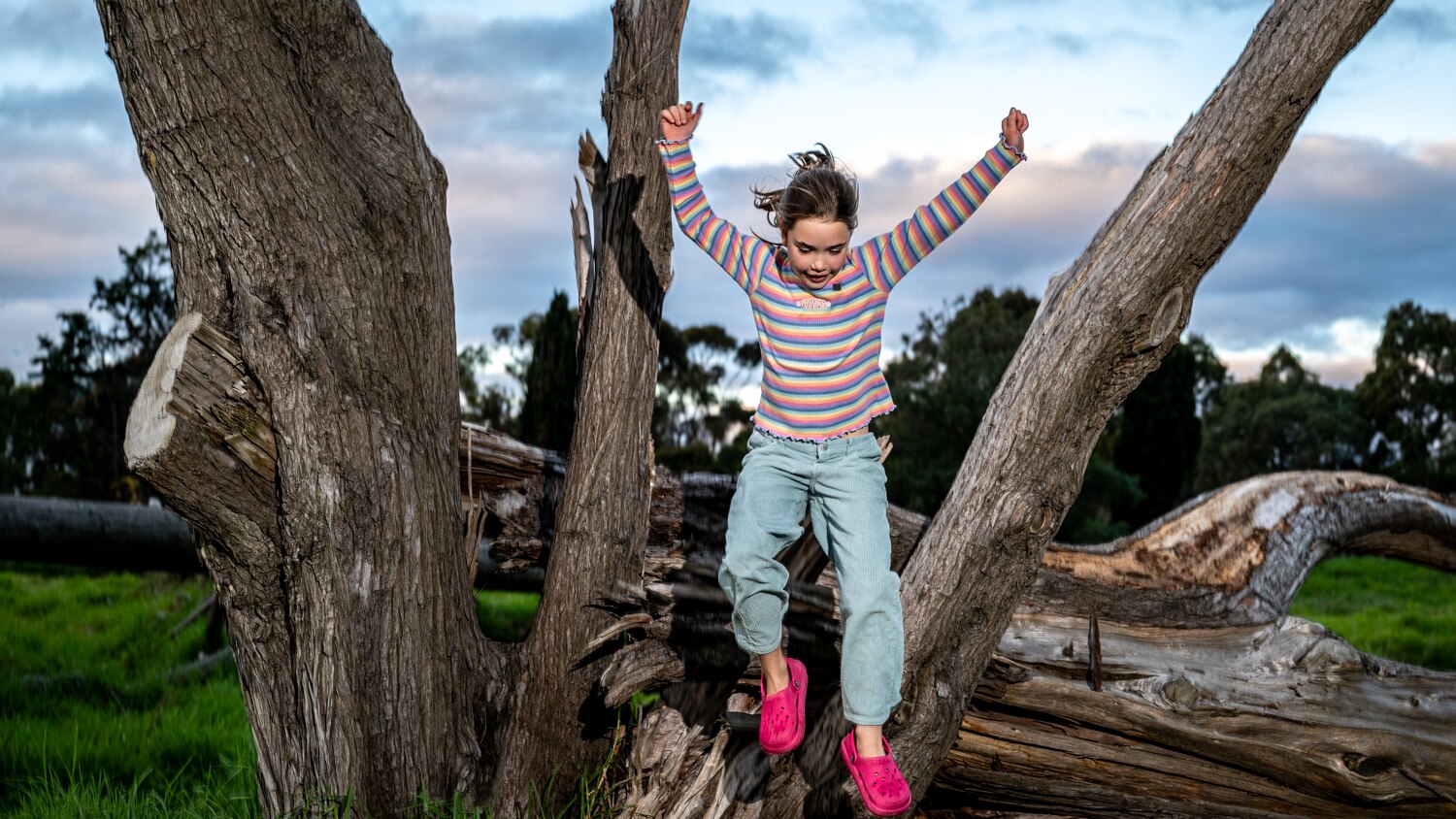
The familiar scene of a parent waving their child off at the primary school gates can now feel tinged with unease for some, as a fundamental aspect of childhood – unstructured play – appears to be on the decline. For Renae Powell, an early childhood educator in Brisbane, this realisation hit hard when her eldest child started school. The strict teacher supervision requirements meant that spontaneous play, both before and after school, was largely prohibited. This starkly contrasted with Powell’s own carefree childhood, where hours spent “away from adults” were a cherished part of her day.
Her concern deepened when her four-year-old son began getting into trouble for what she describes as “basically moving his body.” With short lunch breaks and minimal movement throughout the school day, Powell’s simple, yet radical, observation was that her son and his classmates desperately needed more opportunities to play.
This sentiment is increasingly being validated by a growing body of research. Play, typically defined as child-led activity without predetermined goals or rigid rules, is now understood to offer a wealth of developmental benefits. Unstructured or free play is crucial for fostering emotional self-regulation, critical thinking, problem-solving skills, and social competence. Experts now regard it not as a mere pastime, but as a fundamental developmental necessity. However, there are significant concerns that Australian children are experiencing a decline in playtime, particularly outdoors.
Letting the Children Play: A Growing Concern
Several factors are contributing to the diminishing space for children’s play. Robyn Monro Miller, CEO of Play Australia, points to urban planning that often overlooks the needs of children, the prevalence of increased traffic, parental safety anxieties, the pervasive influence of screen time, an overabundance of structured activities, and the time constraints faced by modern families.
“By about the age of eight, less and less time is allocated to play, and then by the time you’re a 12-year-old, when you go into high school, it’s not encouraged that you will play,” Monro Miller observes. “People don’t see teenagers as children, and teenagers need time to play as well.” She argues that play has been relegated to an afterthought for far too long.
Monro Miller is actively campaigning for governments to prioritise play. Her recent report, funded by a Churchill Fellowship, outlines a roadmap for implementing a national play strategy. Such strategies are designed to integrate a child’s innate need for play across various policy domains, including health, urban planning, transport, and education.
“Play is not reflected in any national government health policy at the moment, and we know the research is just so solid around the benefits of play for children’s health that we should be looking at that as a preventative health strategy,” she states. Furthermore, she advocates for mandatory minimum free playtime requirements in schools.
Wynn Vale Primary: A Case Study in Play
In the quiet northern suburbs of Adelaide, Wynn Vale Primary School is one of twelve schools participating in a two-year trial called Time2Play. Principal Amanda Browne was eager to join the initiative after noticing a decline in essential skills like resilience, problem-solving, and collaboration among her students. Browne firmly believes that unstructured play is instrumental in cultivating these vital attributes.
Twice or thrice weekly, during class hours, teachers lead their students to a natural, scrubby bushland area on the school’s perimeter for approximately thirty minutes. Without any pre-selected equipment, the children are left to their own devices, using natural elements like trees and piles of dirt to spark their imagination and creativity.
“Children were developing little teepees and having little imaginary campfires, and the collaboration, but also the vocabulary and the language that we were starting to see our children use was quite mind-blowing for us,” Browne recounts. Initially implemented for Years 1 and 2, the program has since been extended to Years 3 and 4.
Browne acknowledges that diverting time from traditional classroom learning might initially seem counterintuitive. However, she explains, “Having this opportunity to explore and imagine and create helps children come back into the classroom to engage in that more content-driven, explicit, direct learning time.” The school is committed to continuing this unstructured play initiative beyond the trial period. This progressive approach is not universally adopted, as evidenced by a recent study highlighting confusion among teachers regarding the role of play in primary education.
Wynn Vale Primary School will be celebrating the International Day of Play for the second year. Last year, the school organised an excursion to a dry creek bed, a short ten-minute walk away, for the children to play. The response from parents was overwhelmingly positive, with many describing the simple joy of exploring their local environment as “one of the best days for my child ever.”
Browne also shared anecdotes from students who, despite living nearby, had never ventured down to the creek before. “So, there’s obviously a need for it, and I think it’s up to us to ensure that we’re providing that time for children to… come off screens and come outside and play and just explore the areas around them.”
Addressing Barriers to Play
Play Australia’s 2025 State of Play report identified specific groups facing significant barriers to accessing and participating in play spaces. These include children from low socioeconomic backgrounds residing in high-density housing, families with a member with a disability, children in rural and remote areas, and Aboriginal and Torres Strait Islander children and girls. Monro Miller suggests that implementing “play sufficiency measures,” which would require local governments to assess play opportunities and associated barriers, could help improve access and inclusion.
However, the challenge of play sufficiency isn’t solely about financial investment. Monro Miller points out a surprising trend: “We’re seeing, in some cases, children from higher socio-economic backgrounds are the ones who are missing out the most because they are being enrolled in more and more structured activities.”
“So, it’s not sort of a question of economic capacity. It’s really at times about parents thinking that play is optional rather than needs to be a daily part of their children’s lives.”
Protecting Play: The Power of Loose Parts
When Renae Powell initially voiced her concerns about the lack of playtime at her child’s school, she felt her efforts were not yielding results. Undeterred, she took a proactive approach. What began as a volunteer effort, offering craft activities during lunchtime, evolved into a permanent “loose parts” playground at the school. This concept, inspired by architect Simon Nicholson’s Theory of Loose Parts, posits that objects children can manipulate and repurpose are potent catalysts for creativity and innovation.
Dubbed “Playtopia,” the space is not a manicured ideal of childhood play but rather a dynamic, child-created environment. It’s a vibrant, almost anarchic, landscape constructed and reconstructed by the children themselves, featuring an eclectic mix of plastic and wooden crates, fabric scraps, a mud pit, various containers, and art supplies.
Powell’s dedication over the past decade has been instrumental in establishing and maintaining Playtopia. The space is accessible during lunch hours, supervised by a trained “play worker” – an individual Powell has mentored in facilitating play in educational settings. Her role, she explains, is to “protect play” rather than actively participate in it.
“You’re making sure it’s well-resourced and stocked with loose parts. You’re doing safety sweeps… all of these background things that happen so that the kids can just come in and get straight to playing.”
At Playtopia, children engage in a multitude of imaginative activities. “The children ‘create houses and cafes and war zones and some kids just come in there and smash boxes for half an hour because that’s what they need to do’,” Powell observes. “And that’s play, right? If they don’t have a space like this where they can do that, where do they take those feelings? They take it straight back to the classroom.”
Towards a Playful City
Further south in Brisbane, two loose parts playgrounds have been established by The Australian Institute of Play as part of the Logan Together initiative. This decade-old program aims to enhance the lives of children in Logan, a city that has historically grappled with socioeconomic disadvantage.
Five years after the establishment of one such loose parts playground, which operates several days a week, principal Andrew Bares reported a remarkable transformation. He noted that “fights and aggression in the school playground virtually disappeared… [and] school behaviour data has also shown a marked reduction in serious incidents.”
Michelle Lucas, executive director of Logan Together, highlights “high-quality play” as a cornerstone of their program. However, she laments the difficulty in securing funding for play initiatives. “Despite significant advocacy and the proof in terms of the evaluation, we as Logan Together haven’t been able to encourage deeper investment in Logan’s play culture.”
“Play seems to be a little bit overlooked. I think people assume that play happens naturally, but that’s not the case anymore.”
Returning to the ethos of Playtopia, Powell reiterates the call to return to fundamental principles: “Let them play.” She invites Mo Saunders, a grade 4 student and frequent visitor to Playtopia, to share his perspective. “It’s cool, it has a lot of crates, not much teacher supervision, so they don’t boss you around as much, it’s creative,” Saunders says. “I build shelters and tunnels with my friends, with tabletops, cushions and crates to protect us from the rain.”