Blues’ Origin Selection Raises Eyebrows Ahead of Crucial Second Clash
Despite a moment of sheer brilliance from James Tedesco in the dying seconds that clinched Game 1 of the State of Origin series, the NSW Blues appear to have made questionable selection decisions for the upcoming second fixture. The team from south of the border found themselves outclassed for much of the opening game in Sydney. It was a significant lapse in judgment from Queensland’s Kalyn Ponga, leading to his sin-binning, that ultimately allowed the Blues to capitalise and snatch victory.
With the series on the line and the Queensland Maroons undoubtedly eager to level the score, many observers anticipated a few strategic tweaks to the NSW lineup, even accounting for unavoidable injury-enforced changes. However, there are growing concerns that the Maroons might once again gain the upper hand, potentially forcing a decisive Game 3 back at the formidable Suncorp Stadium.
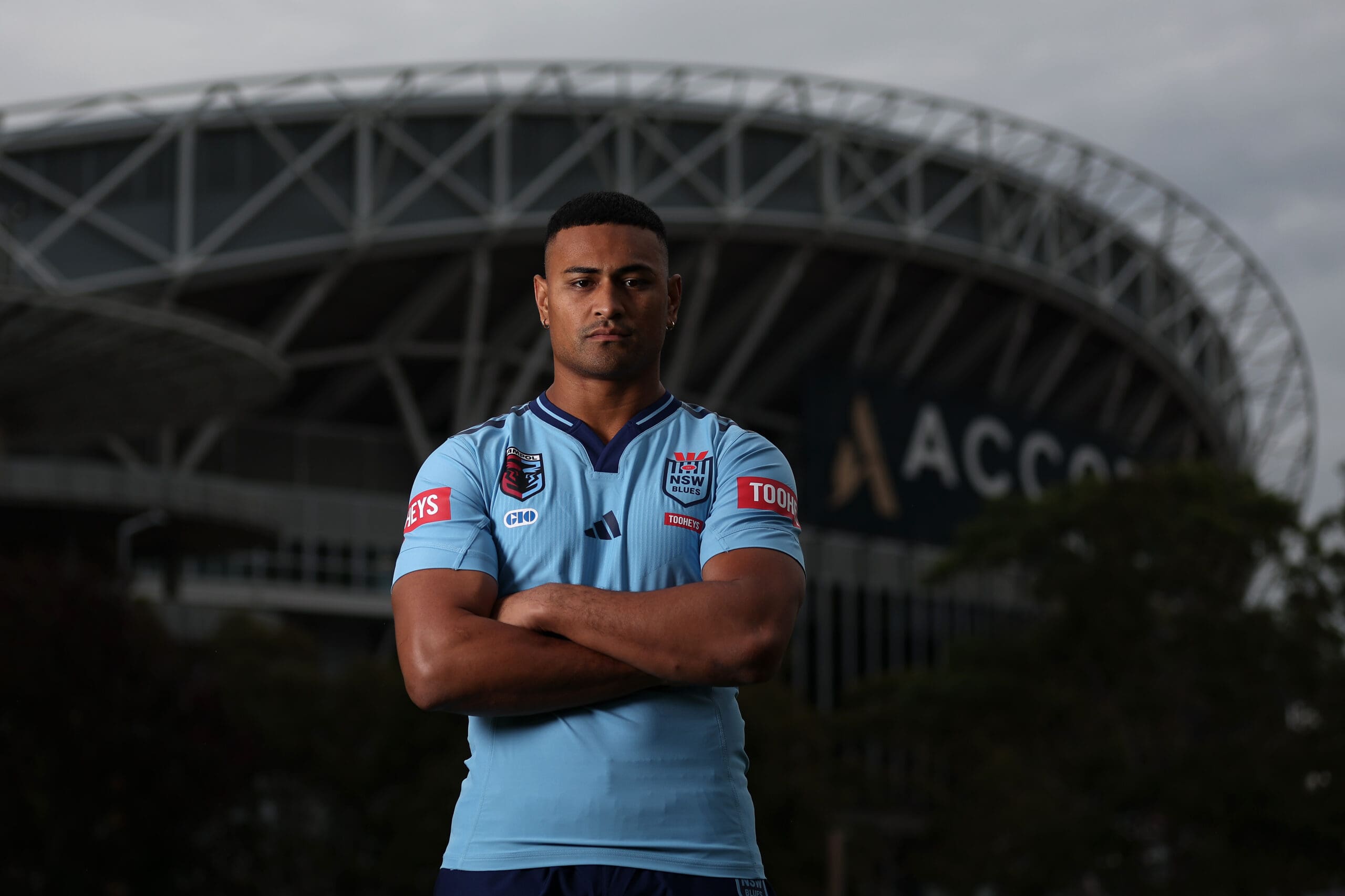
One of the most contentious omissions from the Blues’ squad is Haumole Olakau’atu, arguably the competition’s premier second-rower. Despite his formidable presence and leading metres gained amongst all Blues forwards in Game 1, Olakau’atu has been relegated to the role of 20th man. This decision is particularly perplexing given Olakau’atu’s consistent dominance for the Manly Sea Eagles in clubland. Just last week, he ran for an impressive 266 metres, including 140 metres post-contact, against a strong South Sydney outfit. He has been a standout forward across the entire competition, yet he’s been overlooked for a debutant, Dylan Lucas, who has predominantly played his entire NRL career on the opposite edge.
When questioned about Olakau’atu’s exclusion, Blues coach Laurie Daley explained the difficult nature of the decision. “It was difficult. We tried to see whether we could put him on the bench, but just the balance of the side and the balance of the bench with another back-rower there, we felt like we needed a big man,” Daley stated. He further elaborated, “So it’s just one of those hard calls that you’ve got to make. He’s a destructive back-rower, but unfortunately (for him) we want to give Dylan a run in this game and I’m sure that he’ll play really well.”
Adding to the speculation, other reports have emerged suggesting Olakau’atu’s omission might be linked to his training workloads during camp and perceived effort areas on the field, which reportedly led to cramping in Game 1. However, these claims appear to contradict his performance on the field, where he was observed leading the kick chase for the entire first half and consistently pressuring Selwyn Cobbo from Nathan Cleary’s bombs. It’s often said that confidence is a key ingredient in unlocking a player’s full potential, and Olakau’atu is clearly playing with immense confidence at Manly. His sidelining from such a significant Origin fixture feels like a missed opportunity for his development.
Beyond the back row, there are also questions surrounding the involvement of Cameron Murray. Murray had a transformative impact on Game 1 when he entered the fray around the quarter-mark of the match. His explosive leg speed and rapid play-the-ball pace fundamentally altered the game’s dynamics and were instrumental in spearheading the Blues’ comeback. Many, including this observer, had anticipated a shift in the forward pack, with Isaah Yeo moving to the front row and Murray reclaiming the starting lock position. This would have provided a more potent forward rotation, especially considering starting prop Mitchell Barnett appeared fatigued after absorbing the Blues’ defensive pressure in the opening stages. Such a move would have undoubtedly sharpened the forward pack and kept the Maroons struggling in the field position battle.
It appears that Daley and the Blues’ coaching staff may not have fully identified or addressed the shortcomings from Game 1. The forward rotation, while bolstered by the inclusion of Payne Haas – a selection that was a no-brainer – still feels largely similar. While Haas’s inclusion is a significant boost and will undoubtedly tenfold enhance the Blues’ engine room, credit must be given for handing him a starting jersey.
The selection of Mark Nawaqanitawase on the six-man bench is another intriguing decision. My preference would have been to either see him start on a wing or not be selected at all. The versatility of Casey McLean is, in my opinion, far too vital. As demonstrated in Game 1, McLean could seamlessly step in for a concussed Tolutau Koula. If a similar situation were to arise in Melbourne, Nawaqanitawase could only cover a wing position, forcing Koula to shift into the centres if an injury occurred in the outside backs. Having Nawaqanitawase start rather than having a specialist back-line cover for emergencies, given he can only play one position, seems a less strategic approach.
Adding to the pre-match concerns are reports surfacing that Mitchell Moses did not train on Wednesday due to a hamstring injury. This raises questions about his availability and fitness. Ethan Strange, who had an excellent Origin debut a fortnight ago, has not been rewarded with a starting spot and has been named on the six-man bench.
With only four of the six bench players typically seeing game time, it’s anticipated that Murray, Addin Fonua-Blake, Victor Radley, and Apisai Koroisau will all feature prominently. This means Strange would likely miss out on the field unless an unforeseen injury occurs. His exclusion from a more significant role is somewhat underwhelming, especially after showcasing his ability to compete at the Origin level.
Both the NSW Blues and the Queensland Maroons have now retreated to their respective team camps as they prepare to head down to Melbourne for their highly anticipated clash at the Melbourne Cricket Ground on June 17.