The Rise of Curling’s First Professional League
Curling, a sport that has long been a favorite among winter sports enthusiasts, is taking a bold step forward with the launch of its first professional league. The Rock League is set to debut just over a month after the sport captured global attention during the Winter Olympics. This new venture aims to capitalize on the momentum generated by the recent Olympic success and bring curling into the spotlight in a fresh and exciting way.
A Strong Start with Olympic Stars
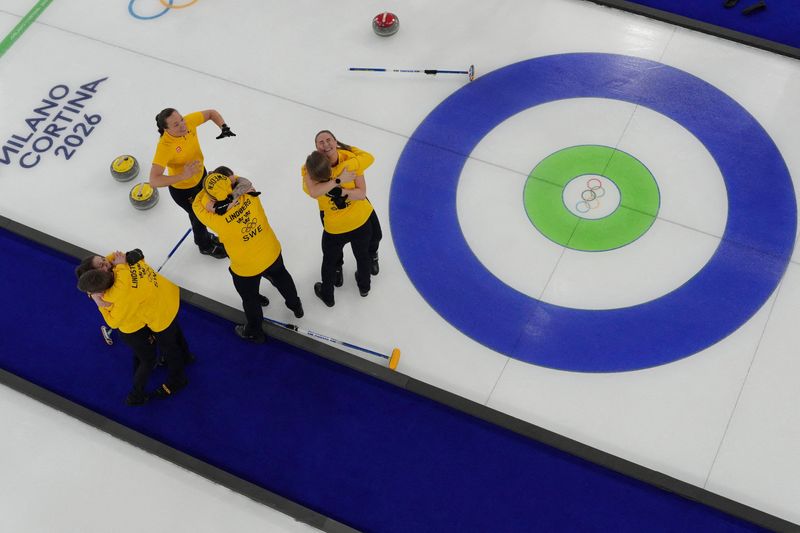
The Rock League will feature six mixed-gender franchises competing in men’s, women’s, mixed team, and mixed doubles events from April 6-12 in Toronto. The league boasts an impressive roster of athletes, including several medallists from the Milano Cortina Games. This high level of talent ensures that fans can expect thrilling matches and competitive play throughout the season.
The league is operated by the Curling Group, a company known for its involvement in the Grand Slam of Curling series. The Curling Group also has the support of notable figures such as former Olympic curling champions and retired NFL Hall-of-Famer Jared Allen, who serve as advisors.
Reframing the Sport for a New Audience
Curling Group CEO Nic Sulsky shared his vision for the Rock League, emphasizing the importance of redefining the sport for a broader audience. “Curling is always among the most watched winter Olympic sports… it was incredible, it was super fun and electric,” he said. “We knew when we founded The Curling Group, that capitalizing on the Olympic momentum was going to be core to our business.”
Sulsky explained that the initial idea was to wait until 2027 or 2028 to launch the league. However, the opportunity to capitalize on the current interest in curling was too significant to ignore. “We’re having this conversation right now because everybody’s been talking about curling.”
The condensed inaugural season of the Rock League will provide a glimpse into the format and rules of the league. In 2027, the league plans to return with five weeks of competition, offering a more extended and immersive experience for fans.
Creating a Professional Ecosystem
From a business perspective, the Rock League represents a new professional ecosystem for curlers. Sulsky highlighted that the league is creating a broadcast-friendly product where games will be two hours long. “There’s going to be lots of excitement when fans come to the arena. They’ll be cheering for teams that have logos and jerseys… What we want to be able to do is create a platform where curlers can dream about one day being an actual professional athlete.”
Rock League vs. Grand Slam of Curling
In addition to the Rock League, the Curling Group acquired the Grand Slam of Curling in 2024. This series of tournaments has been running for over two decades and has a strong following among traditional curling fans.
When asked about the differences in target audiences between the Rock League and the Grand Slam of Curling, Sulsky emphasized the league’s focus on both traditional and casual fans. “We want to appeal to the traditional curling fan, but we also are very focused on bringing a new casual fan into the sport. We want to grow the total audience.”
Sulsky believes that the Rock League will serve as a conduit for bringing casual fans into the sport. “If we do our job the right way, fans are going to be entertained during Rock League, which in my opinion, will spill over to the fall when the Grand Slam of Curling season starts.”
Franchise Rights and Future Growth
The franchises in the Rock League are currently owned and operated by the Curling Group. However, Sulsky mentioned that the company is already planning for future sales of franchise rights. “We’re in a capital raise right now. We’re doing a Series A to fund the future operations of not only Rock League, but the Curling Group.”
The Curling Group’s approach to franchise sales is different from some other emerging leagues. “Different leagues have different strategies as they go to the capital markets. Some emerging leagues decide to sell franchises right away to help fund operations. We decided on a different model, similar to SailGP and Major League Soccer, where the league owns and operates it.”
As the league grows, Sulsky outlined a plan to sell majority stakes of the franchises that have been built to partners within the regions where the teams are based. This strategy aims to ensure long-term sustainability and growth for the Rock League.