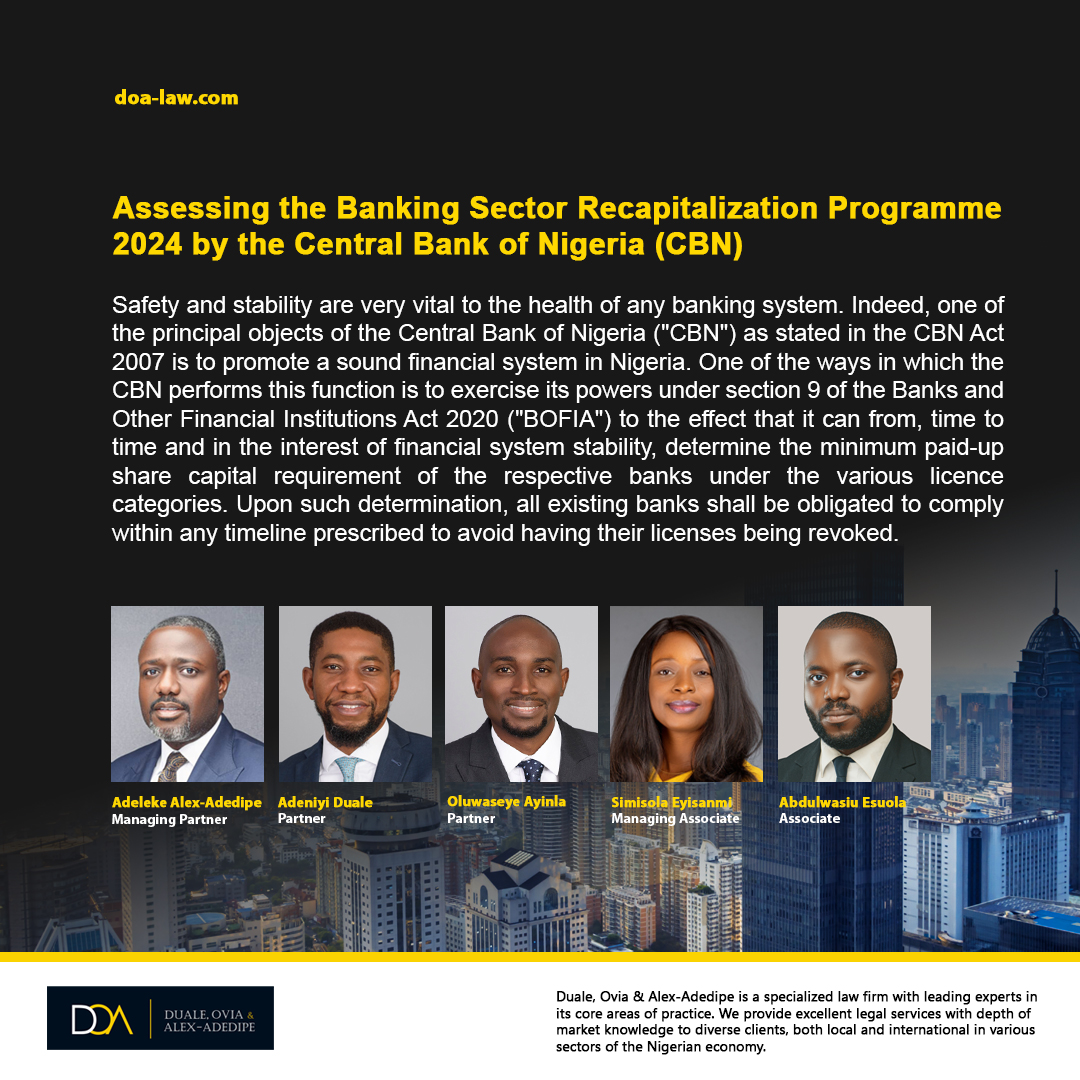
Nigeria’s Bank Recapitalisation: A Step Toward Economic Resilience
The International Monetary Fund (IMF) has expressed strong support for Nigeria’s recent bank recapitalisation programme, highlighting its positive impact on the country’s financial system and economic outlook. The initiative, implemented by the Central Bank of Nigeria (CBN) under the leadership of Olayemi Cardoso, is seen as a critical step in enhancing the resilience of the banking sector and positioning it to withstand global economic shocks.
Strengthening Financial Resilience
According to the IMF, the recapitalisation exercise has significantly improved the capital buffers of Nigerian banks, enabling them to better absorb external shocks during periods of economic stress. This has not only enhanced the stability of the financial system but also strengthened its ability to support monetary policy objectives, such as inflation control and sustained economic growth.
The Fund noted that the recapitalisation has reinforced confidence in Nigeria’s financial system, creating a stronger foundation for long-term economic resilience. It also pointed out that the programme has contributed to a more robust banking sector, which is now better equipped to support the country’s two-year growth outlook.
Positive Outcomes and Future Prospects
This year marks a significant milestone for Nigeria’s financial sector, with several key developments expected to shape its trajectory. These include the emergence of more resilient banks, rising external reserves projected to reach about $51bn by the end of the year, and a renewed commitment by policymakers to achieve single-digit inflation.
These outcomes are part of broader fiscal and monetary reforms aimed at strengthening the financial system and the wider economy. The IMF acknowledged these efforts during the 2026 Spring Meetings of the World Bank and the IMF, describing the recapitalisation as a major milestone for Nigeria’s economy.
Global Financial Stability and Economic Outlook
During the presentation of the Global Financial Stability Report, the IMF Financial Counsellor and Director of the Monetary and Capital Markets Department, Tobias Adrian, highlighted the importance of adequate bank capital in maintaining global financial stability. He emphasized that the value of bank capital becomes most evident during periods of economic stress, noting that well-capitalised banks are better positioned to withstand external pressures.
Adrian also praised the capital raised by Nigerian banks, stating that it would play a crucial role in safeguarding the financial system during turbulent times. He added that the benefits of recapitalisation are particularly visible when economies face heightened uncertainty, such as the ongoing volatility in oil prices linked to the Middle East crisis.
In addition, the IMF Economic Counsellor and Director of the Research Department, Pierre-Olivier Gourinchas, outlined Nigeria’s growth prospects over the next two years. He projected that the Nigerian economy would expand by 4.1 per cent in 2026 and 4.3 per cent in 2027, despite global challenges such as the war in the Middle East, rising commodity prices, and tighter financial conditions.
Policy Recommendations and Challenges
The IMF advised policymakers to remain vigilant and flexible, especially in managing trade-offs related to areas such as defence spending while laying the groundwork for sustained economic recovery. It also warned that many countries no longer have the fiscal space to absorb shocks easily, recommending targeted and temporary measures to support vulnerable populations without fueling inflation.
The Fund further encouraged central banks to maintain price stability through clear communication and prudent policy adjustments, while allowing exchange rates to adjust freely. In the event of a sharp tightening of financial conditions or a significant deterioration in global economic activity, monetary and fiscal authorities should be prepared to adapt their policies to support growth and protect the financial system.
Regulatory Reforms and Credit-Risk Culture
The recapitalisation of Nigeria’s banking sector represents one of the most far-reaching reforms since the 2005 consolidation exercise. It has modernised regulatory frameworks and strengthened risk management practices, reflecting coordinated efforts between the CBN, the Ministry of Finance, and the capital market.
With the recapitalisation phase now concluded, attention is shifting to reinforcing the financial system by promoting a stronger credit-risk culture. This involves ensuring that newly raised capital is deployed prudently to key sectors such as infrastructure, energy, manufacturing, and technology.
CBN’s Commitment to Governance and Transparency
Speaking at a forum in Lagos, CBN Governor Olayemi Cardoso emphasised the importance of safeguarding the capital raised by banks through stricter oversight and improved governance standards. He reiterated that the apex bank will enforce stronger governance, transparency, and accountability measures to protect the funds raised through the exercise.
Cardoso highlighted that the recapitalisation programme has strengthened the capital base of Nigerian banks, reinforcing the resilience of the financial system and ensuring it is well-positioned to support economic growth and withstand domestic and external shocks.
Stakeholder Reactions and Future Expectations
Stakeholders have also expressed support for the recapitalisation initiative, highlighting its potential benefits for the broader economy. Bank customers and industry leaders expect banks to improve service quality, offer more affordable credit, and reduce lending costs. They also called for increased support for the agricultural sector to boost food security and align lending rates with international standards.
Overall, the recapitalisation programme has been widely regarded as a success, with 33 banks raising a combined N4.65tn in fresh capital. The CBN confirmed that the participating banks met the revised capital thresholds, with strong participation from both domestic and international investors.