Diplomatic Shifts in US-Pakistan-Iran Relations
In a sudden turn of events, US President Donald Trump has decided to cancel a planned visit by senior US officials to Pakistan. This move comes as the United States continues its ongoing negotiations with Iran, signaling a shift in diplomatic priorities. The cancellation of this high-level engagement could have had significant implications for regional dialogue and cooperation.
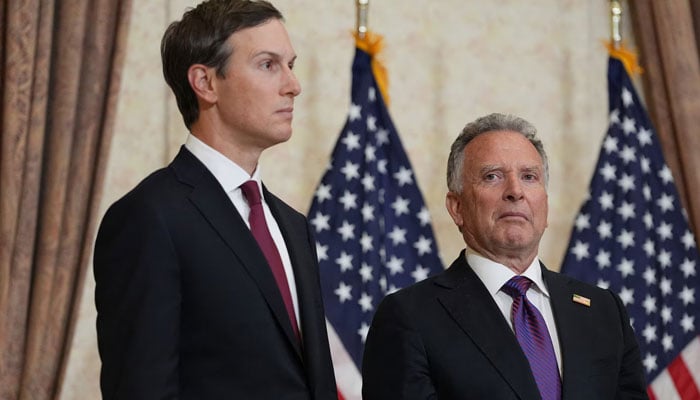
Earlier, Trump had announced that a two-member delegation would travel to Islamabad. The delegation, consisting of Steve Witkoff and Jared Kushner, was expected to engage in high-level discussions during their visit. They were scheduled to depart on the same day the announcement was made, indicating that the trip was well underway in planning stages.
However, Trump confirmed to US media that the visit has now been canceled. He stated that the decision was made despite earlier expectations and preparations. Despite this, he emphasized that Iran is always open to engaging in talks with the United States at any time.
Ongoing Diplomatic Activities in Pakistan
While the US delegation’s visit was called off, diplomatic activities involving Iranian officials continued in Pakistan. Iranian Foreign Minister Abbas Araghchi led a delegation to Islamabad, where they held meetings with Prime Minister Shehbaz Sharif and Field Marshal Asim Munir. These discussions underscored the importance of maintaining communication channels between key regional players.
Following these meetings, the Iranian delegation traveled to Muscat and Moscow for further engagements. This movement highlights the broader diplomatic efforts being undertaken by Iran to manage regional tensions through dialogue and cooperation.
Implications of the Cancellation
The cancellation of the US delegation’s visit reflects shifting priorities in US diplomacy regarding Iran negotiations. It also illustrates the complex dynamics at play in the region, where multiple actors are working to navigate sensitive geopolitical issues.
The decision may have implications for the relationship between the US and Pakistan, as well as for the broader regional landscape. With the US focusing on its own strategic interests, other nations are stepping in to fill the gap and maintain diplomatic momentum.
Regional Efforts to Manage Tensions
Despite the cancellation, efforts to manage tensions through dialogue continue. Pakistan remains a key player in these discussions, serving as a bridge between different regional actors. The country’s role in facilitating communication between the US and Iran cannot be overlooked.
As the situation evolves, it will be important to monitor how these developments impact regional stability. The involvement of multiple stakeholders—ranging from government officials to military leaders—shows the complexity of the challenges faced in the region.
Conclusion
The recent developments highlight the fluid nature of international diplomacy, particularly in regions marked by historical tensions and strategic interests. While the cancellation of the US delegation’s visit may have been unexpected, it underscores the need for continuous dialogue and adaptability in foreign policy.
As the situation unfolds, it remains to be seen how these changes will affect the broader geopolitical landscape. For now, the focus remains on maintaining open lines of communication and fostering cooperation among all parties involved.