The Economic Dimensions of War
War is often perceived as a conflict driven by political or military motives. However, scholars like Philippe Le Billon argue that war has a significant economic dimension. In his book The Political Economy of War, he highlights that conflicts are not only sustained for ideological reasons but also because they create economic opportunities for various actors. This perspective is reflected in the Bollywood film Article 370, where a female intelligence officer character suggests that terrorism can be seen as a commercial enterprise. She illustrates this by claiming that Pakistan might feign efforts to locate Osama bin Laden to ensure continued funding from the United States.
World War I: A Catalyst for Economic Shifts
World War I marked a turning point in global economic history. The war led to widespread destruction of infrastructure and industries in Europe, resulting in a decline in production and trade. European nations borrowed heavily from the rising superpower, the United States, which weakened their economies. Additionally, some regions faced severe inflation due to excessive money printing, with Germany experiencing hyperinflation in the post-war years. The Treaty of Versailles further destabilized the German economy by imposing heavy reparations.
One of the most significant impacts of World War I was the shift in global economic power from Europe to the United States. The U.S. emerged as a leading industrial powerhouse and creditor, reshaping the global economic landscape.
The Great Depression: A Legacy of War Debt
The economic ripples from World War I contributed to the onset of the Great Depression. The war created a structural weakness in the global economy, making it vulnerable to future crises. European nations, including France and the UK, became dependent on U.S. loans, while Germany relied on them for treaty reparations. When the Wall Street crash of 1929 occurred, U.S. banks stopped lending and demanded repayments, causing a systemic default. This was compounded by wartime destruction, unemployment, and inflation, which weakened European industries and hindered recovery.
World War II: Economic Rebuilding and New Global Systems
During World War II, governments spent massive amounts on the war effort, increasing national debt. Countries like Germany, Japan, and the Soviet Union were left in ruins, with destroyed cities and broken industries. Conversely, the United States emerged stronger, as the war boosted its industries and helped pull it out of the Great Depression.
The war also led to the establishment of the Bretton Woods Agreement, which created institutions like the World Bank and the International Monetary Fund. These organizations aimed to formalize financial rules and ensure economic compliance. While this system revived struggling economies, it also imposed a Western-dominated capitalist model, which eventually gave way to the neoliberal order under leaders like Margaret Thatcher and Ronald Reagan.
Current Conflicts: Economic Impacts and Global Concerns
The ongoing conflict between Iran and Israel has had significant economic repercussions. The blockade of the Hormuz Strait has caused oil and gas prices to surge, reaching $100-$120 per barrel. The International Energy Agency has called this the “greatest global energy security challenge in history.” Iran’s economy is expected to suffer greatly, with GDP projected to fall by over 10%, the worst since the 1979 Islamic Revolution.
Global inflation has also risen, with food prices surging the most among consumer goods. Structural effects could push more than 32 million people into poverty, particularly in developing countries.
Peace Talks and Economic Uncertainty
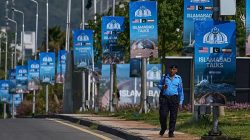
Peace talks mediated by Pakistan have reached a stalemate. Iran continues its blockade, while the U.S. pressures for the strait to be reopened. The World Trade Organization (WTO) warns that if high oil and gas prices persist, global GDP growth in 2026 could decline by as much as 0.3%. The situation has also raised fears of a military confrontation, with former President Donald Trump warning that “a whole civilisation will die tonight” if the strait remains closed.
An immediate ceasefire and the reopening of the Hormuz Strait are crucial to preventing further economic disruption. The global economy and the nations involved stand to benefit from swift action to restore stability.