Urgent Recall of Baby Food Product Over Allergen Concerns
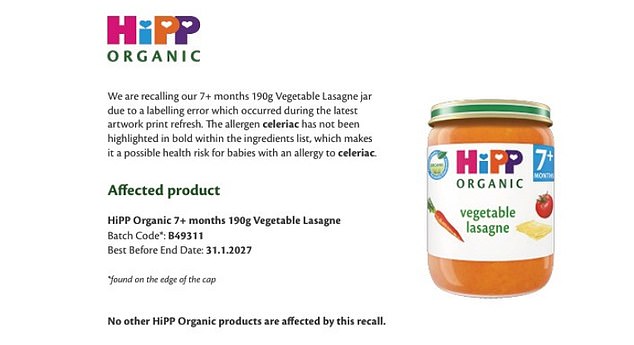
Health authorities have issued an urgent recall of a popular baby food product due to concerns that it could pose a serious risk to children with allergies. The affected product is HiPP Organic UK’s 7+ Months Vegetable Lasagne (190g) jars, which have been found to contain celeriac (celery) that was not properly highlighted on the label.
The error means the allergen was not emphasized in bold within the ingredients list, as required by law. This oversight could potentially put babies with a celery allergy at risk. The affected jars carry a best-before date of January 31, 2027, and batch code B49311. No other HiPP Organic UK products are believed to be impacted.
The baby food, which retails for around £1.25, is sold at major UK retailers including Boots and Ocado. The Food Standards Agency (FSA) warned: “This product contains celeriac, making it a possible health risk for anyone with an allergy to celery.”
HiPP Organic explained that the issue was caused by a labelling mistake during a recent packaging update. A spokesperson added: “The allergen celeriac has not been highlighted in bold within the ingredients list, which makes it a possible health risk for babies with an allergy to celeriac.”
Parents and carers of children with a celery allergy have been urged not to feed them the product. Instead, customers can contact HiPP for a full refund by emailing [email protected] or calling 0800 298 4477.
Celery is one of the 14 major allergens that must be clearly indicated on food labels under UK law, typically through bold text, underlining, or contrasting colours. Although celery allergy is relatively uncommon in babies, reactions can range from mild symptoms such as rashes and itching to more severe responses, including breathing difficulties, swelling, and a rapid heartbeat.
Symptoms can appear within minutes or up to two hours after consumption, with severe cases requiring immediate medical attention.
Recent Incidents Involving HiPP Products
The recall comes just days after a separate scare involving HiPP baby food in Europe. Authorities in Austria launched an investigation after a jar of HiPP product was found to contain rat poison, prompting a large-scale withdrawal across more than 1,000 supermarkets.
The company said it believed the contamination was the result of ‘criminal interference’ within the SPAR Austria supply chain. Police warned consumers to look out for jars with damaged lids, missing safety seals, or unusual smells, while tests on similar products in neighbouring countries reportedly detected toxic substances.
HiPP stressed that the incident was isolated to Austria and not linked to its UK products. The company has since taken steps to ensure the safety of its products and continues to work closely with regulatory authorities to address any concerns.
Steps to Take if You Have the Affected Product
If you have purchased the 7+ Months Vegetable Lasagne (190g) jars, it is important to check the best-before date and batch code. If the product matches the affected batch, do not feed it to your child. Instead, follow the instructions provided by HiPP for a full refund.
It is also advisable to monitor your child for any signs of an allergic reaction if they have consumed the product. If symptoms occur, seek medical attention immediately.
Consumers are encouraged to stay informed about food recalls and to check product labels carefully, especially when purchasing items for children with known allergies. By staying vigilant, parents and caregivers can help protect their children from potential health risks.
Conclusion
The recent recall of HiPP Organic UK’s 7+ Months Vegetable Lasagne highlights the importance of clear and accurate labelling on food products, particularly those intended for infants. While the company has taken swift action to address the issue, it serves as a reminder of the need for ongoing vigilance in ensuring the safety of baby food products.
As the food industry continues to evolve, it is crucial for manufacturers, retailers, and consumers to work together to maintain high standards of safety and transparency. By doing so, we can help prevent future incidents and protect the health of our youngest and most vulnerable members of society.