The Mystery of the Hall of Records Beneath the Great Sphinx
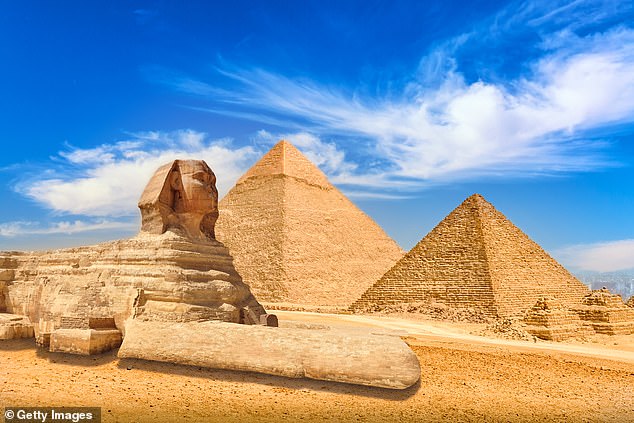
For decades, the idea of an ancient library hidden beneath Egypt’s Great Sphinx has captivated the imagination of historians, archaeologists, and conspiracy theorists alike. This enigmatic concept, known as the Hall of Records, has been the subject of numerous theories and speculations. Recently, a newly discovered CIA document from 1952 has reignited interest in this long-standing mystery.
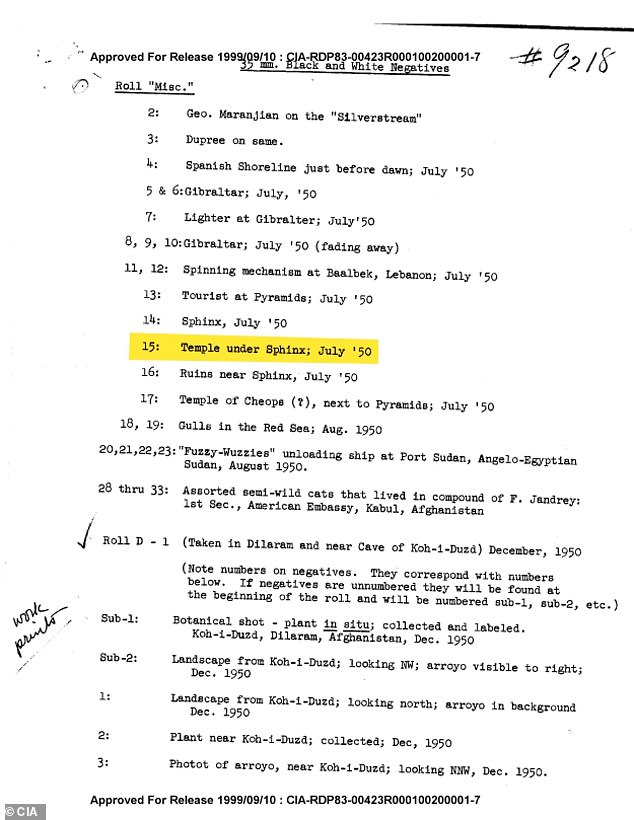
The document, titled ‘Presentation Form for Graphic Material,’ was created on November 20, 1952, and appears to be a simple inventory of photographic negatives taken between July and December 1950. It contains a list of images related to various archaeological sites, including the Great Sphinx. However, one particular entry has drawn significant attention: “Temple under Sphinx; July ’50.”
This phrase is not a standard archaeological term used today, leading many to believe that it could hint at something more profound. The mention of a “temple under the Sphinx” has sparked debates and discussions across online forums, with some questioning whether the CIA might have uncovered evidence of an ancient structure beneath the monument.
The Origins of the Hall of Records Legend
The legend of the Hall of Records can be traced back to American clairvoyant Edgar Cayce. In the 1930s, Cayce claimed that a hidden chamber containing records from Atlantis would one day be discovered beneath the paw of the Sphinx. According to his predictions, this archive would hold texts detailing humanity’s forgotten history, advanced science, and catastrophic events that led to the downfall of earlier civilizations.
Cayce’s claims have fueled generations of speculation and exploration around the Sphinx. Although no physical evidence of such a chamber has been found, the myth continues to inspire both academic and popular interest.
Scientific Investigations and Controversies
Interest in the possibility of hidden chambers beneath the Sphinx intensified in the 1990s when seismic studies and ground-penetrating radar detected underground cavities near the monument. Japanese researchers from Waseda University and later American teams identified unusual voids beneath the Giza Plateau, although mainstream archaeologists remained skeptical about their significance.
Famed Egyptologist Zahi Hawass has consistently denied the existence of a Hall of Records, stating that the Sphinx has been thoroughly excavated. He and his colleague Mark Lehner conducted investigations in 1979 and found no evidence of such a chamber. Hawass also mentioned that he has refused permission for further excavations beneath the Sphinx, citing that the area under the left paw is solid rock.
Despite these denials, the recent discovery of the CIA document has led to renewed excitement among conspiracy theorists and ancient history enthusiasts. Many are asking whether the agency might have stumbled upon something significant beneath the Sphinx over 70 years ago.
The Book of Thoth and Egyptian Mythology
Another element tied to the legend of the Hall of Records is the Book of Thoth, a significant text in Egyptian mythology. The story revolves around Nefer-ka-ptah, a prince of Egypt, who seeks a sacred text attributed to Thoth, the god of wisdom. According to legend, the Book of Thoth is hidden within the legendary Hall of Records beneath the Great Sphinx of Giza.
While the existence of the Book of Thoth remains unverified, its association with the Sphinx has only added to the allure of the mystery surrounding the monument.
The CIA Document and Its Implications
The material in the CIA document was being forwarded to headquarters for archival purposes, with the first page warning that the nitrate film was explosive and required special handling during shipment. While the document primarily focuses on Afghanistan, cataloging hundreds of images related to archaeological digs, cave excavations, and local villages, it also includes entries such as “Tourist at Pyramids,” “Sphinx,” and “Ruins near Sphinx.”
Among these entries is the cryptic reference to “Temple under Sphinx; July ’50,” which has now captured the internet’s imagination. This brief line has sparked a wave of curiosity and speculation, with many questioning what else might be hidden beneath the sands of Egypt.